
 E-Paper



Filmindia in photos
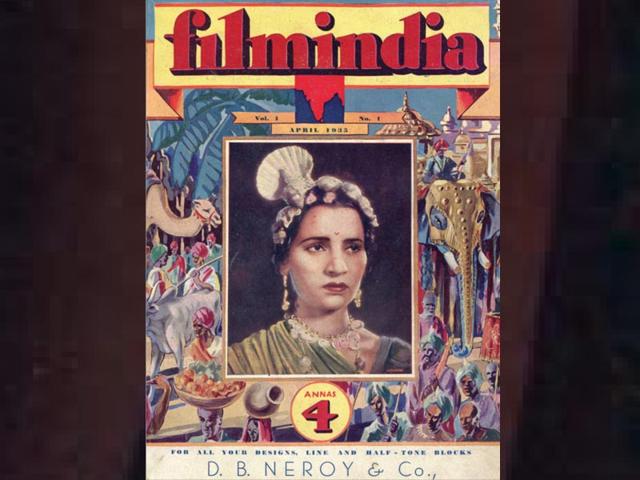
A new book on Baburao Patel and his wife Sushila Rani who edited the influential magazine Filmindia provides interesting insights into the early years of Hindi cinema and film journalism. Here are some beautiful stills from the pages of the magazine, found in journalist and author Sidharth Bhatia's lavishly-illustrated coffee table book, The Patels of Filmindia. (The cover of the launch issue of Filmindia in April 1935.)
Updated on: Jun 29, 2015 8:06 PM IST


Share via


Copy link

1/12
 View Photos in a new improved layout
Updated on Jun 29, 2015 8:06 PM
A new book on Baburao Patel and his wife Sushila Rani who edited the influential magazine Filmindia provides interesting insights into the early years of Hindi cinema and film journalism. Here are some beautiful stills from the pages of the magazine, found in journalist and author Sidharth Bhatia's lavishly-illustrated coffee table book, The Patels of Filmindia. (The cover of the launch issue of Filmindia in April 1935.)
2/12
 View Photos in a new improved layout
Updated on Jun 29, 2015 8:06 PM
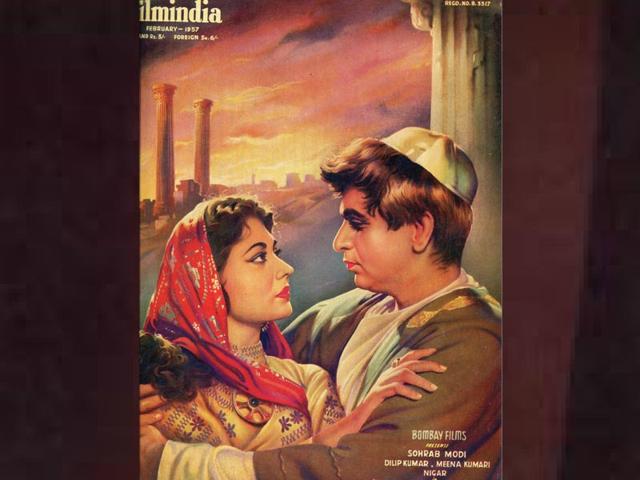
Yahudi, the 1957 film starring Dilip Kumar and Meena Kumari was based on a classic Parsi-Urdu play, Yahudi Ki Ladki by by Agha Hashar Kashmiri. The 1913 play was about the Roman persecution of the Jews. The play was adapted from WT Moncrieff's play, The Jewess and it is written in a mixture of Khari Boli and Urdu. It is for this film, that Mukesh sang Yeh Mera Deewanapan Hai.
3/12
 View Photos in a new improved layout
Updated on Jun 29, 2015 8:06 PM
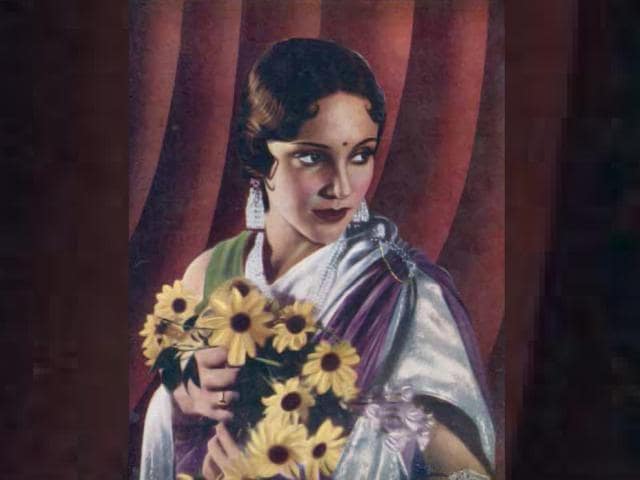
Devika Rani is also called the first lady of Indian cinema. She married the Indian film producer Himanshu Rai and the two established a production house, Bombay Talkies in 1934. The two acted in a 1933 film called Karma, which is considered to be one of the earliest Indian films with a kissing scene.
4/12
 View Photos in a new improved layout
Updated on Jun 29, 2015 8:06 PM
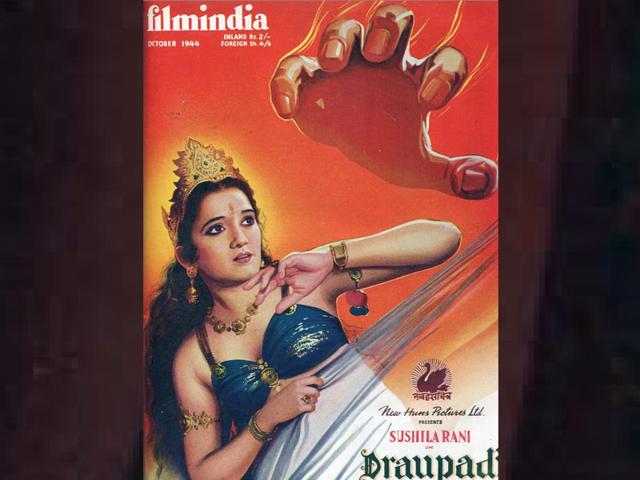
The college-educated Sushila Rani worked briefly as a schoolteacher in Udaipur, far away from her home in Madras. Later, when she met Baburao Patel in Bombay, the already-married editor set about wooing her assiduously. Eventually, she married him, much against her father's wishes and even acted as the lead in a hit film he made, Draupadi (1944).
5/12
 View Photos in a new improved layout
Updated on Jun 29, 2015 8:06 PM
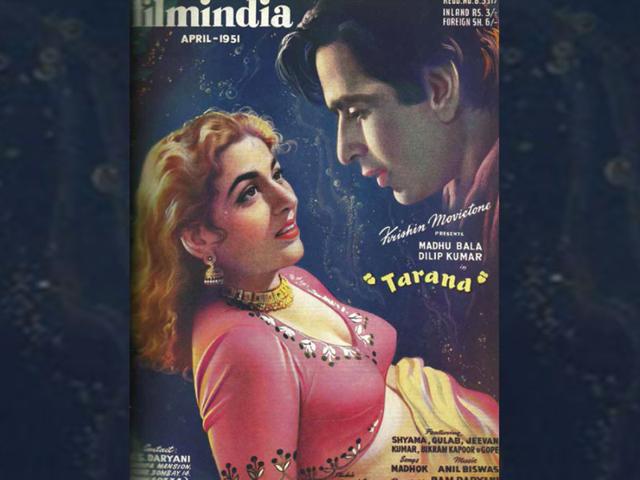
Tarana (1951) was the first film Dilip Kumar and Madhubala did together. A Filmindia review reads: Incidentally, Madhubala gives the best performance of her screen career in this picture. She seems to have discovered her soul at last in Dilip Kumar's company. Source: I Want to Live: The Story of Madhubala By Khatija Akbar.
6/12
 View Photos in a new improved layout
Updated on Jun 29, 2015 8:06 PM
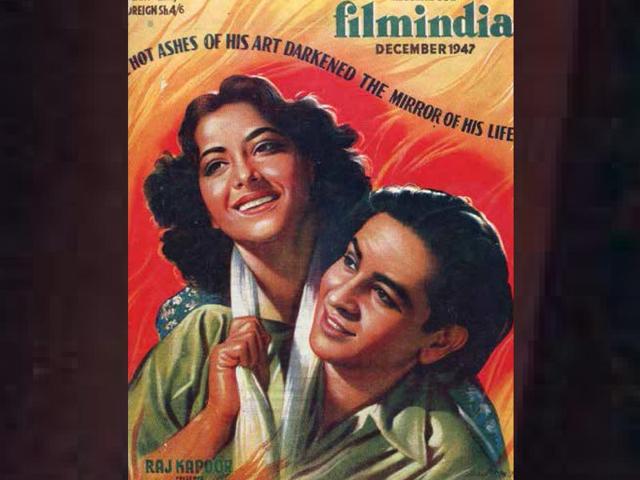
Aag (1947) was the first film to be produced under Raj Kapoor's RK Banner - and it was also the first film he directed. It also starred Nargis and Shashi Kapoor as a child artist who played a younger Raj Kapoor.
7/12
 View Photos in a new improved layout
Updated on Jun 29, 2015 8:06 PM
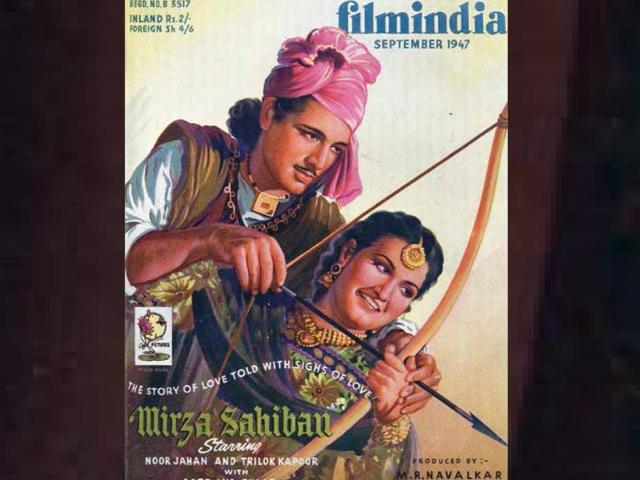
Mirza Sahiban, an adaptation of the classic love story, was one of the top grossers of 1947 (it made Rs 35 lakhs at the time). The film starred Trilok Kapoor (Prithviraj Kapoor's brother) and Noor Jehan (best known as the Pakistani singer, who sang Chandni Raatien). Baburao Patel scathingly wrote that Noor Jehan had an ageing face, having seen two world wars.
8/12
 View Photos in a new improved layout
Updated on Jun 29, 2015 8:06 PM
Baburao Patel, who launched the monthly in 1935, was a pioneer of the early years of film journalism in India. Along with his beautiful wife Sushila Rani, he ran Filmindia, a magazine that was grudgingly respected and feared in equal measure by the film industry, and that went on to complete 50 years, even though Patel died in 1982. In 1960, the magazine was renamed Mother India. Over the years, it began carrying more and more political content.
9/12
 View Photos in a new improved layout
Updated on Jun 29, 2015 8:06 PM
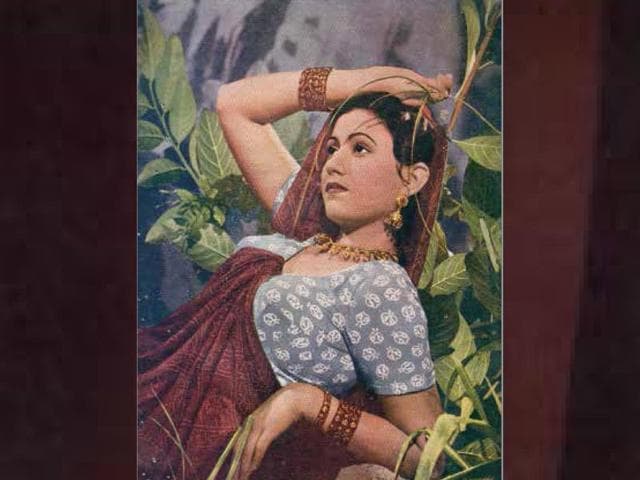
Madhubala in a poster from Nishana (1950). In his book, Bhatia writes that Sushila Rani taught the 18-year-old successful actress to speak, read and write in English. It is around this time that Baburao Patel took her father, Ataullah Khan, for a heart check-up and got Madhubala examined too - and, a hole in her heart was discovered.
10/12
 View Photos in a new improved layout
Updated on Jun 29, 2015 8:06 PM
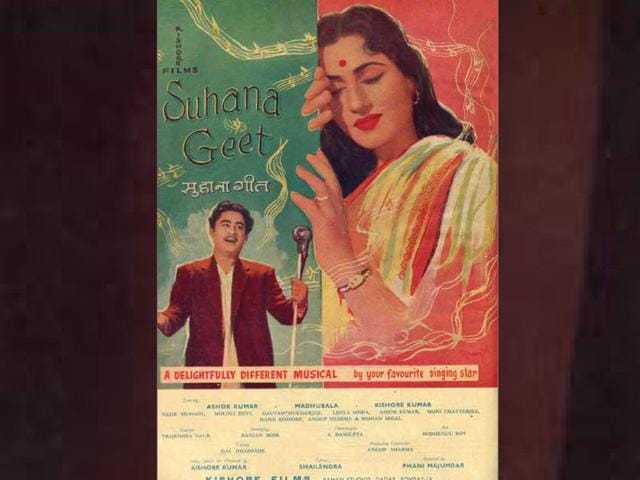
Kishore Kumar turned composer with Neela Aasmaan in 1959, and then Suhana Geet. Both films were to be directed by the pioneering filmmaker Phani Majumdar, but were never released. Source: Gaata Rahe Mera Dil: 50 Classic Hindi Film Songs by B Vittal and A Bhattacharjee
11/12
 View Photos in a new improved layout
Updated on Jun 29, 2015 8:06 PM
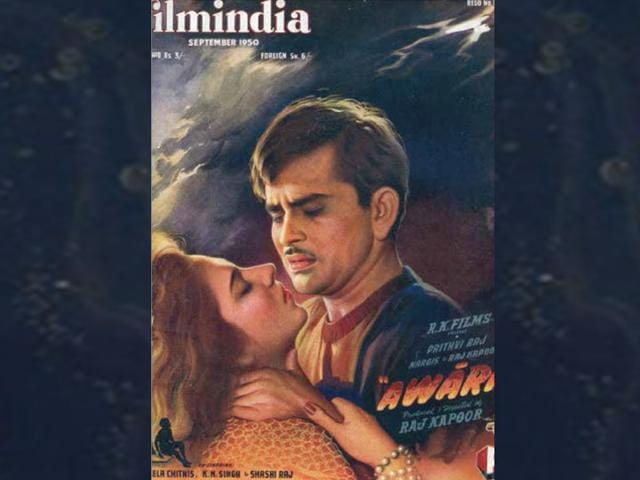
Awara (1951) starring Prithviraj Kapoor, Raj Kapoor and Nargis. In 2012, the film was included in the 20 new entries to Time magazine's list of All-Time 100 greatest films. One of the hallmarks of Filmindia, writes Bhatia, was the art work. The covers - many of which also doubled up as advertisements - were painted by Sambanand Monappa Pandit, a JJ School of Art graduate. These were not always stills from specific films, but show the stars in varied situations.
12/12
 View Photos in a new improved layout
Updated on Jun 29, 2015 8:06 PM


