
 E-Paper



Photos | A year after Section 377: Recapping how the law was struck down
On September 6 last year, a five judge bench led by the then Chief Justice of India Deepak Misra read down Section 377 of the Indian Penal Code, a British-era law that criminalised consensual, adult, same-sex relationships and fostered a climate of fear and discrimination against the entire Lesbian, Gay, Bisexual and Transgender (LGBT) community. A year post this historic verdict, a look at how activists battled for equal rights from the early ‘90s, until last year. However, members of the community believe that there is a long way to go for LGBT persons to have equal rights in the society.
Updated on: Sept 6, 2019 8:22 PM IST


Share via


Copy link

1/12
 View Photos in a new improved layout
Updated on Sept 6, 2019 8:22 PM
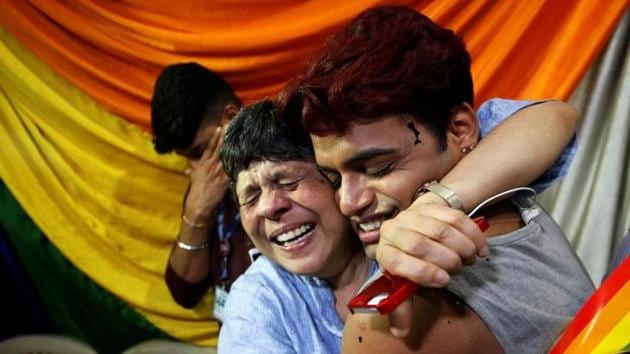
Chitra Palekar and allies of the LGBT community celebrate the Supreme Court’s verdict that read down Section 377 of the Indian Penal Code, a British-era law that criminalised consensual, adult, same-sex relationships and fostered a climate of fear and discrimination against the entire community at an NGO in Mumbai. A year ago, the apex court handed victory to 34 people who had challenged the draconian law. (Francis Mascarenhas / REUTERS)
2/12
 View Photos in a new improved layout
Updated on Sept 6, 2019 8:22 PM
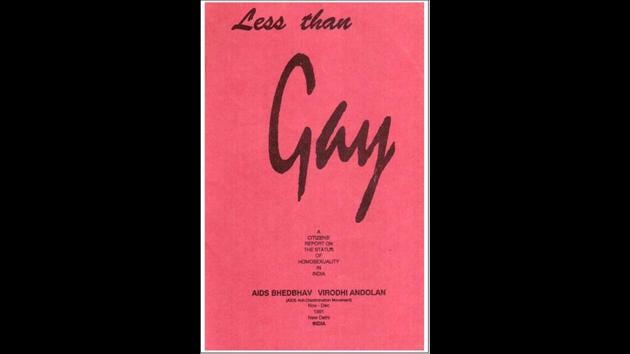
The awareness towards LGBT issues in India began with the publication of ‘Less than Gay,’ a report on the status of homosexuality in the country, brought out by Aids Bhedbhav Virodhi Andolan (ABVA) in the year 1991. The following year, India’s first known gay protest was held outside Delhi Police headquarters. (HT Archive)
3/12
 View Photos in a new improved layout
Updated on Sept 6, 2019 8:22 PM
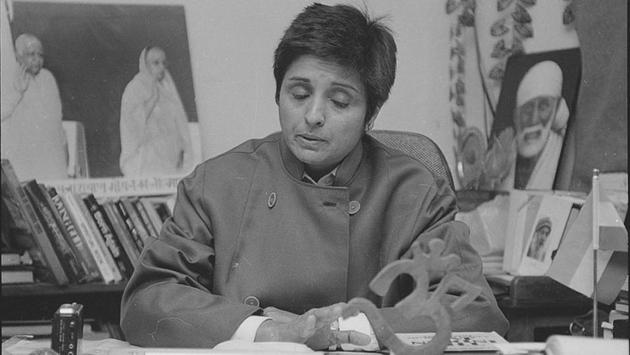
Another move towards challenging section 377 was made by ABVA in 1994, when they filed a writ petition to demand that condoms be made available to inmates of Tihar Jail in New Delhi. Bedi, then the superintendent of Tihar Jail, had refused to allow health workers to distribute condoms to male inmates. (Girish Srivastava / HT Archive)
4/12
 View Photos in a new improved layout
Updated on Sept 6, 2019 8:22 PM
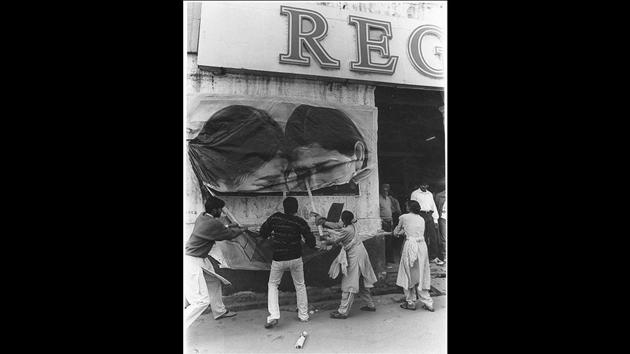
Shiv Sena activists vandalise posters of Deepa Mehta’s film ‘Fire’ during a demonstration in protest of its screening in New Delhi. The repression of same-sex love was highlighted by vehement protests against the film starring Shabana Azmi and Nandita Das in 1998. It also sparked widespread public discourse on homosexuality and freedom of speech. (PTI File)
5/12
 View Photos in a new improved layout
Updated on Sept 6, 2019 8:22 PM
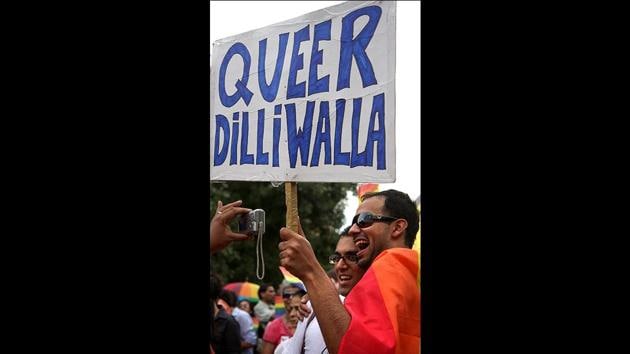
People participate in the Delhi’s first Queer Pride March in June 2008. While ABVA’s petiton was dismissed in 2001, Naz Foundation filed the first major case against Section 377 in December 2001. The case was dismissed by the Delhi High Court in 2004. (Jasjit Plaha / HT Archive)
6/12
 View Photos in a new improved layout
Updated on Sept 6, 2019 8:22 PM
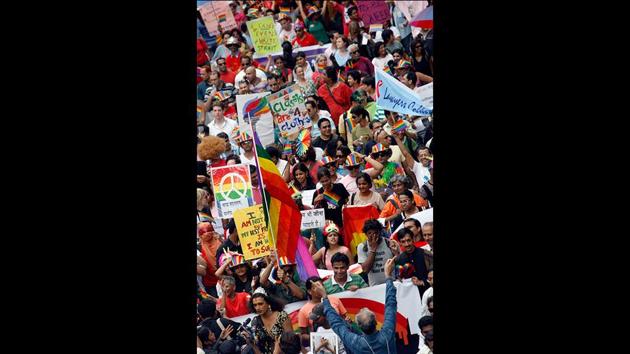
Participants march during ‘Queer Azadi Mumbai 2008’ the city’s first pride march, in September 2008. As momentum against the British era law grew across the country, the Supreme Court ordered the Delhi court to hear the case again. As a result, on July 2, 2009 the Delhi High Court decriminalised Section 377, ruling that consenting intercourse between two adults was not illegal. (Arko Datta / REUTERS File)
7/12
 View Photos in a new improved layout
Updated on Sept 6, 2019 8:22 PM
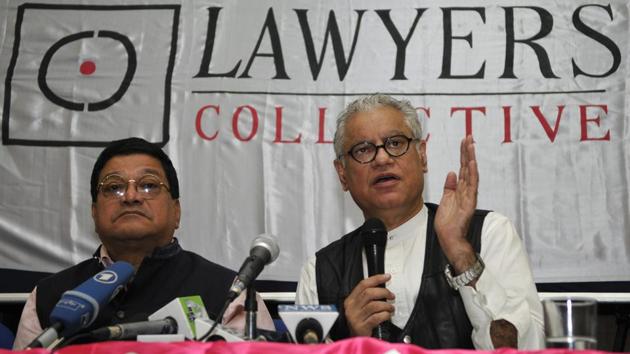
Journalist and LGBT rights activist Ashok Row Kavi and lawyer Anand Grover interact with media after Supreme Court’s verdict on section 377 of IPC, in New Delhi on December 11, 2013, In its ruling, the apex court set aside the decision of the Delhi High Court and reinstated Section 377. It left to the Parliament to “consider the desirability and propriety of deleting Section 377 IPC from the statute book or amend the same.” (Sonu Mehta / HT Archive)
8/12
 View Photos in a new improved layout
Updated on Sept 6, 2019 8:22 PM
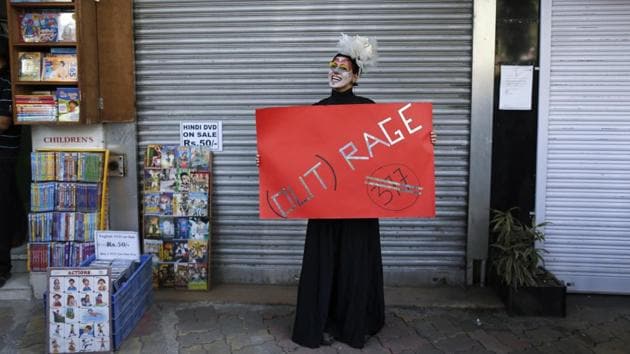
A gay rights activist holds a banner during a protest against the verdict by the Supreme Court in Mumbai. Global Day of Rage demonstrations were organized in over 30 cities worldwide to protest Section 377. The individuals violating the law could be punished for up to 10 years in prison. (Danish Siddiqui / REUTERS File)
9/12
 View Photos in a new improved layout
Updated on Sept 6, 2019 8:22 PM
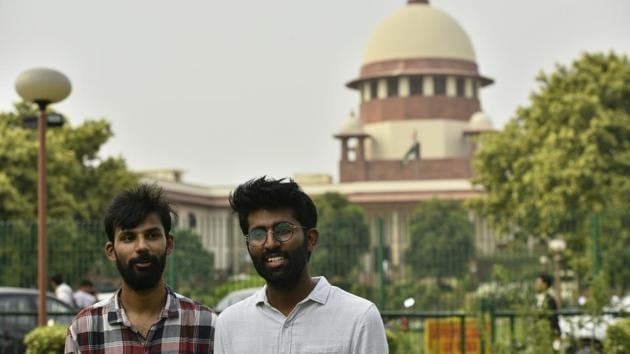
Anurag Kalia (L) and Akhilesh Godi, two of the 20 IITians who challenged Section 377 outside Supreme Court. The fight for equality resurfaced in 2016, when two fresh petitions from LGBT persons, including Navtej Johar and Others vs Union of India were filed. In April-May 2018, new petitions, including one by students of IITs, Mumbai-based organisation the Humsafar Trust and activist Arif Jaffar who had been imprisoned under the Section were filed. (Anushree Fadnavis / HT Archive)
10/12
 View Photos in a new improved layout
Updated on Sept 6, 2019 8:22 PM
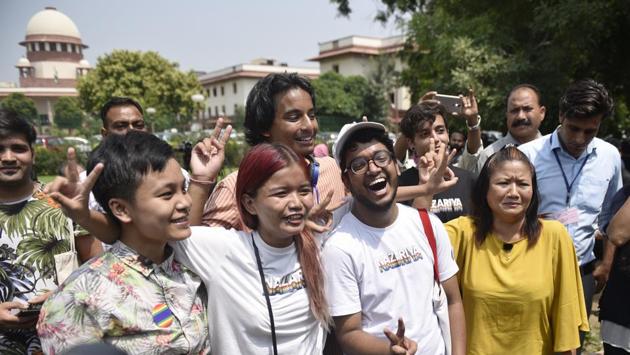
In July 2018, the apex court started hearing the Navtej Johar clutch of petitions. The hearings went on till the month of September. The fateful day arrived on September 6, when a five judge constitution bench, headed by the then Chief Justice of India Dipak Misra, overturned Section 377 161 years after its introduction in the Indian Penal Code. (Sanchit Khanna / HT Archive)
11/12
 View Photos in a new improved layout
Updated on Sept 6, 2019 8:22 PM
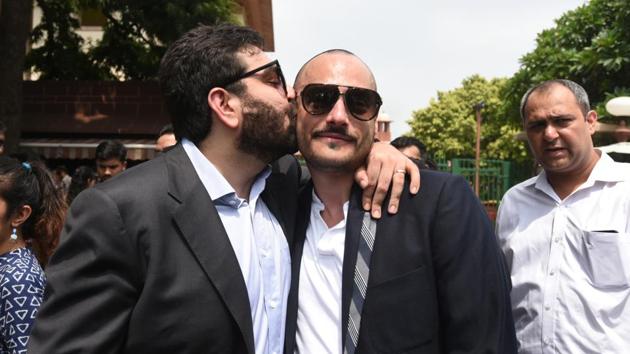
Keshav Suri, hotelier and LGBT rights activist, kisses his partner after the verdict by Supreme Court of India which stuck down Section 377. “History owes an apology to the LGBT community,” Indu Malhotra, the sole woman judge in the bench, said in her statement. (Sushil Kumar / HT Archive)
12/12
 View Photos in a new improved layout
Updated on Sept 6, 2019 8:22 PM


