
 E-Paper



Photos: At Jangpura Dhobi Ghat laundry gets a wash the traditional way
Once ubiquitous to daily life, dhobis and their associated ghats have long been replaced for most by washing machines. Of the few that remain in Delhi, the washermen at Jangpura’s dhobi ghat continue this traditional outsourcing of laundry, albeit to a slightly different clientele.
Updated on: Dec 12, 2017 3:47 PM IST

Share via


Copy link

1/8
 View Photos in a new improved layout
Updated on Dec 12, 2017 3:47 PM
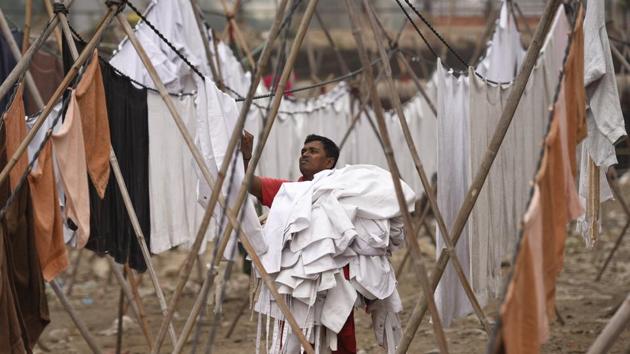
Under the Barapullah flyover that runs along Jangpura in New Delhi, a dhobi ghat situated by a channel that meets the Yamuna comes alive as families gather at dawn to begin the day’s washing and ironing of clothes. In times of household washing machines and start-up laundromats, the Jangpura Dhobi Ghat is one of few in the city where clothes are still washed by hand on an industrial scale. (Burhaan Kinu / HT Photo)
2/8
 View Photos in a new improved layout
Updated on Dec 12, 2017 3:47 PM
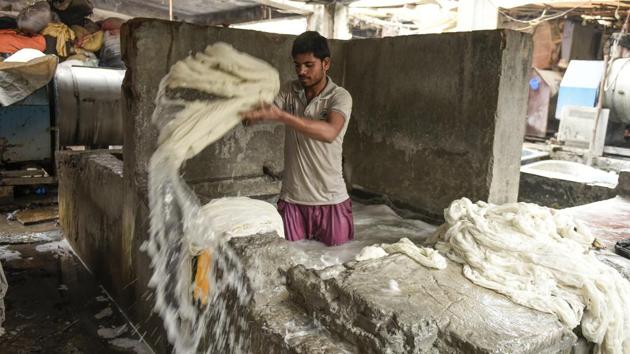
The day’s haul, once collected is brought to large cement tubs where it is treated with detergents. The next step moves the clothes to large vats where washermen --pants rolled up to their knees— stand soaking and rinsing them in water. The sound of clothes slapping against concrete fills the air. (Burhaan Kinu / HT Photo)
3/8
 View Photos in a new improved layout
Updated on Dec 12, 2017 3:47 PM
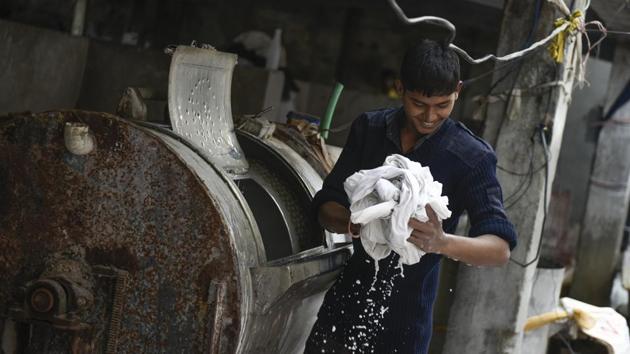
A diligent scrub and soak later, the load moves on to large electric drum dryers that pull out all remnants of dirt, soap and water. From here, the laundry shifts to the clothesline and is left out to dry in the open air. (Burhaan Kinu / HT Photo)
4/8
 View Photos in a new improved layout
Updated on Dec 12, 2017 3:47 PM
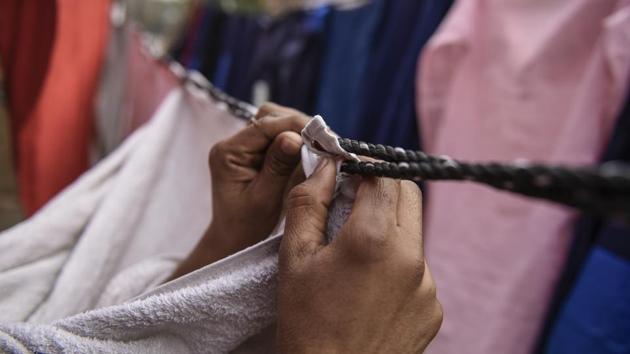
This routine is followed by nearly 40 families of washermen engaged at the Jangpura Dhobi Ghat. Nearly 250 people, including additional labourers hired as aides operate this dhobi ghat –even in the city’s biting winters. (Burhaan Kinu / HT Photo)
5/8
 View Photos in a new improved layout
Updated on Dec 12, 2017 3:47 PM
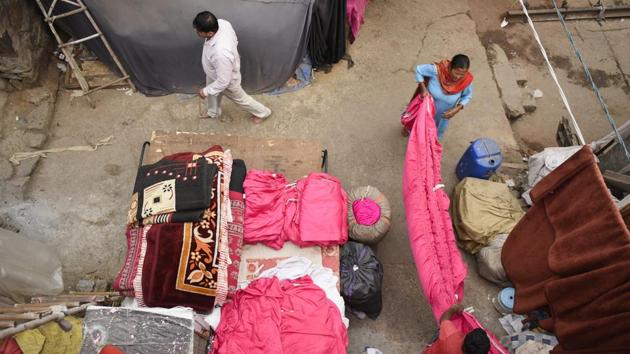
While most households tackle their laundry by themselves, the clientele here constitutes mostly hospitals, hotels, restaurants, gyms and other large operations. Consequently, the majority of their washing is made up of towels, stacks upon stacks of white linen, tents and even curtains as pictured above. (Burhaan Kinu / HT Photo)
6/8
 View Photos in a new improved layout
Updated on Dec 12, 2017 3:47 PM
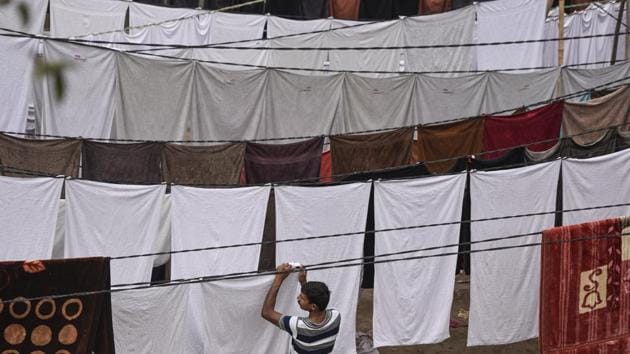
The washermen here are residents of areas adjoining their workplace such as Nizamuddin, Bhogal, Ashram and Jangpura itself. Many have been associated with this line of work for generations and have only known washing clothes as a career. (Burhaan Kinu / HT Photo)
7/8
 View Photos in a new improved layout
Updated on Dec 12, 2017 3:47 PM
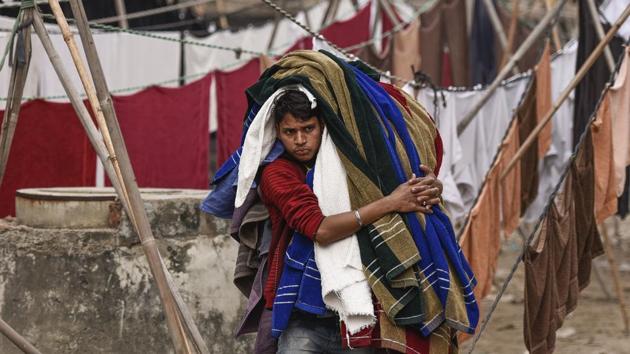
Braving the elements the washermen here depend on the daily influx of laundry to sustain fluctuating incomes. With prices ranging between 10-20 rupees per item, each washerman goes through 50-60 pieces of laundry to cover operational costs and generate a living. (Burhaan Kinu / HT Photo)
8/8
 View Photos in a new improved layout
Updated on Dec 12, 2017 3:47 PM


