
 E-Paper



Photos: Delhi’s bid at night tourism awaits expected response
In the last one year, the Archaeological Survey of India has illuminated five monuments in the city with the objective of encouraging night tourism in the city. Footfall though has not yet reached levels that the authorities had expected and pales in comparison to that during the day. The reasons behind this range from a lack of awareness among visitors of the extended visiting hours, concerns over safety during the night or simply scaled down versions of what daytime visits may entail leaving them just the illumination of the monument as an experience.
Updated on: Sep 29, 2019 3:35 PM IST

Share via


Copy link

1/9
 View Photos in a new improved layout
Updated on Sep 29, 2019 3:35 PM
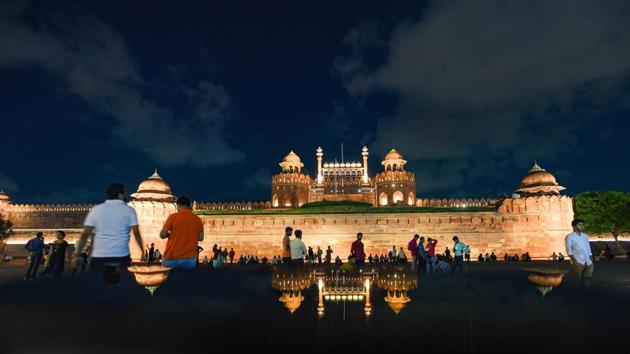
The Red Fort illuminated in New Delhi. In the last one year, the Archaeological Survey of India (ASI) has illuminated five monuments in the city —Red Fort, Purana Qila, Humayun’s tomb, Safdurjung Tomb and the Qutub complex. The illumination of the Tughlaqabad fort is also ongoing and is expected to be completed before the end of this year. (Amal KS / HT Photo)
2/9
 View Photos in a new improved layout
Updated on Sep 29, 2019 3:35 PM
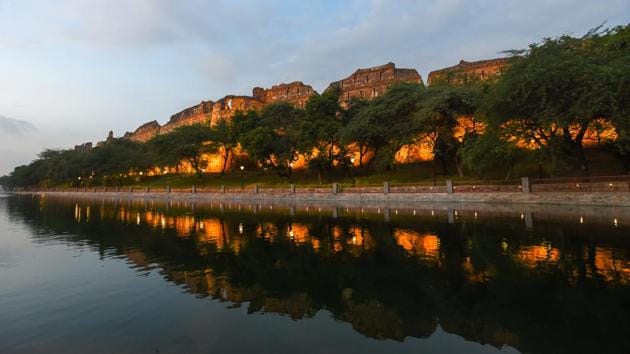
The monuments, apart from Purana Qila (pictured), have also been opened to public till late hours. “We had illuminated the monuments so that they look beautiful and more people can come and see them in the evenings. However, we have not been getting a good response yet. Maybe it will take some time for people to catch up,” said Praveen Singh, superintendent archaeologist in-charge, ASI Delhi circle. (Amal KS / HT Photo)
3/9
 View Photos in a new improved layout
Updated on Sep 29, 2019 3:35 PM
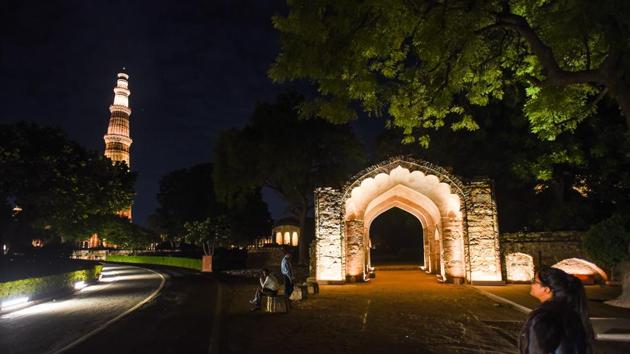
While Qutub Minar has been receiving an average of 200 tourists in the evening, Red Fort — which was opened to public till 9pm in March this year — gets around 150 tourists post 6pm. Both these monuments have been noted to attract the highest number of tourists in the country after the Taj Mahal, and receive a footfall of close to 10,000 to 12,000 daily. (Amal KS / HT Photo)
4/9
 View Photos in a new improved layout
Updated on Sep 29, 2019 3:35 PM
Humayun’s Tomb and Safdarjung Tomb (pictured), meanwhile, have been receiving merely 5-10 tourists daily after 6pm since August, when the hours were extended. Heritage enthusiast Vikramjeet Singh Rooprai said people were happy to see the monuments “glittering like pieces of gold,” and that footfall should increase once awareness spreads about the illumination. (Amal KS / HT Photo)
5/9
 View Photos in a new improved layout
Updated on Sep 29, 2019 3:35 PM
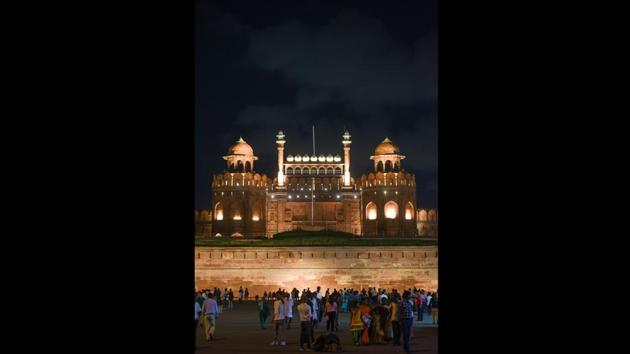
The light and sound show at the Red Fort, which has been on halt for the past several months, is one big factor why people stream out of the monument just when it gets lit up. “What else will people see inside? Apart from the Naqqar Khana and the Diwan-i-Aam, everything else is closed off to public after 6pm,” said one of the ticket vendors at the fort complex. (Amal KS / HT Photo)
6/9
 View Photos in a new improved layout
Updated on Sep 29, 2019 3:35 PM
A view of the Safdarjung Tomb at night. While lack of awareness is one reason why night tourism hasn’t taken off yet, the bigger factor impacting footfall seems to be safety, or the lack of it. Visitors at Safdarjung Tomb and the Qutub Minar complex flagged the presence of dark or isolated patches that would act as a deterrent. (Amal KS / HT Photo)
7/9
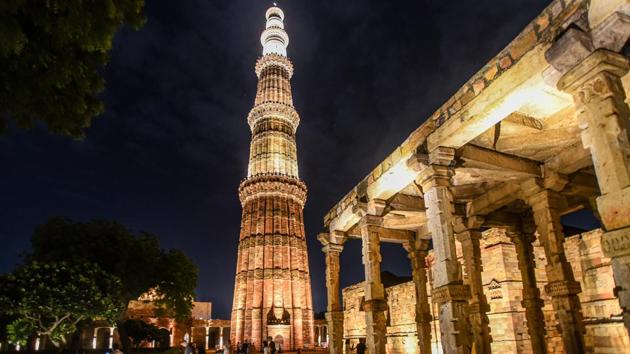 View Photos in a new improved layout
Updated on Sep 29, 2019 3:35 PM
Heritage expert Sohail Hashmi believes that just by illuminating the monuments tourists will not start coming in. Urban safety and gender activist Kalpana Viswanath said “we need to activate public spaces. The route from the Metro to the monuments should be well lit, and vendors and shops need to be encouraged to stay open till late evenings.” (Amal KS / HT Photo)
8/9
 View Photos in a new improved layout
Updated on Sep 29, 2019 3:35 PM
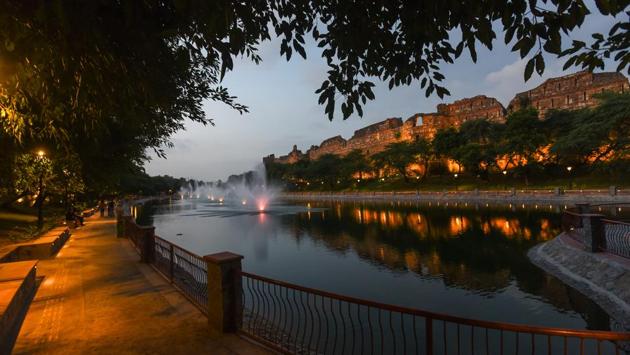
A view around the illuminated Purana Qila. Yet another aspect is that of experience, which experts believe need comprise some sort of activity rather than looking at lit up monuments. There are other inconveniences facing tourists eager to explore the city’s monuments in the evening. Rooprai, said that “most of the monuments do not allow public to access toilets in the evenings.” (Amal KS / HT Photo)
9/9
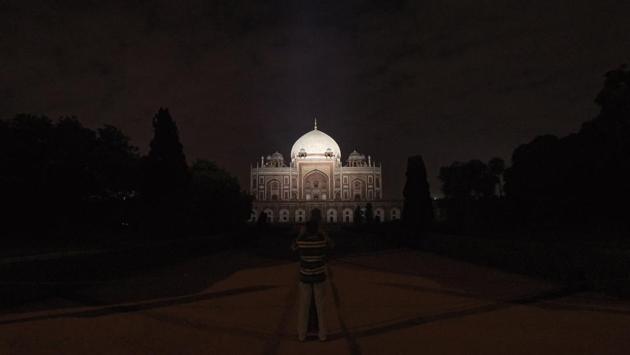 View Photos in a new improved layout
Updated on Sep 29, 2019 3:35 PM


