
 E-Paper



Photos: For Dantewada women, the Kadaknath brings economic strength
The all-black Kadaknath chicken, known for its unique appearance and gamey taste, has been in the news because of an ownership tussle between Madhya Pradesh and Chhattisgarh. MP won, but it is in Chhattisgarh’s Dantewada that the fowl has become a symbol of hope. Women are being given Kadaknath chicken at a fraction of the cost, and with the money they are making from rearing and selling them, they’re rain-proofing their homes, paying for siblings to go to college and, in one case, buying a motorcycle.
Updated on: Apr 17, 2018 2:46 PM IST

Share via


Copy link

1/8
 View Photos in a new improved layout
Updated on Apr 17, 2018 2:46 PM
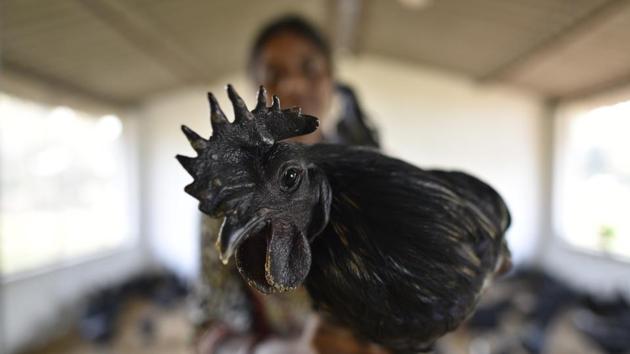
Dantewada has found its golden goose, except, it’s a chicken. An iridescent black, from eyes to wattles, with slate-grey feet and protein-rich black meat, they call it the Kadaknath or kariakukdi. And it’s changing lives in this impoverished and conflict-ridden region of Chhattisgarh. Both Madhya Pradesh and Chhattisgarh had been tussling over ownership and a Geographical Indication tag for the Kadaknath. MP recently won. (Sanchit Khanna / HT Photo)
2/8
 View Photos in a new improved layout
Updated on Apr 17, 2018 2:46 PM
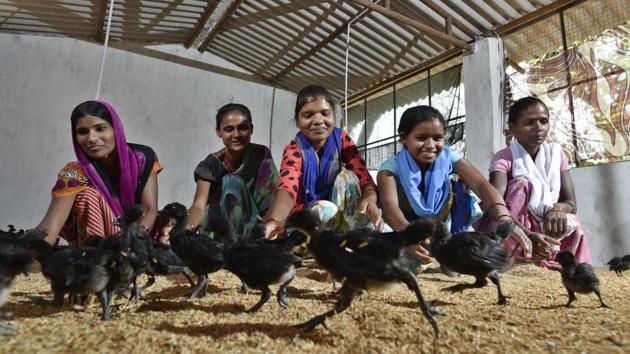
As part of a district-level initiative, Dantewada women are being given Kadaknath chicks at a fraction of the cost, and with the money made from rearing and selling them, they’re rain-proofing homes, paying for siblings to go to college and, in one case, buying a motorcycle. (Sanchit Khanna / HT Photo)
3/8
 View Photos in a new improved layout
Updated on Apr 17, 2018 2:46 PM
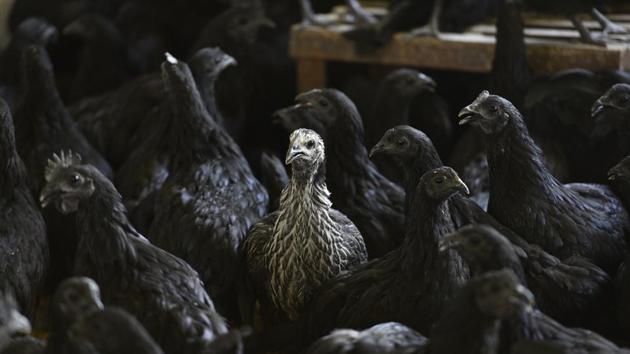
Native to Madhya Pradesh, the Kadaknath is also found in areas of Gujarat and Rajasthan. Its meat is considered a delicacy for its gamey flavour, unusual appearance and more recently for its high protein and low fat content. How the Kadaknath came to Dantewada’s aid is part of a larger story of change that now encompasses a free wi-fi zone, e-rickshaws, an education zone, and the district’s first BPO. (Sanchit Khanna / HT Photo)
4/8
 View Photos in a new improved layout
Updated on Apr 17, 2018 2:46 PM
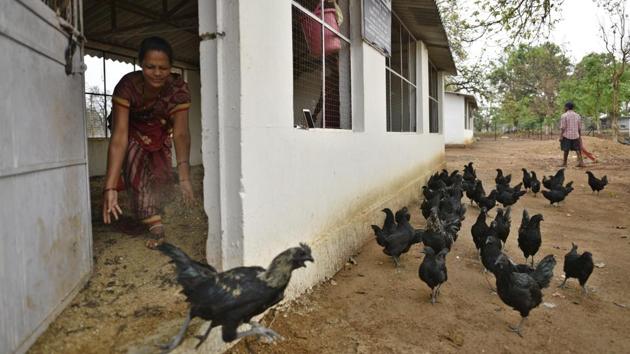
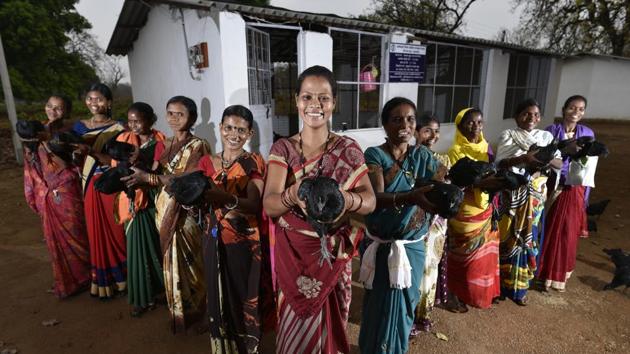
Asmati Arya, 33 is one of nearly 1,500 women raising Kadaknath in Dantewada, either individually or as part of the district’s 160 self-help groups. The women receive 21-day-old chicks from the district-level Krishi Vigyan Kendra (KVK). The district subsidises 90% of cost for the first batch of chicks, and 75% for the second. KVK helps with training and basic infrastructure like construction of the sheds and chicken feed. (Sanchit Khanna / HT Photo)
5/8
 View Photos in a new improved layout
Updated on Apr 17, 2018 2:46 PM
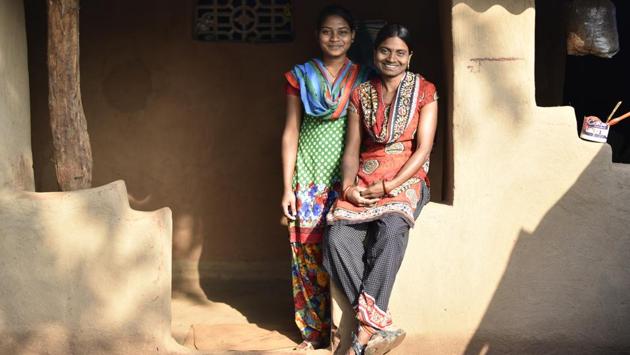
Most of the women are aged 18 to 45; high-school dropouts, former farm labourers, widows and single parents. Champa Atami (R), is both a dropout and former labourer. A new tin roof glints on her mud home. Where her parents – paddy farmers – couldn’t afford her school fees, she is now saving up so her sister Ranjeeta, the youngest of four siblings, can graduate. (Sanchit Khanna / HT Photo)
6/8
 View Photos in a new improved layout
Updated on Apr 17, 2018 2:46 PM
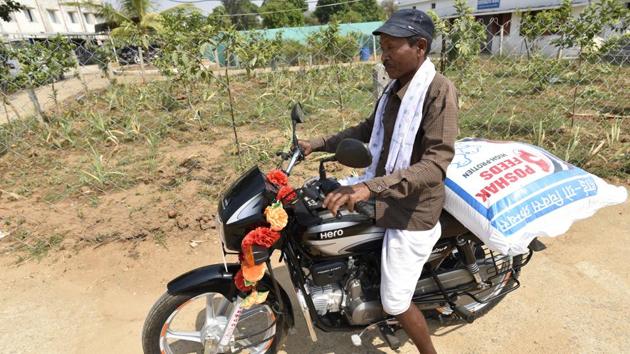
Sukalu Metam’s new motorcycle was made possible by his wife Jhunni Netham’s Kadaknath farm. Rearers get batches of 500 chicks that reach the target weight of 1.5 kg in three months and are sold to local traders or to a company tied with the district administration. A Kadaknath sells for Rs 400 to Rs 900 a piece — against Rs 150 to Rs 300 for a regular chicken. (Sanchit Khanna / HT Photo)
7/8
 View Photos in a new improved layout
Updated on Apr 17, 2018 2:46 PM
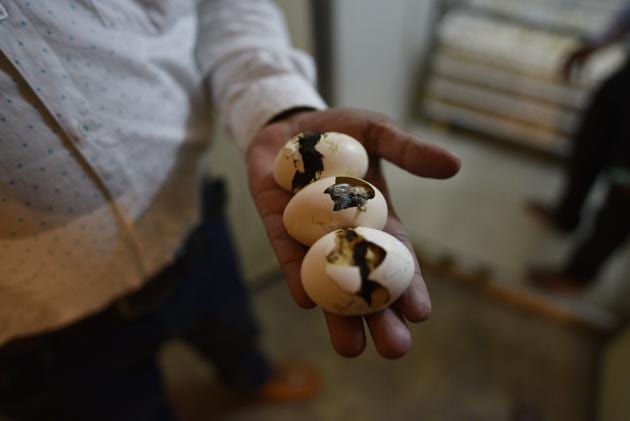
Until the Kadaknath, the main source of income was paddy, foraging for forest produce and poultry. This gave villages a per capita income of Rs 26,000 (as of 2006-07), putting the district in India’s bottom 50. Eventually, the subsidies will be phased out, farmers encouraged to buy incubators (the Kadaknath does not hatch its own eggs) and farming of the Kadaknath will, hopefully, take off in earnest. (Sanchit Khanna / HT Photo)
8/8
 View Photos in a new improved layout
Updated on Apr 17, 2018 2:46 PM


