
 E-Paper



Photos: Heritage City tag aspirations for Puducherry
Puducherry is gearing up to apply for a ‘heritage city’ tag. Once a French colony, the Union Territory’s interesting blend of Tamil and colonial architecture, is a draw for tourists. This intermingling of cultures, experiences and skills, dating back centuries, gives Puducherry its identity, reflected in its cuisine, customs, language and especially its architecture. It also gives the Puducherry government the reason to seek a UNESCO heritage tag for the Union Territory (UT), or at least parts of it. But are conservation efforts focused only on the built heritage?
Updated on: Mar 25, 2019 2:33 PM IST


Share via


Copy link

1/15
 View Photos in a new improved layout
Updated on Mar 25, 2019 2:33 PM
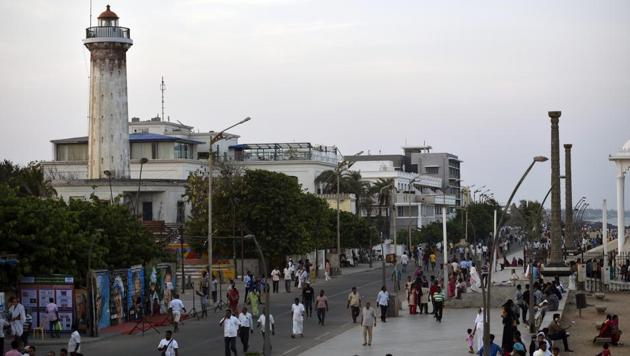
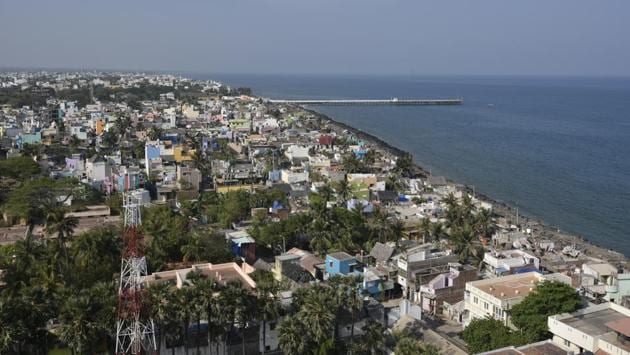
If Puducherry were human, its soul would be the Beach Road. Traffic is closed here between six in the evening and seven-thirty in the morning, and pedestrians claim the space. White faces mingle with brown. Not all the Indians are Tamils – the original inhabitants of Puducherry – just as not all the foreigners are tourists. Come Friday, visitors – often from nearby Chennai or Bengaluru – add to the mix. (Biplov Bhuyan/HT PHOTO)
2/15
 View Photos in a new improved layout
Updated on Mar 25, 2019 2:33 PM
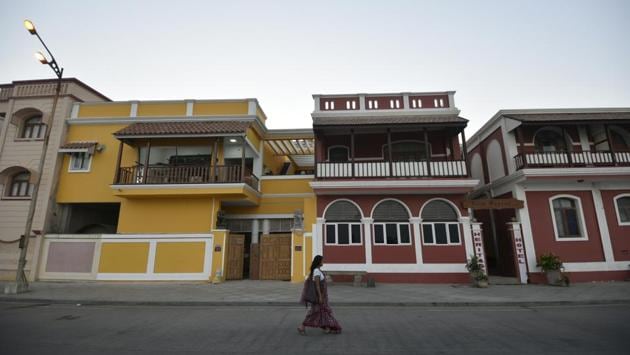
The preparation for the application for a ‘heritage city’ listing has been initiated. Helping the government is the local Indian National Trust for Art and Cultural Heritage (INTACH) chapter. “Puducherry is one of the most planned cities of India. That heritage has to be conserved,” said P Parthiban, secretary to government (tourism). “Our focus is on the ‘white town’, but there is also our own history to protect,” he says. (Biplov Bhuyan / HT Photo)
3/15
 View Photos in a new improved layout
Updated on Mar 25, 2019 2:33 PM
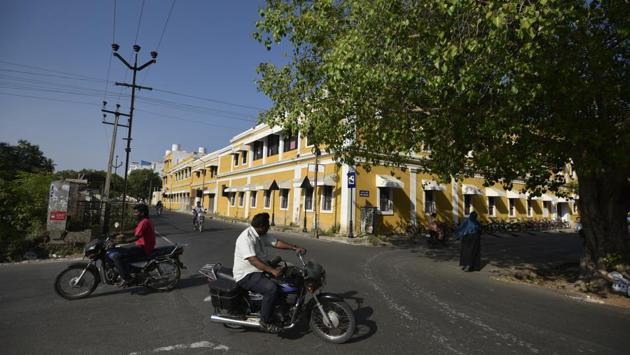
Though many European traders – including the Portuguese and Dutch – visited Puducherry from the 16th century onwards, what remains today is mostly a relic of its French past. The British razed Pondicherry to the ground when they gained control over it in 1761. When the French returned in 1763, they built what is known as the ‘boulevard town’ or old town. This is what the government now wants to promote as a heritage city. (Biplov Bhuyan / HT Photo)
4/15
 View Photos in a new improved layout
Updated on Mar 25, 2019 2:33 PM
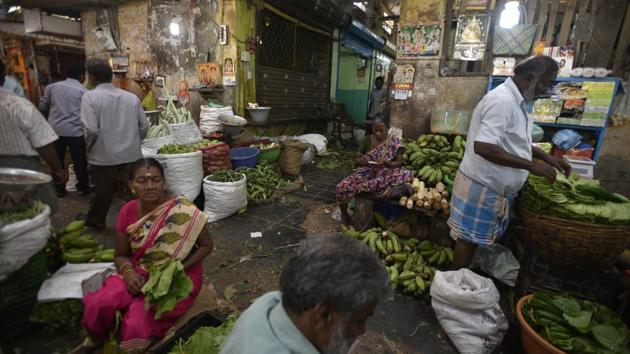
A storm water canal separates what were, during the French colonisation, the Tamil and the French quarters – popularly referred to as the ‘black’ and ‘white’ towns. Today, while locals simply refer to the old ‘black town’ as the Tamil side, ‘white town’ continues to be used for what was the French area. “It’s like its two different worlds,” said 49-year-old Paris resident Anne Marie, who was spending time learning Tamil. (Biplov Bhuyan / HT Photo)
5/15
 View Photos in a new improved layout
Updated on Mar 25, 2019 2:33 PM
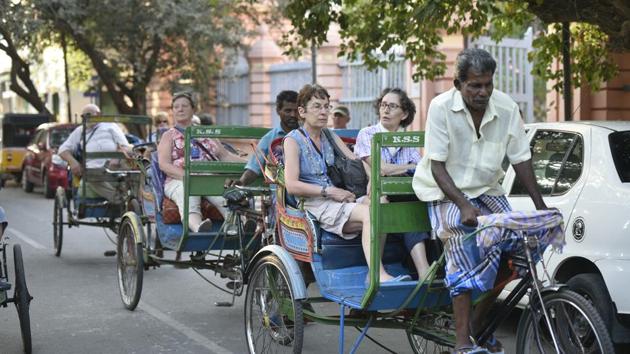
For Devangi Ramakrishnan, an urban designer from Mumbai, who has made Pondicherry her home for the past few years, the ‘white town’ is the romanticisation of a colonial fantasy. “You go to Google and you type Pondicherry and what come up is ‘white town’. This is ridiculous. We must change this nomenclature.” But locals say ‘white town’ is just a tourism gimmick. (Biplov Bhuyan / HT Photo)
6/15
 View Photos in a new improved layout
Updated on Mar 25, 2019 2:33 PM
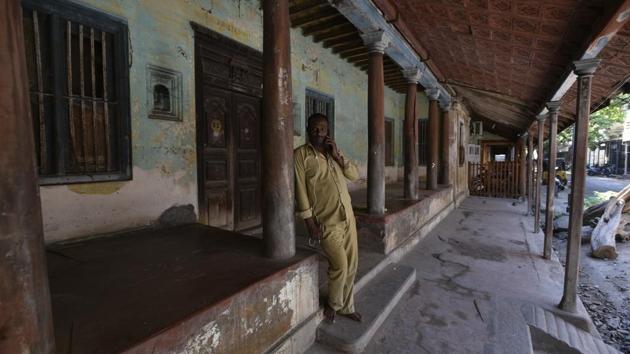
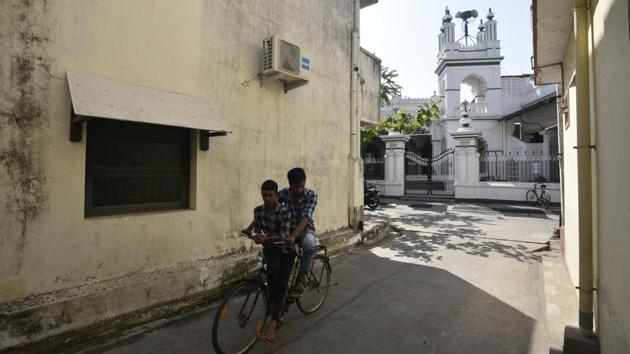
The two sides of the canal have starkly different characters. The Tamil side is busy, congested and much more modern. Time has changed it more than the ‘white town’. There are a handful of old Tamil houses, with their sitting-out area, wooden pillars and courtyards. But they are so scattered, lost even, among modern houses that it’s difficult to get a sense of an old town here. (Biplov Bhuyan / HT Photo)
7/15
 View Photos in a new improved layout
Updated on Mar 25, 2019 2:33 PM
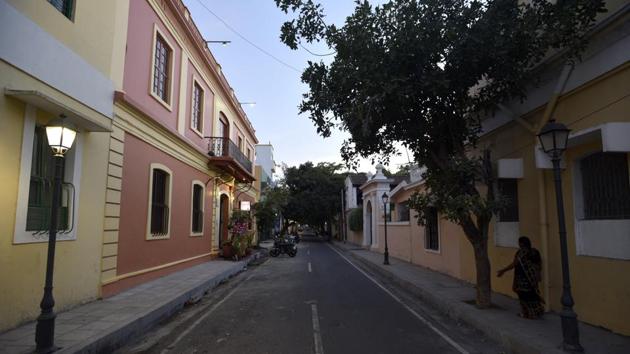
In comparison, the French part is still quaint, with more old houses lining the streets. “The real heritage of Pondicherry is not just the buildings, it’s also the way the town has been laid out, ” said Rafael Gastebois, a French conservation architect working on the government’s ‘smart city’ project, to help balance progress and better facilities for residents and tourists with heritage conservation. (Biplov Bhuyan / HT Photo)
8/15
 View Photos in a new improved layout
Updated on Mar 25, 2019 2:33 PM
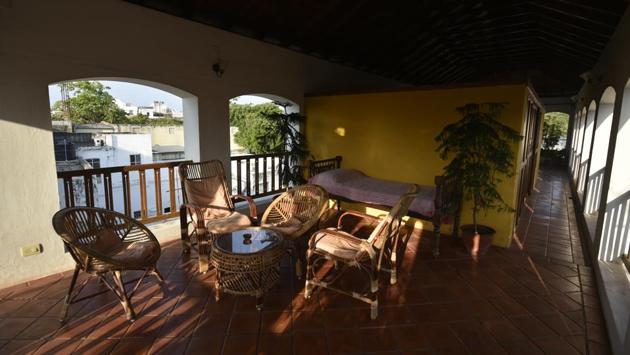
Originally the buildings were either white or yellow and red, because those were the only two colours available then to mix into the limewash, explained Gastebois. Many of the privately owned buildings in the French quarter have been turned into heritage hotels. But there are also new constructions – shops, bed-and-breakfasts – the inescapable frills of a once-secluded town finding its place on the tourist map. (Biplov Bhuyan / HT Photo)
9/15
 View Photos in a new improved layout
Updated on Mar 25, 2019 2:33 PM
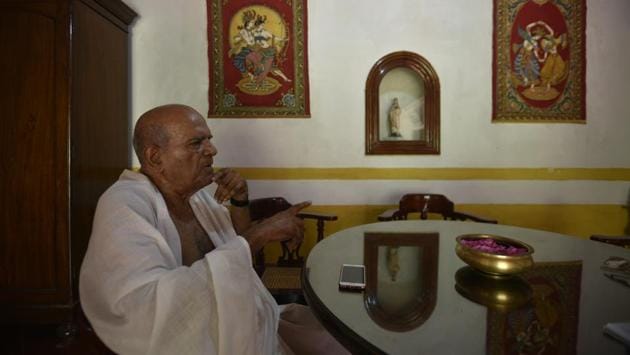
Once rickshawallahs in Pondicherry spoke French. Ninety-two-year-old retired judge, David Annoussamy, lives in a traditional old Tamil house on the erstwhile Indian side of Puducherry. And he often answers his phone with a “Oui”. What remains today - as a relic of the past - is a smattering of spoken French, some old street names and structures, a handful of French institutes and the colonial game of petanque. (Biplov Bhuyan / HT Photo)
10/15
 View Photos in a new improved layout
Updated on Mar 25, 2019 2:33 PM
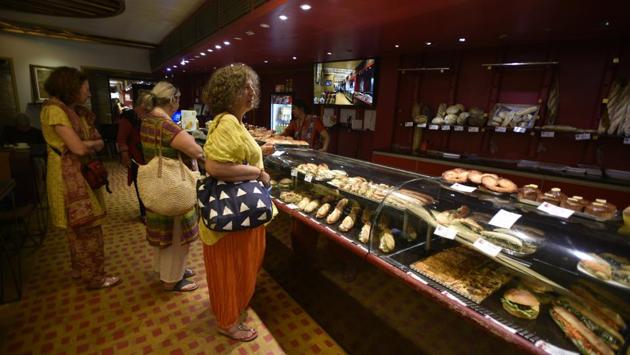
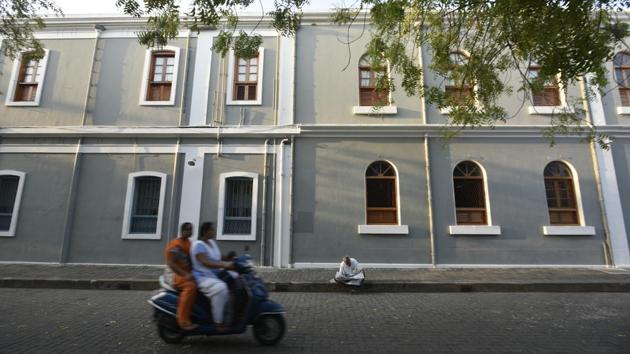
Pondicherry Cuisine - a blend of French and Tamil flavours- survives in some kitchens. “Many years have passed since the French left; Pondicherry has been assimilated into India,” said Annoussamy. It’s not just the French connect that’s fading. In 1910, Sri Aurobindo made Pondicherry his home. The Aurobindo Ashram was founded in 1926 and owns some of the old French buildings today (mostly coloured grey and white). (Biplov Bhuyan / HT Photo)
11/15
 View Photos in a new improved layout
Updated on Mar 25, 2019 2:33 PM
Over the years the Ashram has drawn followers from across the country and world. But many of them now miss the quiet and peace that once characterised Pondicherry. “I still remember the ’70s and ’80s. There was no traffic. Everybody was on bicycles. There were only three-four cars in Pondicherry then,” says Saikat Bhattacharya, who works at the Alliance Francaise, Puduchery. (Biplov Bhuyan / HT Photo)
12/15
 View Photos in a new improved layout
Updated on Mar 25, 2019 2:33 PM
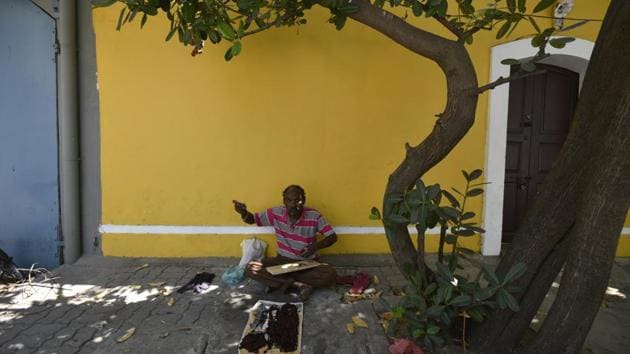
Part of the change is just the passage of time. The other is Pondicherry’s metamorphosis into a tourist hub. “One of the guidelines of the ‘smart city’ project is turning Pondicherry into a global tourist destination through heritage. But how can you promote heritage without taking into consideration the intangible heritage?” asks Nicolas Bautes, a French town planner, associated with the project. (Biplov Bhuyan / HT Photo)
13/15
 View Photos in a new improved layout
Updated on Mar 25, 2019 2:33 PM
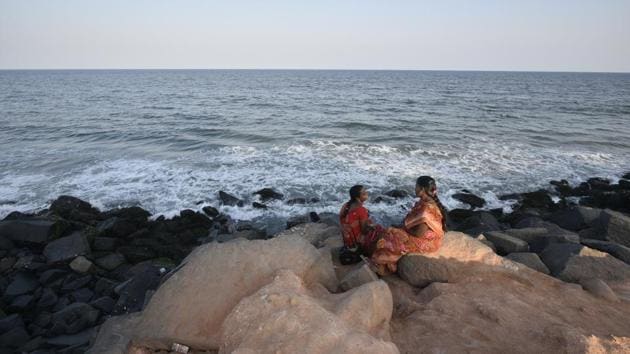
It’s the perception of the ‘French connect’ that probably makes many believe it to be a bit of a ‘foreign’ getaway within India. “It is a kind of freedom zone,” said Bhattacharya. “The local town (Tamil side) is quieter, because the whole world comes to the beach. Every day there are broken bottles everywhere,” he says. The ‘Heritage City’ tag, if and when it happens, is expected to bring in even more tourists. (Biplov Bhuyan / HT Photo)
14/15
 View Photos in a new improved layout
Updated on Mar 25, 2019 2:33 PM
The Union Territory is also covered under the central government’s Swadesh Darshan Scheme to promote theme based tourist circuits. One of the circuits that Puducherry is a part of, is the heritage circuit. Then there is the smart city project. No doubt, all this will further boost the economy of the UT - bringing in business and creating more job opportunities in allied industries such as hospitality. (Biplov Bhuyan / HT Photo)
15/15
 View Photos in a new improved layout
Updated on Mar 25, 2019 2:33 PM


