
 E-Paper



Photos: Seeking salvation in Varanasi’s homes for the dying
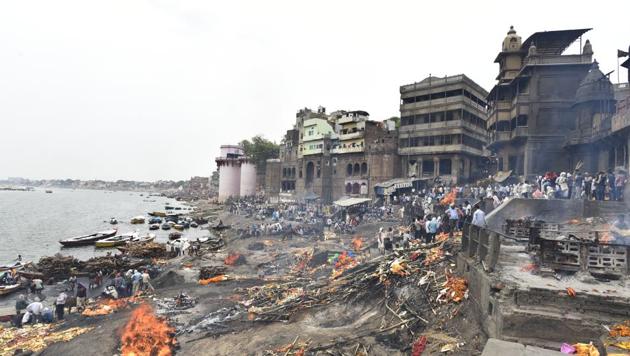
In Varanasi, establishments offer moksha-seekers a place to await death. It is said that dying in Kashi, brings liberation from the cycle of birth and rebirth. For centuries, this prospect is what has motivated the devout to go to Varanasi in their last days. And while in earlier times moksha-seekers would be indistinguishable among the crowd, living out their days in the homes of local residents, today most spend their days, or at times years at one of the many salvation homes in the older part of the holy city.
Updated on: Aug 6, 2018 11:44 AM IST


Share via


Copy link

1/11
 View Photos in a new improved layout
Updated on Aug 6, 2018 11:44 AM
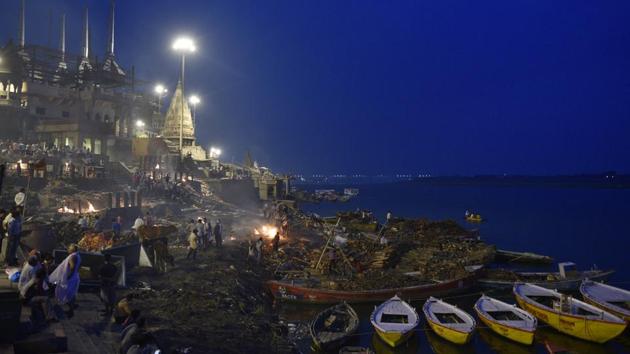
A view of Manikarnika Ghat at Varanasi in Uttar Pradesh. In the Hindu belief system, dying in Kashi, the older part of Varanasi city, along the banks of Ganga, is associated with moksha or mukti – liberation from the cycle of life and death. This is what has motivated the devout to go to Varanasi in their last days. Or last years, in many cases. (Sanchit Khanna / HT Photo)
2/11
 View Photos in a new improved layout
Updated on Aug 6, 2018 11:44 AM
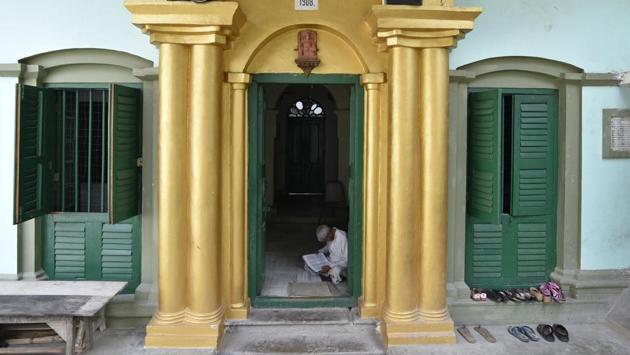
Mukti Bhavan, the lodge for salvation seekers with its wrought iron gate, arches and tin mailbox, is a a more than 60-year-old structure. In 1958, industrialist Vishnu Hari Dalmia set up the lodge for those who wanted to die in peace in Kashi. (Sanchit Khanna / HT Photo)
3/11
 View Photos in a new improved layout
Updated on Aug 6, 2018 11:44 AM
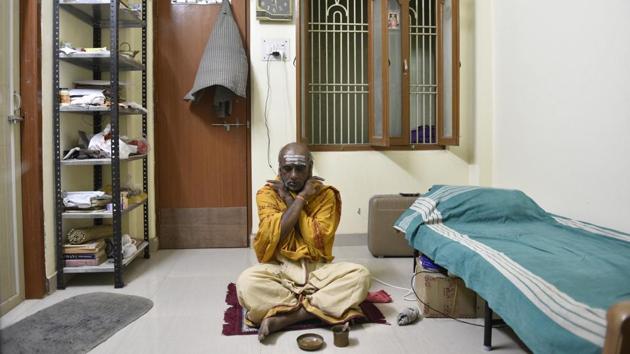
PSS Shastri came from Vijayawada, Andhra Pradesh to live in Kashivas Bhavan, awaiting death. Once upon a time, it was difficult to identify moksha seekers in Kashi. They were part of the crowd and were not segregated as visitors or guests in hotels where people check-in to die. (Sanchit Khanna / HT Photo)
4/11
 View Photos in a new improved layout
Updated on Aug 6, 2018 11:44 AM
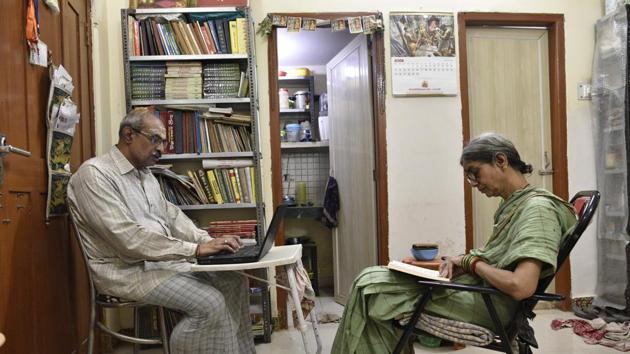
Kasivas Bhavan is also home to GVSP Kumar, 65, and his wife E Usha Bala, 62. Both of them opted for retirement from the Hyderabad education department in 2007, and became regular visitors at Kashi’s Annapurna temple. In 2015, they donated for one of the rooms in the then under-construction Bhavan. The donor had the option of taking possession of the room or giving it to the temple trust. They agreed to take the room. (Sanchit Khanna / HT Photo)
5/11
 View Photos in a new improved layout
Updated on Aug 6, 2018 11:44 AM
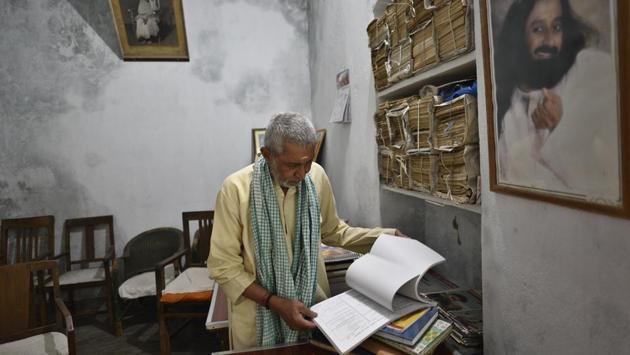
Bhairav Nath Shukla, has been Mukti Bhavan’s manager for the last 40 years. Shukla hosts people when they are close to death, allocating one of the Bhavan’s 10 rooms to them and supervises the transition from material to immortal. He has done this more than 12,000 times. Piles of hard-bound registers recording these details, smelling of seepage, sit stacked besides him. (Sanchit Khanna / HT Photo)
6/11
 View Photos in a new improved layout
Updated on Aug 6, 2018 11:44 AM
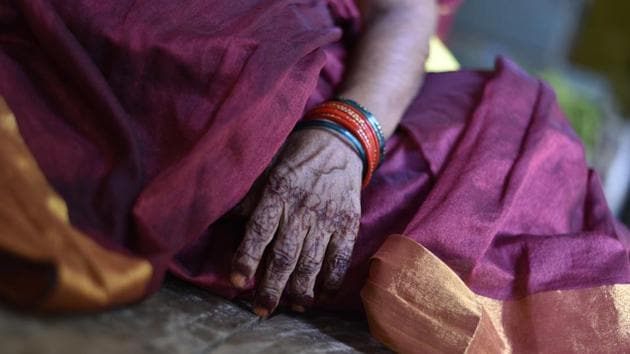
A detail of mehndi applied to hand of Saraswati Aggarwal who came to live in Mumukshu Bhavan. The stay at Mukti Bhavan is free. The visitor must have an attendant, and can take a room for a maximum of 15 days, after which Shukla decides whether to extend the stay or not depending on the person’s health and the availability of rooms. Other facilities meant for moksharthis have different terms and conditions. (Sanchit Khanna / HT Photo)
7/11
 View Photos in a new improved layout
Updated on Aug 6, 2018 11:44 AM
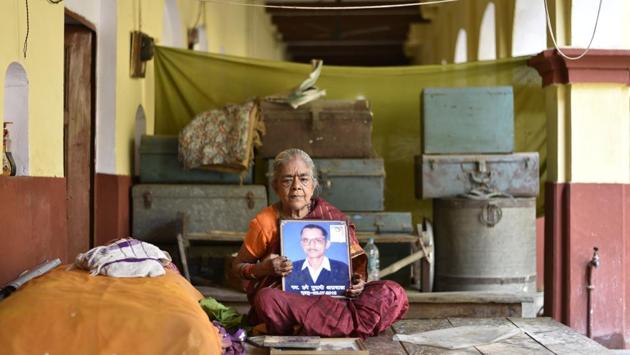
Saraswati Aggarwal holds a picture of her late husband at Mumukshu Bhavan. This landmark near the iconic Assi Ghat is spread over four acres. The campus has a secondary school, temple, resthouse for travellers and a 60-room section for salvation-seekers. (Sanchit Khanna / HT Photo)
8/11
 View Photos in a new improved layout
Updated on Aug 6, 2018 11:44 AM
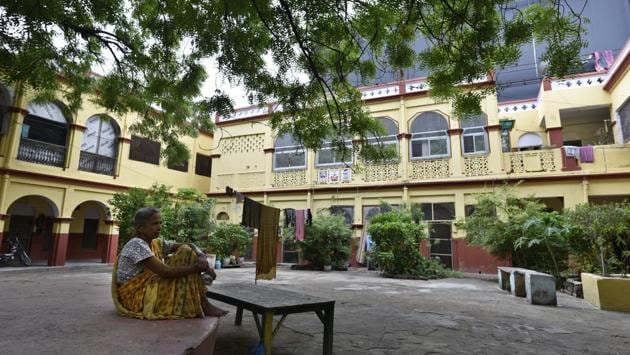
Veteran journalist Amitabh Bhattacharya, remembers neighbourhood families hosting salvation seekers – including beggars and widows – in their last days during earlier times as a common occurrence. “Salvation has become a business now. It suits both the moksharthi (salvation seeker) and the person offering the accommodation. What’s more, the same courtyard can be booked for marriage functions. What can you and I do?” (Sanchit Khanna / HT Photo)
9/11
 View Photos in a new improved layout
Updated on Aug 6, 2018 11:44 AM
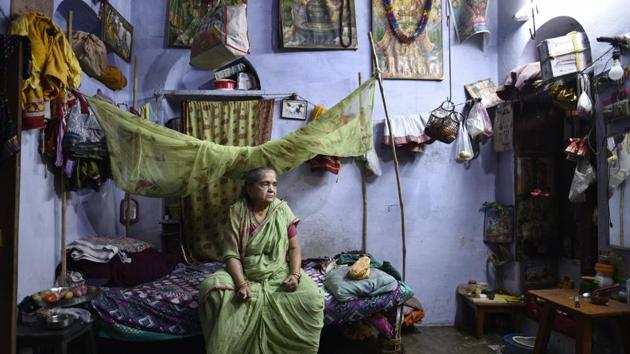
“This is my world,” said Gulabi Bai, surrounded by laminated posters of Shiva, Saraswati and Krishna pasted on a wall, a French window converted into a prayer section and clothes hanging on a line above the headrest. Fruits and vegetables, kept in polythene bags, hang on a thick string fastened to the walls. “Moksha is nowhere else but here,” she said in her sharp voice. (Sanchit Khanna / HT Photo)
10/11
 View Photos in a new improved layout
Updated on Aug 6, 2018 11:44 AM
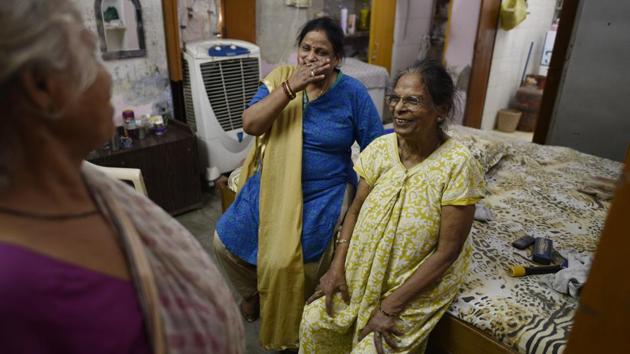
76-year-old Gayatri Devi (C) came from Delhi to live in Mumukshu Bhawan. “I came here expecting that there would be pooja path (prayers) all through the day, and it would be a conducive atmosphere to die in peace. Nothing of that nature happens here. Everybody is busy back biting,” Gayatri Devi complained. (Sanchit Khanna / HT Photo)
11/11
 View Photos in a new improved layout
Updated on Aug 6, 2018 11:44 AM


