
 E-Paper



Here’s all you need to know about the traditional Assamese ‘Gamosa’
Here are six things about the traditional Assamse Gamosa that you probably didn't know about.
Published on: Jul 26, 2022 5:19 PM IST


Share via


Copy link

1/7
 View Photos in a new improved layout
Published on Jul 26, 2022 5:19 PM
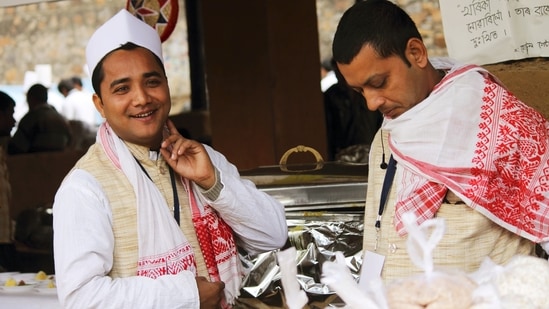
The traditional Assamese Gamosa/Gamusa or Gamucha is one of the most recognisable cultural symbols of Assam. It is a white rectangular piece of cloth with embroidered red borders. While it has a lot of uses, it is mostly used as an article presented to guests, elders, family or friends on special occasions as a sign of respect. No important ceremony or event is complete without the Gamosa. (Pexels)
2/7
 View Photos in a new improved layout
Published on Jul 26, 2022 5:19 PM
There are a total of nine types of Gamosas used for different occassions. Uka Gamosa, Phulam Gamosa, Bihuwan Gamosa, Tiyoni Gamosa, Pani Gamosa, Anakota Gamosa, Telosh Gamusa, Jor Gamosa and Xadharon Gamosa. (Pinterest)
3/7
 View Photos in a new improved layout
Published on Jul 26, 2022 5:19 PM
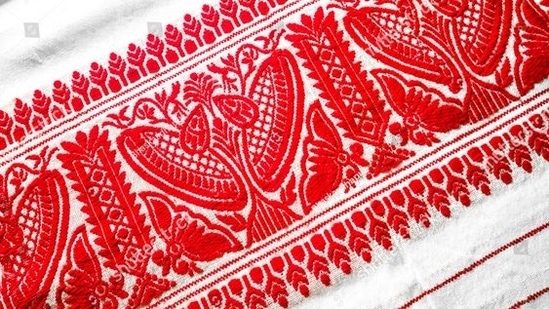
The red border is called the "anchu" and is believed to be the sign of Ahom strength. "Anchu” was derived from a certain red flower which was also known as “anchu”. (Pinterest)
4/7
 View Photos in a new improved layout
Published on Jul 26, 2022 5:19 PM
The world ‘Gamusa’ originated from the Sanskrit word “gatro Marjuni," which translates to 'a cloth to wipe the body.' (Pinterest)
5/7
 View Photos in a new improved layout
Published on Jul 26, 2022 5:19 PM
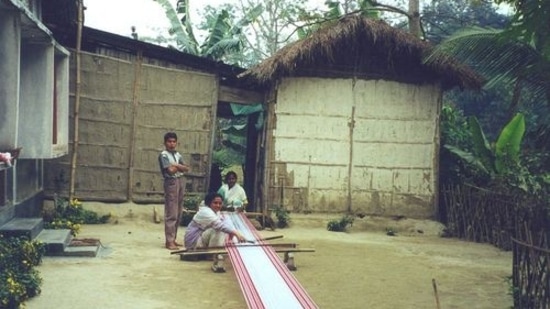
It is rectangle in shape and around 2 feet in width and 4 feet in height. While most Gamosas are made of cotton, few utilized in special occasions are made from Silk too. (Pinterest)
6/7
 View Photos in a new improved layout
Published on Jul 26, 2022 5:19 PM
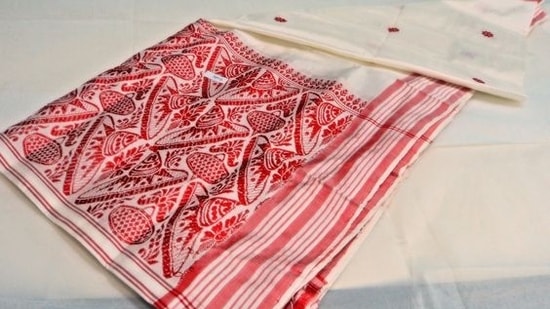
During the Ahom King Syo-Kha-Pha's rule, this unique piece of cloth was worn by men as a head gear. (Pinterest)
7/7
 View Photos in a new improved layout
Published on Jul 26, 2022 5:19 PM


