
 E-Paper



Meet the original Kala Ghoda, and other colonial rejects cast in stone
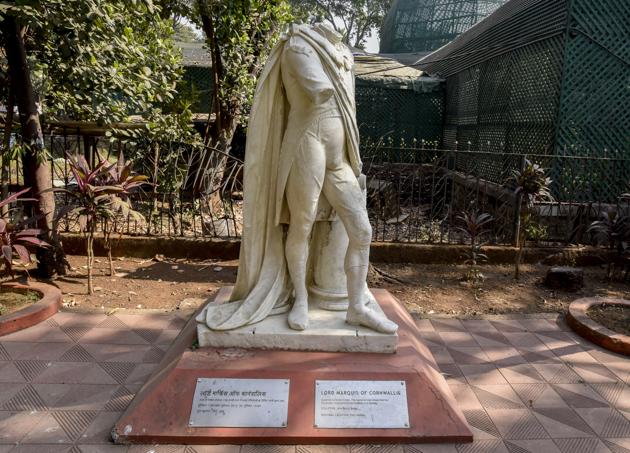
This statue of Elphinstone Charles, the first Marquis of Cornwallis and two-time Governor General of India, once stood at the Elphinstone Circle in south Mumbai. It was transferred to the grounds of the Bhau Daji Lad museum in 1965. (Kunal Patil / HT Photos; Text by Dipanjan Sinha)
Updated on: Jan 05, 2017 8:31 PM IST

Share via


Copy link

1/6
 View Photos in a new improved layout
Updated on Jan 05, 2017 8:31 PM
This statue of Elphinstone Charles, the first Marquis of Cornwallis and two-time Governor General of India, once stood at the Elphinstone Circle in south Mumbai. It was transferred to the grounds of the Bhau Daji Lad museum in 1965. (Kunal Patil / HT Photos; Text by Dipanjan Sinha)
2/6
 View Photos in a new improved layout
Updated on Jan 05, 2017 8:31 PM
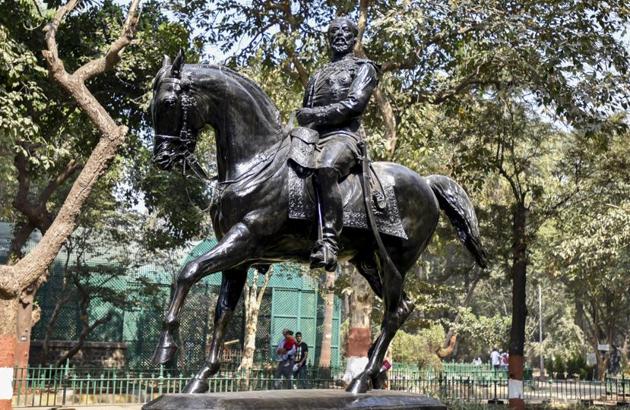
There’s a secret graveyard behind Mumbai’s Bhau Daji Lad museum. It’s where colonial relics have been buried in full view, for over 50 years. This is a bronze statue of Albert Edward, then Prince of Wales and future King Edward VII of Britain, atop a horse. Sculpted by Joseph Edgar Boehm, it stands 16.7-ft tall and was removed from the junction of Esplanade Road and Rampart Row in the Kala Ghoda art district, in 1965. (Kunal Patil / HT photo)
3/6
 View Photos in a new improved layout
Updated on Jan 05, 2017 8:31 PM
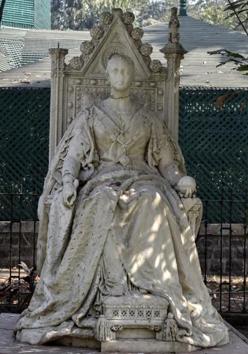
A statue of Queen Victoria with a missing nose sits near the Kala Ghoda. This statue of the ‘Empress of India’, executed by Matthew Noble, was presented to the museum by Maharaja Khanderao Gaikwad, along with a tall canopy, in 1869. In August 1965, the statue was moved following an attack by vandals. Most of the statues were brought here in the mid-1960s, when symbols of colonialism were being removed from across the city. (Kunal Patil / HT photo)
4/6
 View Photos in a new improved layout
Updated on Jan 05, 2017 8:31 PM
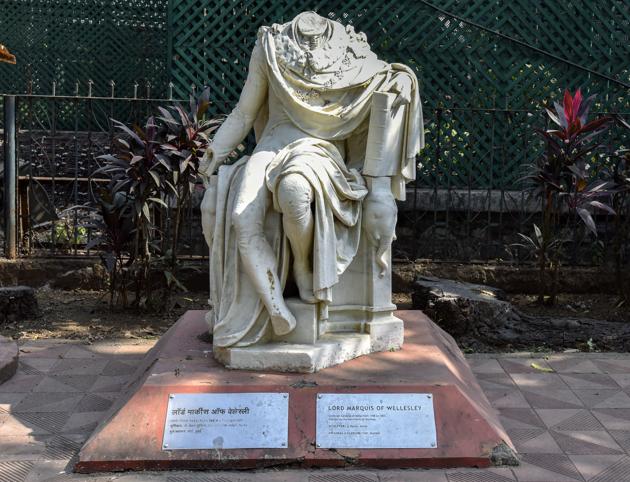
When the walls of the original Fort were demolished, this statue of Richard Colley, first Marquis of Wellesley and former governor general of India, was moved to Elphinstone Circle. From there it was moved to the Town Hall (now the Asiatic Library) and finally to the grounds of the museum in 1965. “We maintain the statues in the way they were brought here. The idea of restoring them was floated a few years ago but the British Council decided against it as they consider the statues in their present state to be representative of a time in history. I agree with that stand. In fact, the museum which was established during the British colonial era seems a perfect place for these damaged statues,” says Tasneem Zakaria Mehta, director of the Bhau Daji Lad museum. (Kunal Patil / HT photo)
5/6
 View Photos in a new improved layout
Updated on Jan 05, 2017 8:31 PM
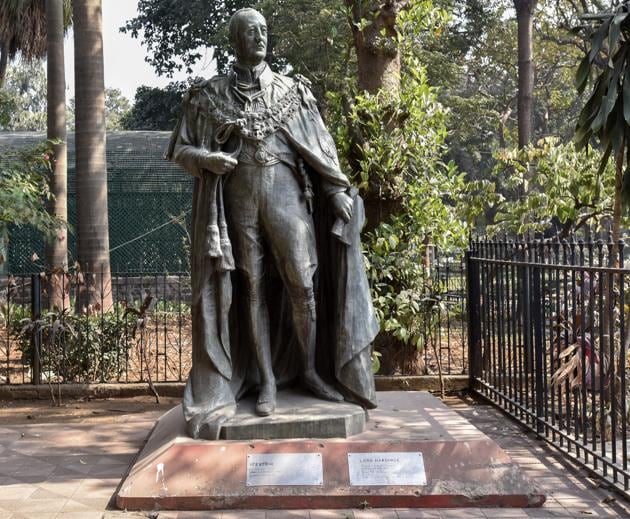
This bronze statue by Herbert Hampton, of Lord Hardinge of Penshurst, viceroy of India from 1910-16, stood at Apollo Bunder, looking out over the harbour. (Kunal Patil / HT photo)
6/6
 View Photos in a new improved layout
Updated on Jan 05, 2017 8:31 PM


