
 E-Paper



A blessing or a curse: The true cost of Laos’ banana plantations
Several Chinese plantation owners and managers expressed frustration at the government ban, which forbids them from growing bananas after their leases expire.They said the use of chemicals was necessary, and disagreed that workers were falling ill because of them.
Updated on: May 14, 2017 4:35 PM IST

Share via


Copy link

1/12
 View Photos in a new improved layout
Updated on May 14, 2017 4:35 PM
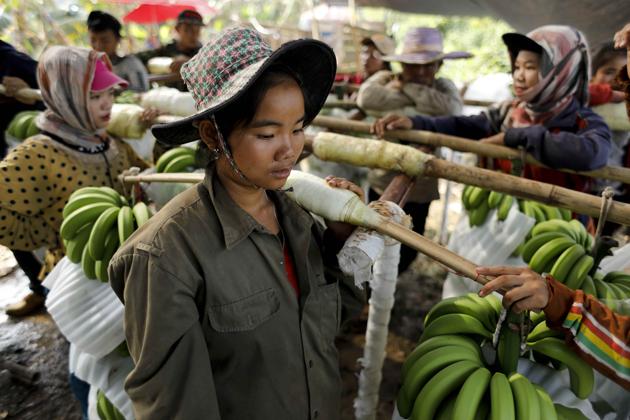
A woman waits to deliver her harvest in a packing line at a banana plantation operated by a Chinese company in the province of Bokeo in Laos . Several Chinese plantation owners and managers expressed frustration at the government ban, which forbids them from growing bananas after their leases expire.They said the use of chemicals was necessary, and disagreed that workers were falling ill because of them. (Jorge Silva / REUTERS)
2/12
 View Photos in a new improved layout
Updated on May 14, 2017 4:35 PM
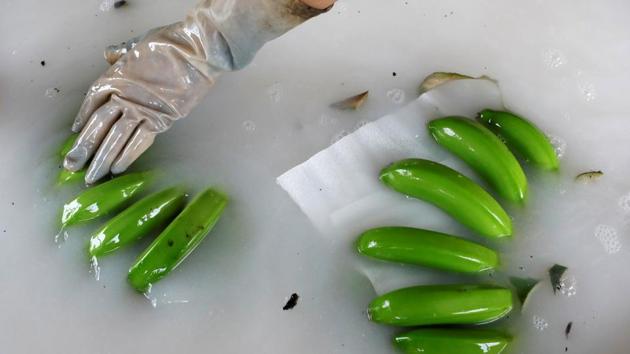
A worker plunges bananas into a chemical bath at a packing line at a banana plantation operated by a Chinese company. (Jorge Silva / REUTERS)
3/12
 View Photos in a new improved layout
Updated on May 14, 2017 4:35 PM
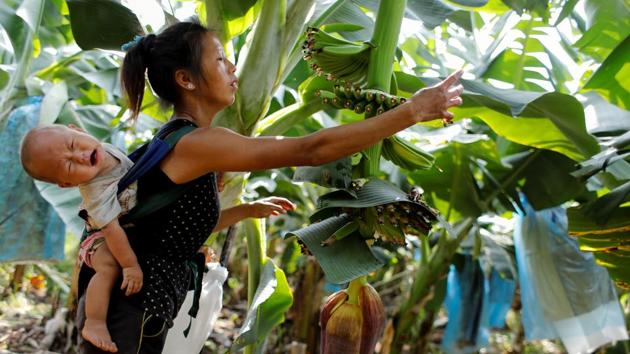
On Keo Wa, 25, carries her 9-month-old baby while working at a banana plantation . (Jorge Silva / REUTERS)
4/12
 View Photos in a new improved layout
Updated on May 14, 2017 4:35 PM
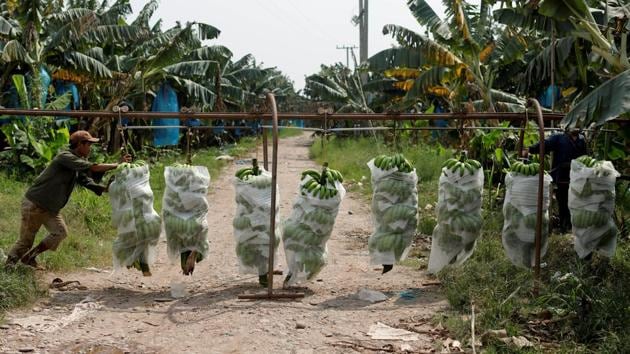
China is the biggest foreign investor in Laos, a landlocked country of 6.5 million people, with over 760 projects valued at about $6.7 billion, according to Chinese state-run media. (Jorge Silva / REUTERS)
5/12
 View Photos in a new improved layout
Updated on May 14, 2017 4:35 PM
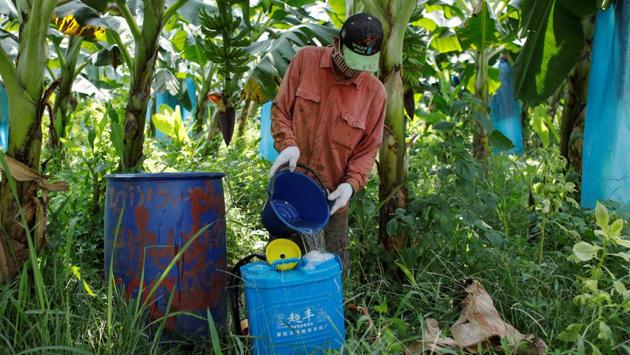
A man prepares pesticide before spaying it at a banana plantation. In the ensuing years, Lao banana exports jumped ten-fold to become the country’s largest export earner. Nearly all of the fruit is sent to China. (Jorge Silva / REUTERS)
6/12
 View Photos in a new improved layout
Updated on May 14, 2017 4:35 PM
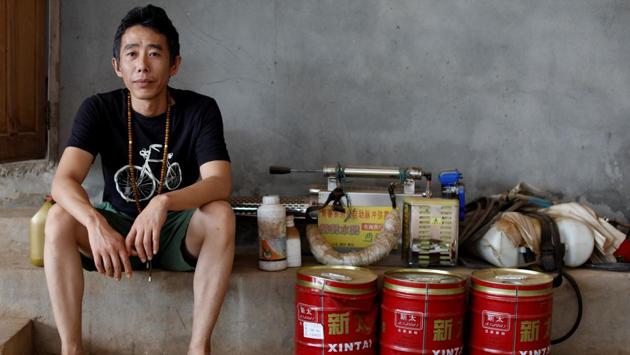
Zhang Jianjun, 40, co-owner of the Lei Lin banana plantation sits outside his house . (Jorge Silva / REUTERS)
7/12
 View Photos in a new improved layout
Updated on May 14, 2017 4:35 PM
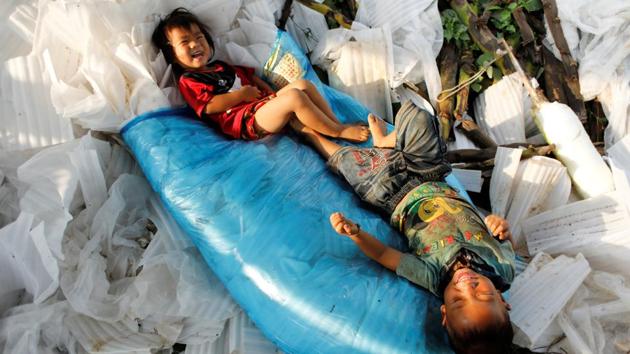
Children play next to a packing line at a banana plantation. (Jorge Silva / REUTERS)
8/12
 View Photos in a new improved layout
Updated on May 14, 2017 4:35 PM
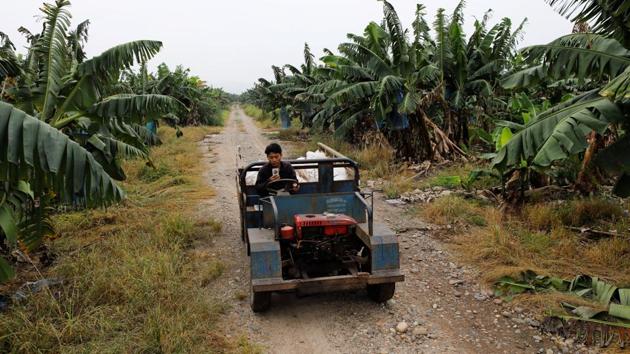
For impoverished, hill-dwelling minorities such as the Hmong or Khmu, the banana rush meant better wages.At harvest time, they can earn the equivalent of at least $10 a day and sometimes double that, a princely sum in a country where the average annual income was $1,740 in 2015, according to the World Bank. (Jorge Silva / REUTERS)
9/12
 View Photos in a new improved layout
Updated on May 14, 2017 4:35 PM
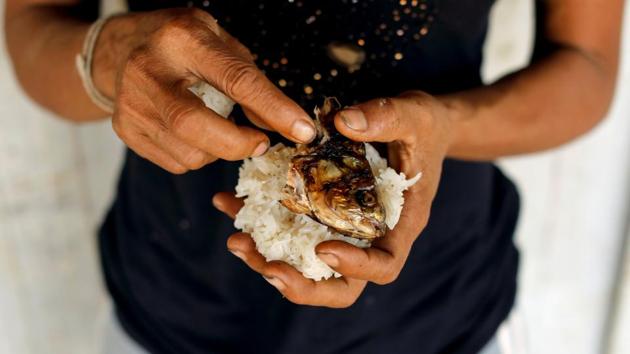
A banana plantation worker holds food in her hand during a day off at a plantation . Most Chinese planters grow the Cavendish variety of banana which is favored by consumers but susceptible to disease. (Jorge Silva / REUTERS)
10/12
 View Photos in a new improved layout
Updated on May 14, 2017 4:35 PM
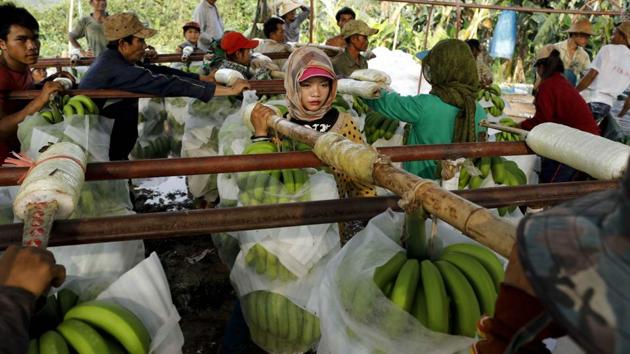
Some banana workers grow weak and thin or develop rashes, said Phonesai Manivongxai, director of the Community Association for Mobilizing Knowledge in Development (CAMKID), a non-profit group based in northern Laos. (Jorge Silva / REUTERS)
11/12
 View Photos in a new improved layout
Updated on May 14, 2017 4:35 PM
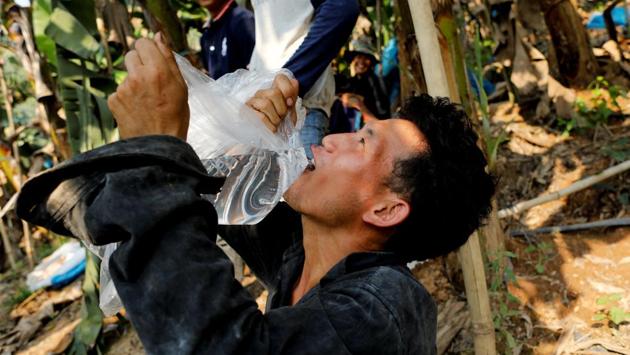
Most pesticides come from China or Thailand and bear instructions and warnings in those countries’ languages, Reuters learned. Even if the labeling was Lao, some Hmong and Khmu are illiterate and can’t understand it. (Jorge Silva / REUTERS)
12/12
 View Photos in a new improved layout
Updated on May 14, 2017 4:35 PM


