
 E-Paper



Photos: Khomeini’s legacy looms over Iran, 30 years after his death
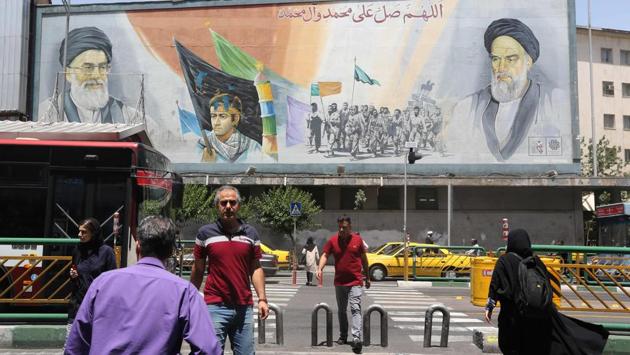
Thirty years ago millions of mourners crowded the streets of Tehran for the funeral of Ayatollah Ruhollah Khomeini, and today the founder of the Islamic republic remains a guiding figure in Iran. The image of the black-turbaned cleric who brought down the monarchy in 1979 stares out at people across the country, from hotel lobbies and the front of stadiums to hospitals and banknotes. In life Khomeini was recognised by his followers as the "Imam", leader of the Shiite community, and decades after his death he remains enshrined in the Iranian constitution as "the great source of imitation".
Updated on: Jun 04, 2019 11:43 AM IST

Share via


Copy link

1/9

 View Photos in a new improved layout
Updated on Jun 04, 2019 11:43 AM
Ayatollah Ruhollah Khomeini salutes his followers in the Iranian capital Tehran on September 26, 1980. “His key legacy is the strong notion of independence, sovereignty and resilience against foreign hegemony and imperialism that still continues to exist among Iranians,” Mohammad Marandi, head of the American studies department at Tehran University, told AFP. (Stig Nilsson / AFP File)
2/9
 View Photos in a new improved layout
Updated on Jun 04, 2019 11:43 AM
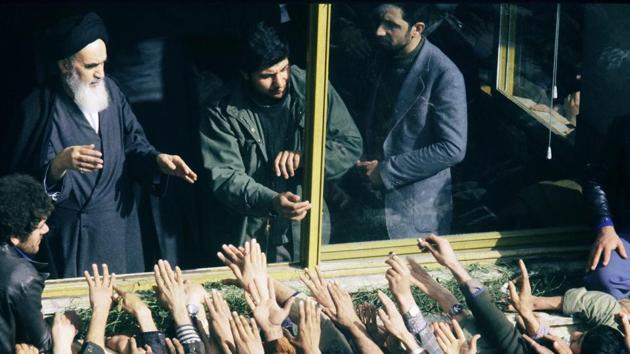
Crowds greet Ayatollah Khomeini (L) in Tehran, after his return from exile in France on February 2, 1979. Born in 1902, Khomeini died on 3 June 1989 following a battle with cancer just over 10 years after he led the Islamic revolution that swept Iran’s last shah Mohammad Reza Pahlavi from power. (Gabriel Duval / AFP File)
3/9
 View Photos in a new improved layout
Updated on Jun 04, 2019 11:43 AM
An Iranian fighter sits on the back of an anti-aircraft artillery as another climbs a captured armoured personnel carrier in Faw during the Iran-Iraq war on February 17, 1986. Khomeini’s rule saw a decade of tensions with the “Great Satan” Washington and the brutal 1980-88 war unleashed by Saddam Hussein’s Iraq. Khomeini’s teaching was centred on the defence of Islam and a fierce rejection of Western modernity and imperialism. (AFP File)
4/9
 View Photos in a new improved layout
Updated on Jun 04, 2019 11:43 AM
An image of Khomeini is displayed on the window of a shop, in Tehran on January 1, 1979. He developed the doctrine of Velayat-e faqih (the guardianship of the jurist) stating that power should be in the hands of a supreme spiritual leader chosen to direct both the state and believers. The theocratic principle forms the cornerstone of the Iranian system that combines elected institutions with religious control. (AFP)
5/9
 View Photos in a new improved layout
Updated on Jun 04, 2019 11:43 AM
Ayatollah Khomeini in a Tehran hospital surrounded by his son Ahmed and three of his grandchildren on February 1, 1980. “Velayat-e Faqih is not a concept that he created. It existed in Shiite jurisprudence over many centuries,” said Marandi. “What was new was that he actually was able to overthrow a Western-backed dictatorship in the country and establish an Islamic republic” that allowed Iran to put the “theory into practice”. (AFP File)
6/9
 View Photos in a new improved layout
Updated on Jun 04, 2019 11:43 AM
A huge crowd tries to touch the container covering the Khomeini’s tomb on June 7, 1989. While Khomeini has become a major historic figure, he continues to play a central role in Iranian discourse. “The Ayatollah’s charisma is kept alive in the political debate,” Clement Therme, an Iran specialist at the International Institute of Strategic Studies said. (Christophe Simon and Pascal George / AFP File)
7/9
 View Photos in a new improved layout
Updated on Jun 04, 2019 11:43 AM
The podium (R) where Khomeini used to address his followers, in Tehran’s Jamaran neighbourhood. “All the political elites of the Islamic republic claim to be his heirs and his words are used in the debate to score points off opponents,” Therme said. The splits that run through the country’s rulers are fed by “different interpretations” of Khomeini’s thoughts. (Atta Kenare / AFP)
8/9
 View Photos in a new improved layout
Updated on Jun 04, 2019 11:43 AM
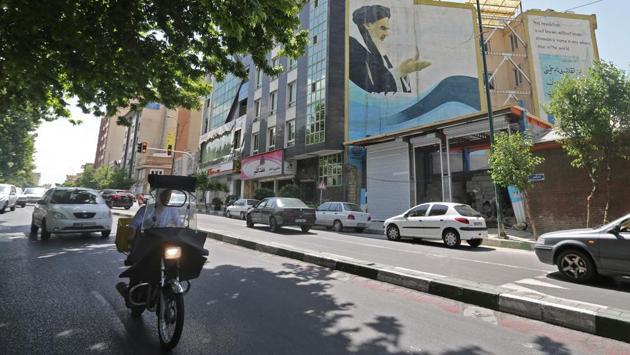
A mural painting of Ayatollah Khomeini covers the wall of a building in Tehran. On the one side are reformists “who insist on the popular elected legitimacy of institutions” and on the other are the conservatives focused on “divine legitimacy”, Therme said. While the disputes may rage over Khomeini’s political legacy there is little doubt that he transformed Iran and remains for many in the country a major authority. (Atta Kenare / AFP)
9/9
 View Photos in a new improved layout
Updated on Jun 04, 2019 11:43 AM


