
 E-Paper



Photos: 30 years since the removal of Checkpoint Charlie in Germany
At once a symbol of Eastern totalitarianism, Western defiance, a source of tension and a place of hope --Checkpoint Charlie was one of the few pockets that allowed to and fro passage in the span of the Berlin Wall. June 22 marked thirty years to the day it was dismantled as East and West Germany reunified in 1990. Decades later, it remains a focal point in the history of the country and is a landmark that immediately harkens to the Cold War era, if only with its period re-enactors and vintage souvenir shops that have replaced tanks and armed soldiers of yore.
Updated on: Jun 23, 2020 7:10 PM IST


Share via


Copy link

1/8
 View Photos in a new improved layout
Updated on Jun 23, 2020 7:10 PM
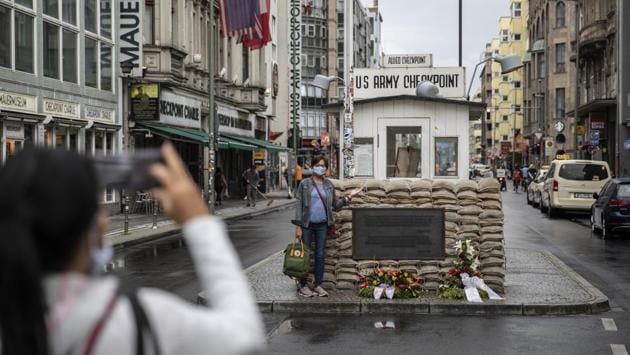
A tourist has their picture taken at Checkpoint Charlie on June 19 in Berlin, Germany. Yesterday marked the 30th anniversary of the removal of the Checkpoint Charlie border crossing between the communist East and capitalist West Berlin during the Cold War. (Maja Hitij / Getty Images)
2/8
 View Photos in a new improved layout
Updated on Jun 23, 2020 7:10 PM
A man walks past a board depicting a scene from times when Germany was split between Soviet and Allied sectors, displayed at the Checkpoint Charlie landmark on June 22-- the day of the 30th anniversary of its removal. (John MacDougall / AFP)
3/8
 View Photos in a new improved layout
Updated on Jun 23, 2020 7:10 PM
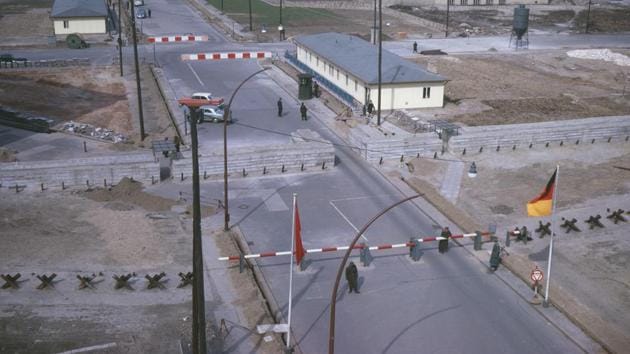
View of the Checkpoint Charlie border crossing between West and East Berlin, Germany, sometime in the 1960s. A designated crossing for foreigners and allied troops, Checkpoint Charlie was also used for prisoner swaps between East and West. Thirty years on, the site has been turned into a tourist trap and authorities are now mulling its future. (Hulton Archive / Getty Images)
4/8
 View Photos in a new improved layout
Updated on Jun 23, 2020 7:10 PM
People at the Checkpoint Charlie landmark on June 22. While named so, there never was a Charlie. The checkpoint was named after the letter C in NATO’s phonetic alphabet. Checkpoint Alpha, the largest and most important border crossing, was located at Helmstedt between Berlin and Hanover, while Checkpoint Bravo was at Dreilinden in southwestern Berlin. (John MacDougall / AFP)
5/8
 View Photos in a new improved layout
Updated on Jun 23, 2020 7:10 PM
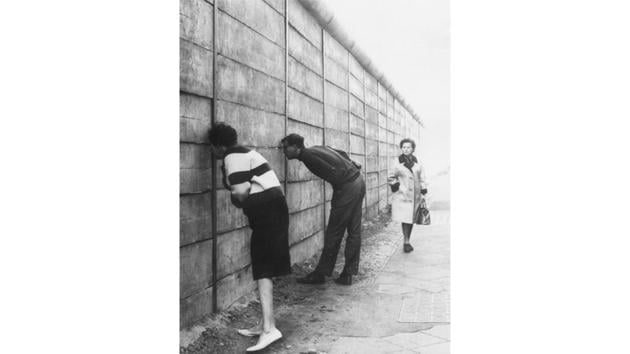
West Berliners peer through the Berlin Wall into the Eastern sector near Check Point Charlie, c. 1966. Checkpoint Charlie was the site of various daring attempts by East Germans to escape to the West, since it was one of the only gaps in the mass of concrete and barbed wire that made up the Berlin Wall. (Keystone / Getty Images)
6/8
 View Photos in a new improved layout
Updated on Jun 23, 2020 7:10 PM
Every Berliner knows this face and millions of tourists have taken their picture with him. The soldier in the picture at the site of Checkpoint Charlie today is a former US army tuba player called Jeff Harper. He was 22 when he was photographed as part of a series to commemorate the last Allied soldiers in Berlin in 1994. (Maja Hitij / Getty Images)
7/8
 View Photos in a new improved layout
Updated on Jun 23, 2020 7:10 PM
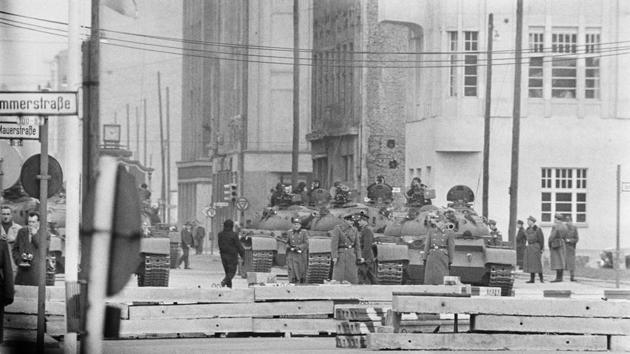
Soviet tanks and troops at Checkpoint Charlie in February 1961. Later that year, combat-ready US and Soviet tanks stood similarly facing each other in one of the tensest confrontations of the Cold War. Deployed as part of a border dispute, tanks faced off just 100 metres apart, their engines rumbling until US president John F Kennedy and Soviet leader Nikita Khrushchev finally agreed to withdraw. (Daily Express / Hulton Archive / Getty Images)
8/8
 View Photos in a new improved layout
Updated on Jun 23, 2020 7:10 PM


