
 E-Paper



Photos: A restoration centre in Peru keeps Andean art alive
Treasures from Peru's bygone golden age which include sculptures of decapitated Roman Catholic saints, dismembered angels and charred paintings from remote churches, all find their way, to a studio at the Ministry of Culture’s Restoration Centre in Cuzco where more than 50 conservationists in surgical masks and armed with modern technology like X-ray and ultraviolet machines uncover images that over time have faded away on canvases that average 300 years old. The 15-year-old centre has already made major contributions to the country's cultural heritage by rescuing more than 500 paintings, sculptures, and ceramic pieces.
Updated on: Jul 05, 2018 1:37 PM IST

Share via


Copy link

1/9

 View Photos in a new improved layout
Updated on Jul 05, 2018 1:37 PM
An art restorer works on a 17th century painting in a studio at the Ministry of Culture’s Restoration Centre in Cuzco, Peru. Sculptures of decapitated Roman Catholic saints, dismembered angels and charred paintings from remote churches across the spine of the Andes -- all find their way here, where a team of dedicated specialists mends them after centuries of neglect. (Martin Mejia / AP)
2/9
 View Photos in a new improved layout
Updated on Jul 05, 2018 1:37 PM
Cuzco was the capital of the ancient Inca Empire, and between the 16th and 18th centuries it became an epicentre for Catholic-themed art under Spanish colonizers. Paintings from the “Cuzco School” reflect a rich blend of European influences with indigenous imagery and homegrown artistic techniques that later spread throughout South America. (Martin Mejia / AP)
3/9
 View Photos in a new improved layout
Updated on Jul 05, 2018 1:37 PM
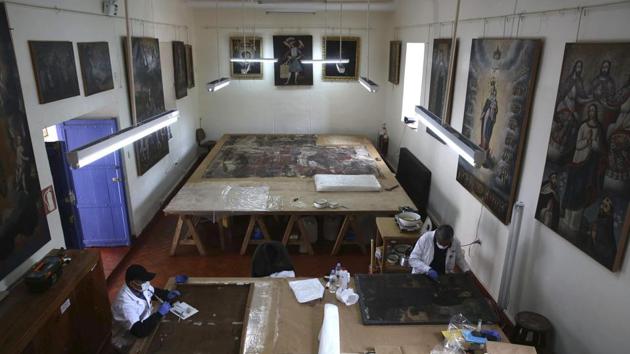
This facility, opened in 2003, claims to be the only one in Peru and has already made contributions to the country’s cultural heritage. Between 2015 and 2017, it rescued more than 500 paintings, sculptures, and ceramic pieces. This old colonial palace high in the Andes, crowded with treasures from Peru’s golden age, feels more like an emergency room than a workshop for recovering artwork. (Martin Mejia / AP)
4/9
 View Photos in a new improved layout
Updated on Jul 05, 2018 1:37 PM
A restorer uses a photo as a guide for a painting. “They are like patients suffering terminal cancer that we are bringing back to life,” said Erwin Castilla, head of canvas conservation. The centre’s teams of more than 50 conservationists wear surgical masks and use technologies like X-ray and ultraviolet machines to uncover images that time has faded away. (Martin Mejia / AP)
5/9
 View Photos in a new improved layout
Updated on Jul 05, 2018 1:37 PM
The workshop struggles to run on a shoestring budget of $700,000 a year, said Nidia Perez, an art historian who heads the workshop. But the team never loses sight of its mission. (Martin Mejia / AP)
6/9
 View Photos in a new improved layout
Updated on Jul 05, 2018 1:37 PM
In this meticulous workshop, conservationists keep detailed records of each piece as if they were a patient’s medical chart. A board of experts then pores over the records to determine how to bring the works back to life. (Martin Mejia / AP)
7/9
 View Photos in a new improved layout
Updated on Jul 05, 2018 1:37 PM
The centre receives calls for help from small churches in remote Andean villages that have existed for centuries, and many of the paintings have endured punishing rain, sun, mold, nibbling moths and even flawed repairs by untrained hands. “We have to advance bit by bit,” Castilla said. “Sometimes it takes us years.” (Martin Mejia / AP)
8/9
 View Photos in a new improved layout
Updated on Jul 05, 2018 1:37 PM
A restorer works on a sculpture of Jesus Christ. The team also restores delicate sculptures depicting Catholic martyrs made from wood and cloth that are often missing heads or arms. One restored painting by the indigenous artist Diego Quispe Tito was scorched in a 2016 fire at a Cuzco church along with more than 30 other works. Authorities estimate losses from that fire at nearly $2 million. (Martin Mejia / AP)
9/9
 View Photos in a new improved layout
Updated on Jul 05, 2018 1:37 PM


