
 E-Paper



Photos: A struggle for food precedes ballot concerns in Madagascar
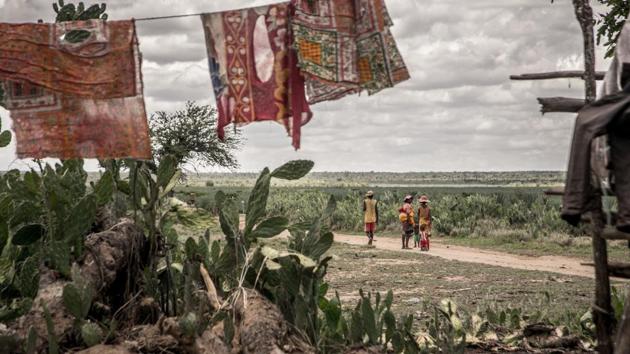
At the southern tip of Madagascar, the noise and excitement of the country's election campaign seems far away as locals confront more pressing needs in a daily struggle for food. For several seasons now, the entire southern part of Madagascar has been caught up in a drought that has made water increasingly scarce, wrecking even efforts to grow rice -- the staple food.
Updated on: Dec 19, 2018 10:04 AM IST

Share via


Copy link

1/10
 View Photos in a new improved layout
Published on Dec 19, 2018 10:04 AM
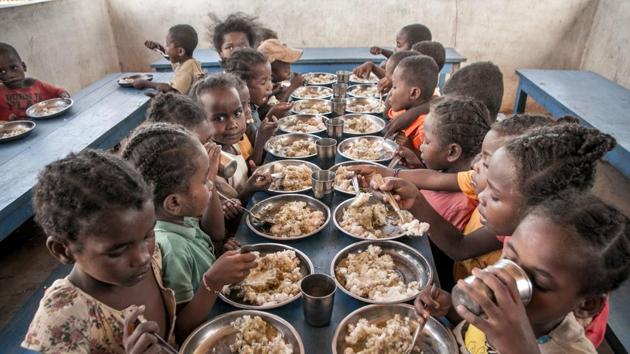
One after another, the mothers sat their babies in the shade, on a mat placed on the dusty ground. This morning at least, their children would have enough to eat. In the village of Ifotaka, at the southern tip of Madagascar, the noise and excitement of the country’s election campaign seemed far away as locals confront more pressing needs in a daily struggle for food. (Rijasolo / AFP)
2/10
 View Photos in a new improved layout
Published on Dec 19, 2018 10:04 AM
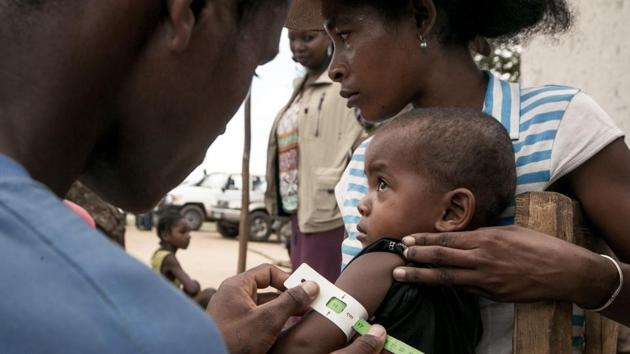
A member of the NGO Action Contre la Faim measures the arm circumference of infants to detect malnutrition. For Pastrolina Vatofara, aid agency food distribution is a matter of survival. “I earn a little money by harvesting sisal trees (to make rope) but that’s not enough to feed my three little ones,” said the 28-year-old. “With the drought, they would not survive without help... The government has forgotten us.” (Rijasolo / AFP)
3/10
 View Photos in a new improved layout
Published on Dec 19, 2018 10:04 AM
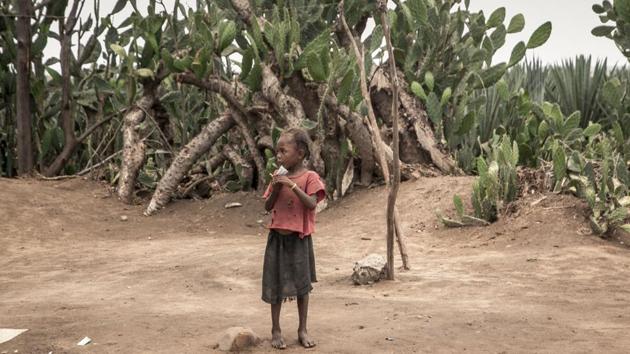
A girl eats a food supplement. Even on an empty stomach, Vatofara will vote Wednesday for the second round of the presidential election. “I hope the next president will help us a little more,” she said. For several seasons now, southern Madagascar has been caught up in a drought that has made water scarce, wrecking even efforts to grow rice -- the staple food. (Rijasolo / AFP)
4/10
 View Photos in a new improved layout
Published on Dec 19, 2018 10:04 AM
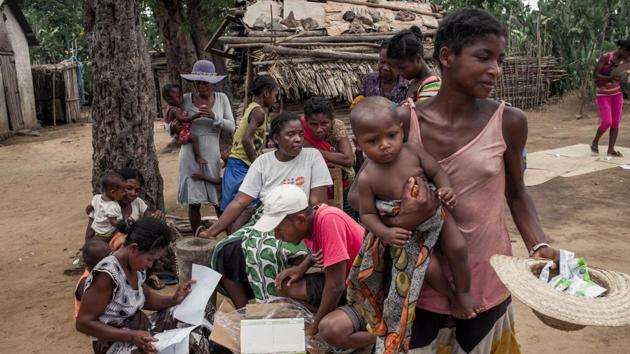
Residents participate in a programme to screen for malnutrition and distribute food supplements for infants. “Today, 1.2 million people are food insecure,” said Maman Bashir Yacouba, head of the World Food Programme (WFP) in Madagascar.”In most of these areas, the whole economy is based on agriculture and livestock, and it has been at least four years now that there has not been good rainfall ”. (Rijasolo / AFP)
5/10
 View Photos in a new improved layout
Published on Dec 19, 2018 10:04 AM
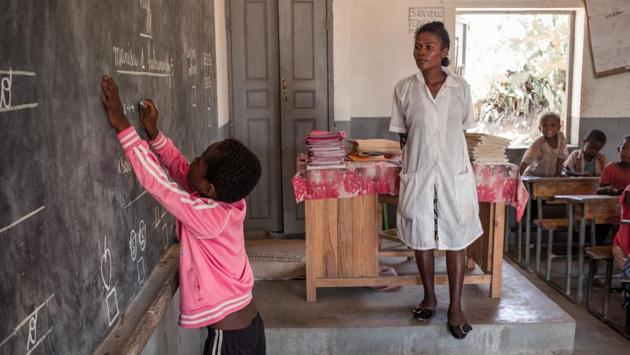
Children are the worst hit, with almost half of those under five chronically malnourished. In areas affected by drought, up to 12% suffer from severe malnutrition. In the Amboasary region, action groups are trying to distribute rations and dietary supplements to protect the youngest children for as long as possible. But the task is enormous and their resources are inadequate. (Rijasolo / AFP)
6/10
 View Photos in a new improved layout
Published on Dec 19, 2018 10:04 AM
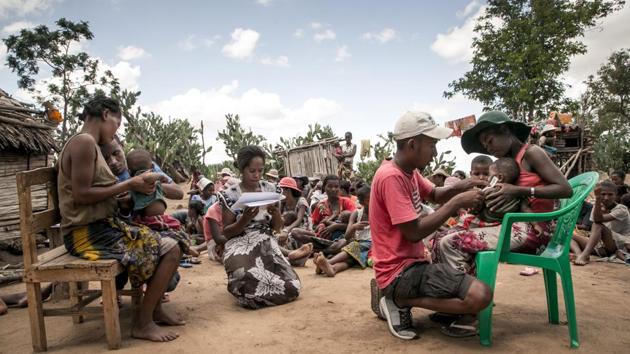
“Madagascar is a country forgotten by international aid,” said one humanitarian worker declining to be named. “Every year, we only react to the emergency crisis. We know that we could tackle the problem by improving water supplies, but it is much too expensive”. So the population is forced to rely on occasional help, when it arrives, and on whatever else they can find. (Rijasolo / AFP)
7/10
 View Photos in a new improved layout
Published on Dec 19, 2018 10:04 AM
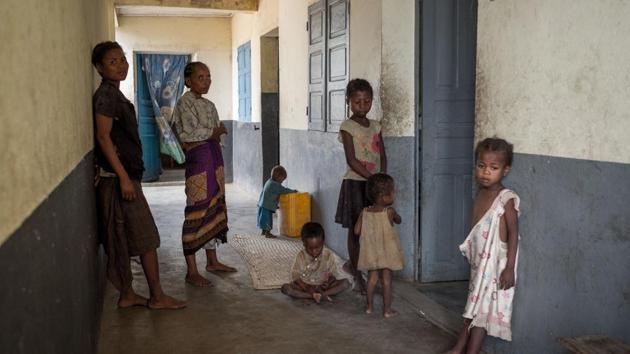
Patients stand in a corridor at the Amboasary-Sud Hospital. WFP local coordinator Mamy Razafindrakoto said the region faces a grim time until at least the next harvest in April. “Here people work, they are not lazy, they make progress when they have some water -- the problem is that there is none,” he said. They drink and wash from the same puddles as cattle. (Rijasolo / AFP)
8/10
 View Photos in a new improved layout
Published on Dec 19, 2018 10:04 AM
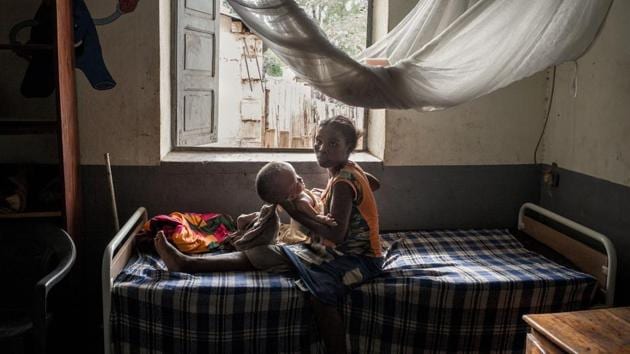
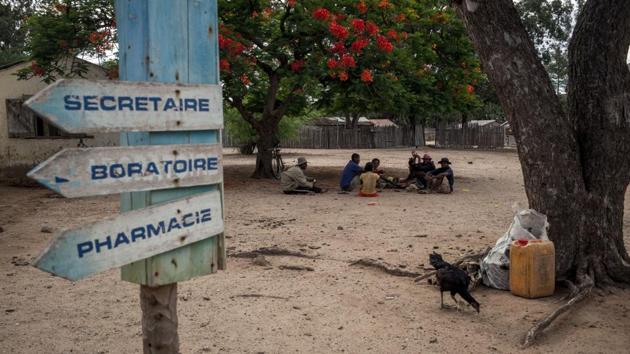
And if natural calamities were not enough, the south suffers a glaring absence of infrastructure. Hospitals lack staff, equipment, medicine and reliable electricity. “I have trouble seeing any presence of the state here,” said Fatou Sall, local coordinator of Action Against Hunger. “Just having good roads would be a huge change. When you cannot move, you wait and pray, that’s all that is left to do.” (Rijasolo / AFP)
9/10
 View Photos in a new improved layout
Published on Dec 19, 2018 10:04 AM
Annick Rakotoanosy, a Madagascan, holds out some hope for the second-round election, which pitches two former presidents -- Marc Ravalomanana and Andry Rajoelina -- against each other. “What could change things is a political will to help the south,” she said. “We know that the government cannot stop the drought, but drilling or water supply works, that it could. If there is a will, then we can move forward.” (Rijasolo / AFP)
10/10
 View Photos in a new improved layout
Published on Dec 19, 2018 10:04 AM


