
 E-Paper



Photos: Battle to save African elephants is gaining ground in Tanzania
In a move to crack down on demand, Britain this month announced a ban on ivory sales. In China, trade in ivory and ivory products is illegal as of 2018. And in the U.S., a ban on ivory apart from items older than 100 years went into place in 2016. If poaching can be brought under control in Tanzania, there is hope that the killing of elephants can be stemmed elsewhere on the continent. The battle to save the continent's elephants is gaining momentum, with killings declining and some herds showing signs of recovery.
Updated on: Apr 19, 2018 1:41 PM IST

Share via


Copy link

1/11
 View Photos in a new improved layout
Updated on Apr 19, 2018 1:41 PM
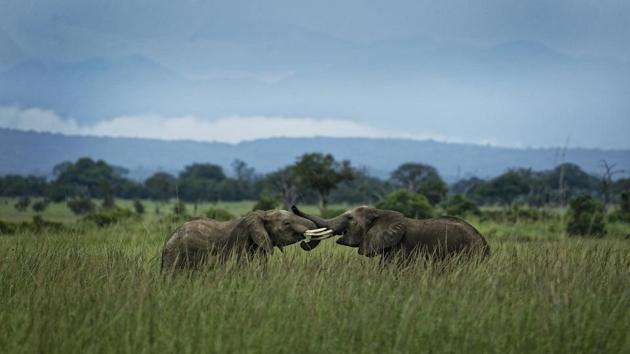
Young elephants play in Mikumi National Park, Tanzania. The battle to save Africa’s elephants appears to be gaining momentum in Tanzania, with killings declining and some populations starting to grow again. Tanzania’s Selous-Mikumi region is one of the biggest killing fields for African elephants, but the wilderness of about 60,000 square kilometers still offers hope for the world’s biggest land animal. (Ben Curtis / AP)
2/11
 View Photos in a new improved layout
Updated on Apr 19, 2018 1:41 PM
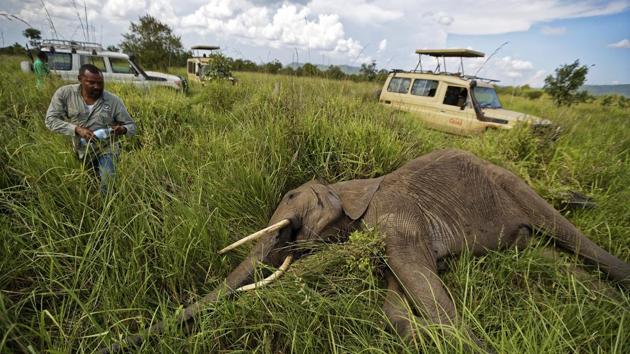
It wasn’t a killer who targeted her but a conservation official with a tranquilizer dart. Soon she was snoring loudly, and they propped open her trunk with a twig to help her breathe. A GPS tracking collar went around the rough skin of her neck and an antidote brought her back to her feet. After inspecting the contraption, she ambled back to her family herd. (Ben Curtis / AP)
3/11
 View Photos in a new improved layout
Updated on Apr 19, 2018 1:41 PM
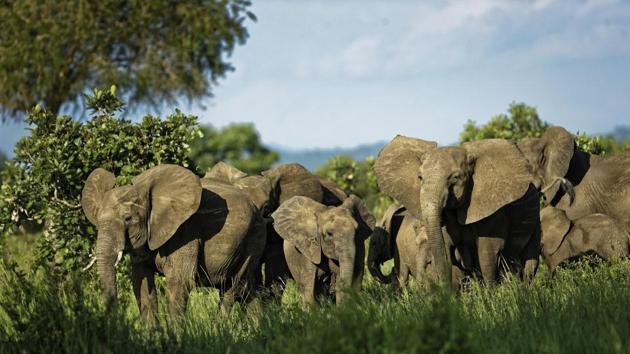
A herd forms a protective circle against a perceived threat, after an elephant was shot with a tranquilliser dart during a tagging operation. The GPS tagging is part of a yearlong effort to collar and track 60 elephants in and around Tanzania’s Selous Game Reserve, widely acknowledged as ‘Ground Zero’ in the poaching that has decimated Africa’s elephants in recent years. (Ben Curtis / AP)
4/11
 View Photos in a new improved layout
Updated on Apr 19, 2018 1:41 PM
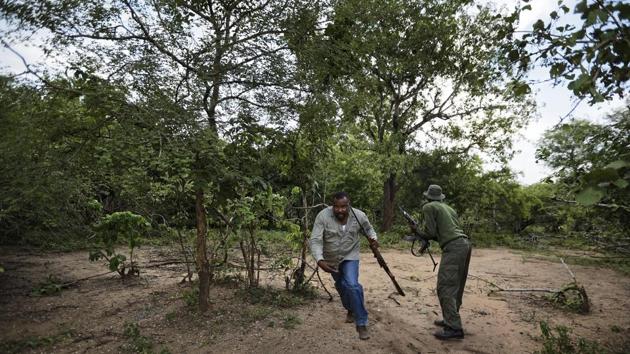
Wildlife veterinarian Ernest Mjingo (C), runs as an elephant charges after being darted. It’s far too early to declare a turnaround. Poachers are moving to new areas and traffickers are adapting, aided by entrenched corruption. The rate of annual elephant losses still exceeds the birth rate. And the encroachment of human settlements is reducing the animals’ range. (Ben Curtis / AP)
5/11
 View Photos in a new improved layout
Updated on Apr 19, 2018 1:41 PM
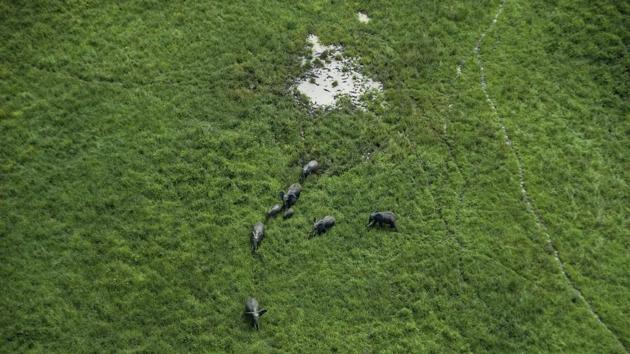
But if poaching can be controlled here, there’s hope elsewhere on the continent. Africa’s elephant population plummeted from millions around 1900 to at least 415,000 today. Intelligent and emotional, elephants have been hunted for their ivory for centuries. A ban on international trade in ivory went into effect in 1990, but many countries continued to allow domestic trade. (Ben Curtis / AP)
6/11
 View Photos in a new improved layout
Updated on Apr 19, 2018 1:41 PM
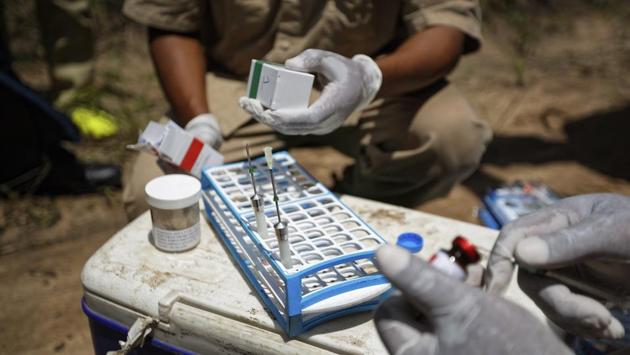
Wildlife veterinarians prepare tranquilliser darts containing etorphine hydrochloride. Increased demand from consumers in China fueled a new wave of killings. In Tanzania alone, the elephant population declined by 60% to 43,000 between 2009 and 2014, according to the government. Much of the slaughter happened in an ecosystem comprising the Selous and the adjacent Mikumi National Park. (Ben Curtis / AP)
7/11
 View Photos in a new improved layout
Updated on Apr 19, 2018 1:41 PM
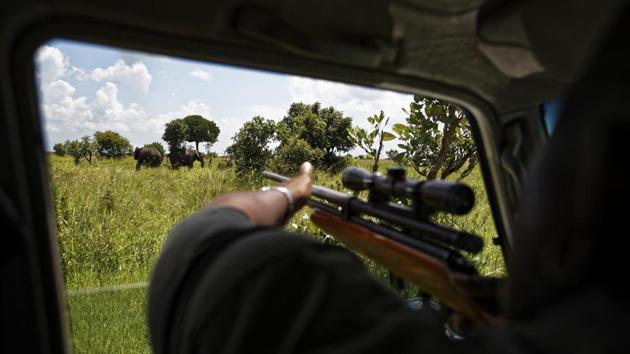
Justin Shamancha prepares to tranquillise an elephant. The killings in Tanzania appear to have slowed down. A count in the Selous-Mikumi area last year added up 23 poached carcasses, just 20% of the number four years earlier. And African elephant poaching has declined to pre-2008 levels after peaking in 2011, according to the Convention on International Trade in Endangered Species. (Ben Curtis / AP)
8/11
 View Photos in a new improved layout
Updated on Apr 19, 2018 1:41 PM
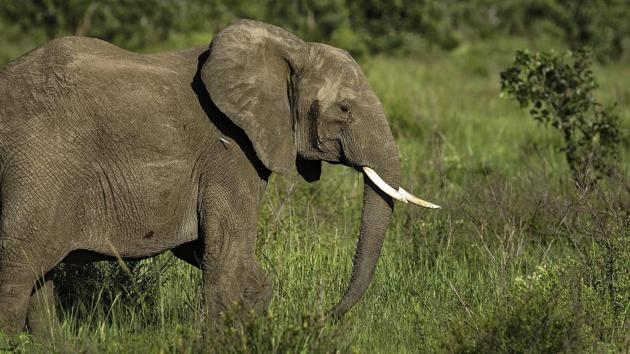
The collars are designed to allow rangers to track elephant herds, and then mobilize to protect them if they move into poaching hotspots. Receiving satellite-transmitted data on mobile phones, rangers can also intercept elephants that drift into human settlements or fields of crops. (Ben Curtis / AP)
9/11
 View Photos in a new improved layout
Updated on Apr 19, 2018 1:41 PM
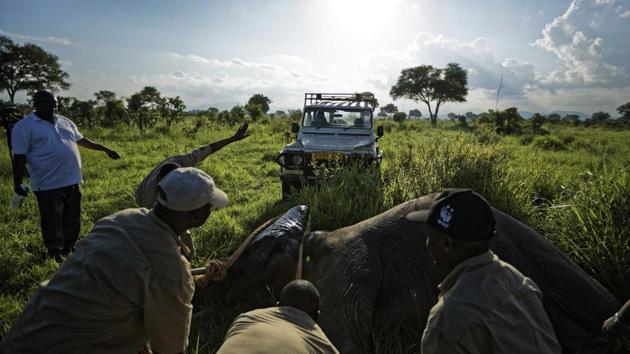
A team of veterinarians use a 4x4 vehicle to turn over a tranquilized elephant to attach a collar. There has also been movement to crack down on trafficking. Tanzanian President John Magufuli took a hard line and authorities have arrested key suspects linked to trafficking syndicates. But when gains are made in one area, the killings intensify in another spot. (Ben Curtis / AP)
10/11
 View Photos in a new improved layout
Updated on Apr 19, 2018 1:41 PM
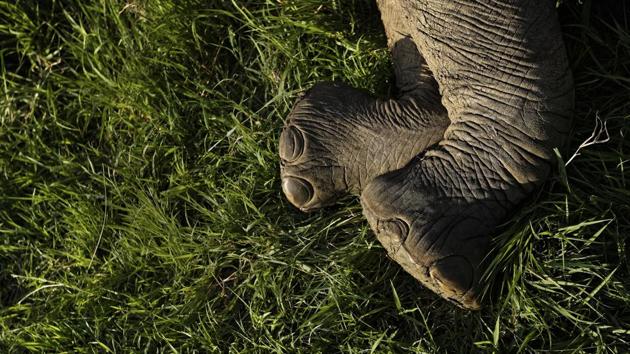
And international seizures of smuggled ivory appear to be as large as ever, a possible sign of hurried efforts by traffickers to move stockpiles before business gets too difficult. Another worrying development is evidence of increased processing of ivory into jewelry and trinkets within Africa, instead of the old method of shipping it out of the continent. (Ben Curtis / AP)
11/11
 View Photos in a new improved layout
Updated on Apr 19, 2018 1:41 PM


