
 E-Paper



Photos: By the Dead Sea, Bedouin graze camels at Earth’s lowest place
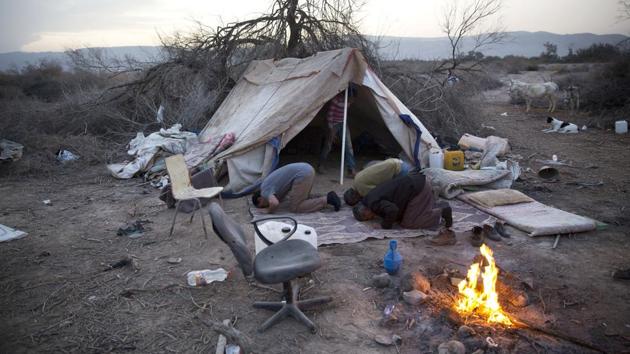
As the hot summers of the Israeli territories give way to cool winter climes, hundreds of camels and their Bedouin Arab herders keeping watchful eyes, journey from southern Israel to the Dead Sea where the livestock pastures for months, and the herders share traditional knowledge and bond with their sons in desert camps away from modernity, keeping alive an ancient tradition passed from father to son over the generations.
Updated on: Mar 19, 2018 1:57 PM IST

Share via


Copy link

1/9
 View Photos in a new improved layout
Updated on Mar 19, 2018 1:57 PM
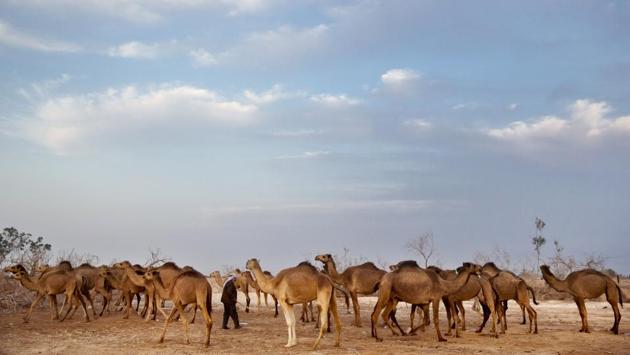
Ali El Guran checks his camels as they return back to camp after grazing all day in the open fields of the Israeli Kibbutz Kalya, near the Dead Sea. Each winter, camels lope around the moon-like desert landscape of the lowest place on Earth under the watchful eyes of their Bedouin Arab herders, in an ancient tradition passed from father to son over the generations. (Oded Balilty / AP)
2/9
 View Photos in a new improved layout
Updated on Mar 19, 2018 1:57 PM
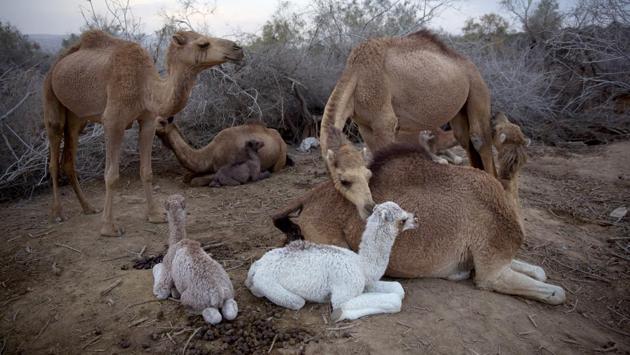
Ali El Guran brings his herd of more than 100 camels from southern Israel to the Dead Sea every November to pasture. It’s also birthing season, and this year 30 of El Guran’s camels are pregnant. (Oded Balilty / AP)
3/9
 View Photos in a new improved layout
Updated on Mar 19, 2018 1:57 PM
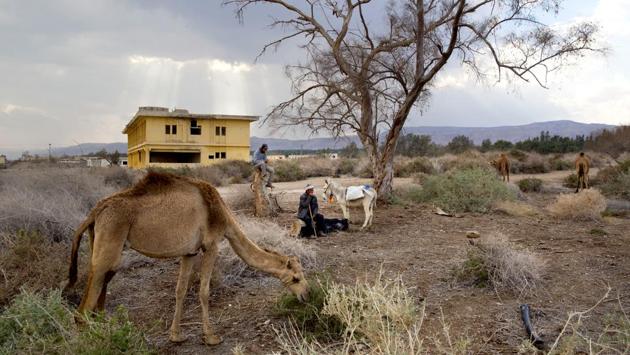
Herders Muhammed Zarlul (L) and Salem Rashaideh, rest as the camels graze. Bedouin lifestyles have changed dramatically in the last few decades, with many leaving traditional nomadic ways to settle in towns of southern Israel, trading their camels for pickup trucks and living off tourists instead of goat herds. (Oded Balilty / AP)
4/9
 View Photos in a new improved layout
Updated on Mar 19, 2018 1:57 PM
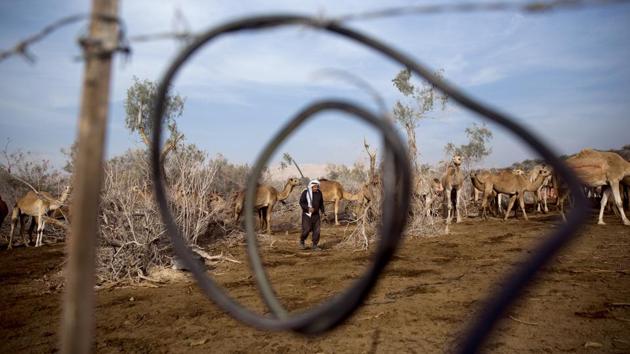
But for these three months every year, El Guran and the other herders appear to almost go back in time, living in nature as their forefathers did for generations. (Oded Balilty / AP)
5/9
 View Photos in a new improved layout
Updated on Mar 19, 2018 1:57 PM
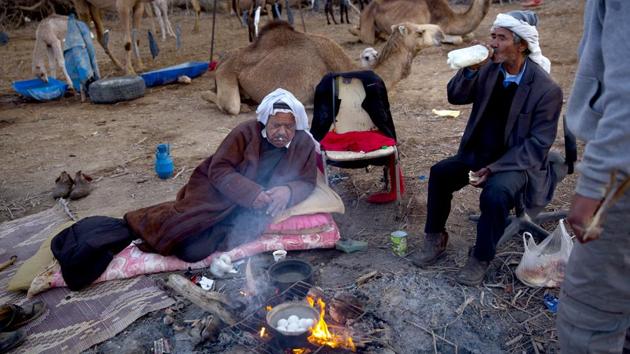
Camel owner Ali El Guran (L) and his herder Salem Rashaideh (R), have breakfast at their camp. Here they live simple routines, surviving mainly on bread and olive oil while drinking thick black coffee boiled on campfires. They sleep under the stars, near the herd, for weeks at a time without any cellphone coverage or other modern amenities. (Oded Balilty / AP)
6/9
 View Photos in a new improved layout
Updated on Mar 19, 2018 1:57 PM
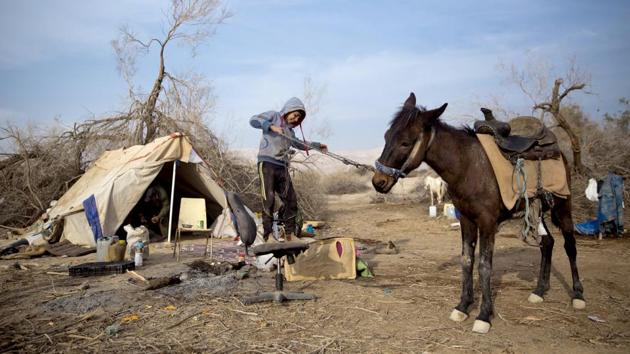
Young Beduin Majed Zarlul who joins his father for camel herding during weekends tries to get on his mule at the night camp. El Guran and the others use the time to bond with their sons who have come with them to the pastures, away from the distractions of the contemporary world. (Oded Balilty / AP)
7/9
 View Photos in a new improved layout
Updated on Mar 19, 2018 1:57 PM
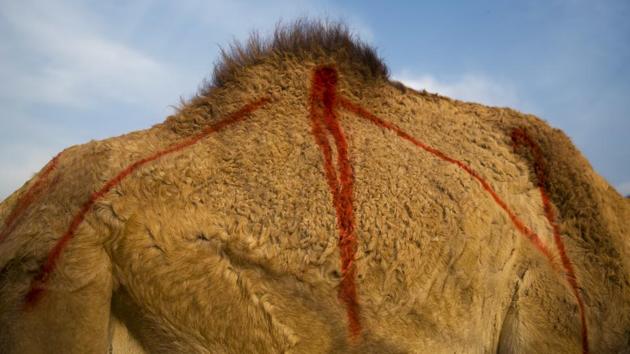
The pregnant camels are marked with red spray paint. When it’s time to give birth, the mother camels separate themselves from the herd, sometimes walking several miles to find a private spot. Herders later find them standing guard over the newborns, protecting them from wolves and jackals -- the main predators in the area. (Oded Balilty / AP)
8/9
 View Photos in a new improved layout
Updated on Mar 19, 2018 1:57 PM
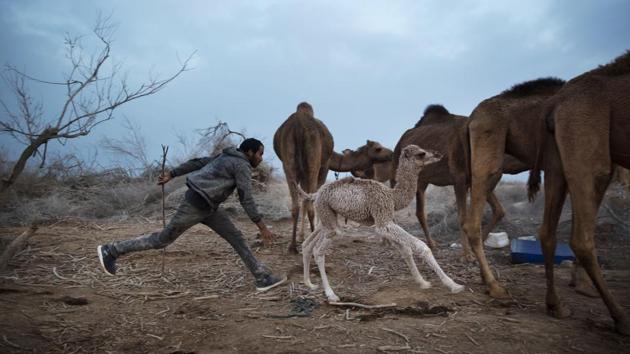
Muhammed Zarlul chases a newborn camel as they turn back to camp after grazing all day in the open fields near the Dead Sea. The herders speak to the camels in a special language, directing them where to graze. (Oded Balilty / AP)
9/9
 View Photos in a new improved layout
Updated on Mar 19, 2018 1:57 PM


