
 E-Paper



Photos: Chile’s indigenous pine, a botanical dinosaur facing extinction
The Chilean pine also known as the Araucaria araucana, a "living fossil" because trees can be as old as 1,000 years o more, was declared a part of Chile's national heritage in 1976. In Quinquen, a community centered around the pine in the Chilean Andes, 50 or so families -- a total of 200 people, all of them named Melinir after the term for the tree’s fruit -- live throughout the area, which is the first indigenous conservation zone established in Chile. While the community has bene able tep stem threats from logging, climate change has meant more wildfires and threats from blight for trees that take at least two decades to first sprout.
Updated on: Dec 12, 2018 12:52 PM IST

Share via


Copy link

1/10
 View Photos in a new improved layout
Updated on Dec 12, 2018 12:52 PM
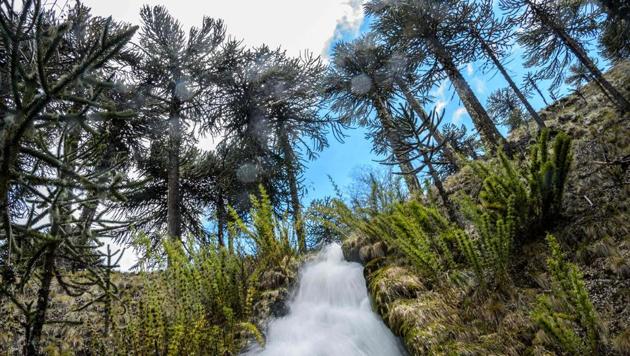
Araucaria trees are seen at Conguillio National Park in Temuco, Chile. In Quinquen, an indigenous community is saving a forest of Chilean pine trees -- the araucaria araucana, a “living fossil” held sacred by several local tribes. Some of the trees here are 1,000 years old or more, but they all face common threats -- from logging companies, from blight and climate change. (Martin Bernetti / AFP)
2/10
 View Photos in a new improved layout
Updated on Dec 12, 2018 12:52 PM
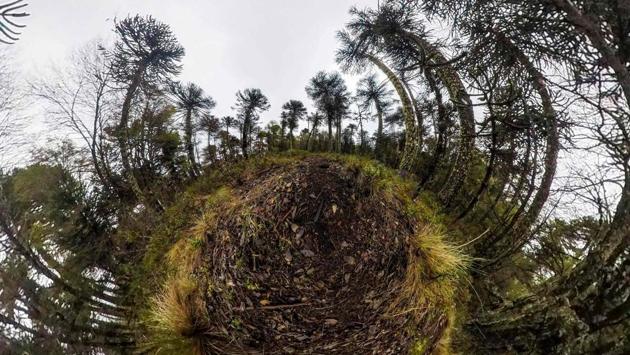
A 360 panorama of Araucaria trees at Conguillio National Park. “It is difficult to say how old these pines are,” a 60-something Ricardo Melinir showing off a forest of Chilean pines said. His conservation work here has managed to save the “Monkey Puzzle” trees from logging companies eyeing timber. (Martin Bernetti / AFP)
3/10
 View Photos in a new improved layout
Updated on Dec 12, 2018 12:52 PM
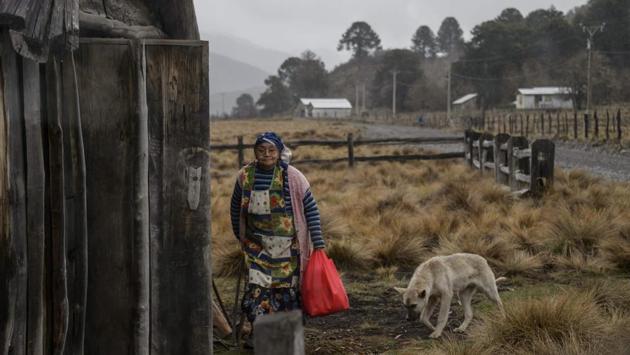
In 1991, the restoration of a democratic government in Chile following the Pinochet dictatorship allowed the Pehuenche to recover their ancestral lands, which they had lost 50 years before. Today, 50 or so families -- a total of 200 people, all of them named Melinir -- live throughout the area, which is the first indigenous conservation zone established in Chile. (Martin Bernetti / AFP)
4/10
 View Photos in a new improved layout
Updated on Dec 12, 2018 12:52 PM
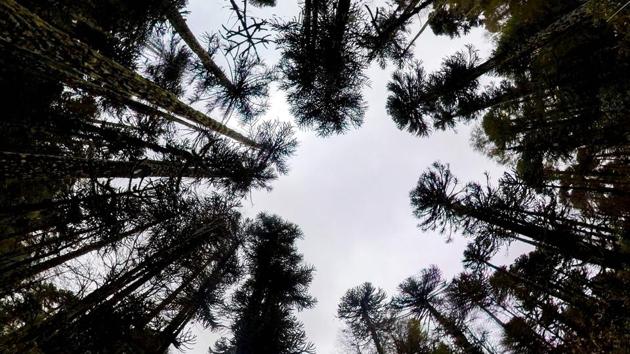
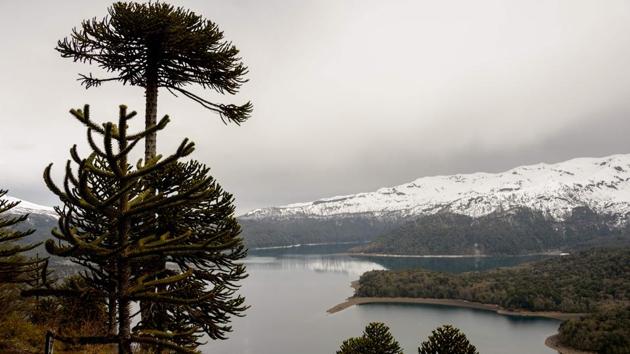
The forest is located in Araucaria province, in the Chilean Andes. In Quinquen, at least 40% of the pine tree forests are wild, says Melinir, who is the head of the Pehuenche community, which takes its name from the tree’s fruit. The trees, declared a part of Chile’s national heritage in 1976, can grow up to 60 metres (200 feet) in height and three metres in diameter. (Martin Bernetti / AFP)
5/10
 View Photos in a new improved layout
Updated on Dec 12, 2018 12:52 PM
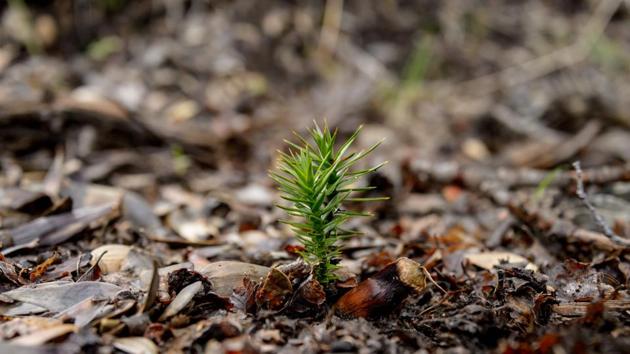
The Chilean pine grows very slowly, and needs other male and female trees in order to ensure pollination and survival. It has dark brown male “flowers” at the tips of its branches, and female yellow-green pine cones. The two “fall in love” in the boreal spring, Melinir said with a flourish. Then, it’s a long wait -- 20 to 25 years -- before the tree sprouts. (Martin Bernetti / AFP)
6/10
 View Photos in a new improved layout
Updated on Dec 12, 2018 12:52 PM
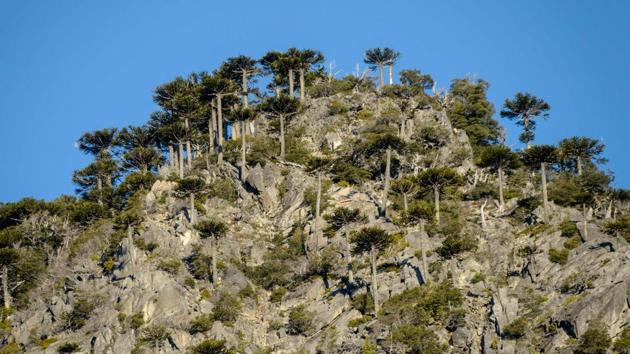
But climate change has meant more wildfires, and many trees have been destroyed. Researchers are also in a race against time to identify a new blight that has devastated the forests in recent years. According to a study published in the Chilean daily El Mercurio, 90% of the trees are already affected, and two percent of those are dead. (Martin Bernetti / AFP)
7/10
 View Photos in a new improved layout
Updated on Dec 12, 2018 12:52 PM
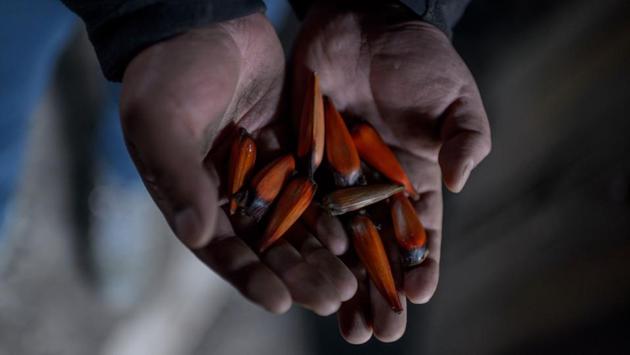
All told, the trees are more vulnerable than ever. Their pine nuts -- prized by chefs the world over -- have been stripped from what Neruda once called ‘Chile’s towers.’ “The pine nut is our only way of surviving, the only crop we have,” said Rene Melinir, Ricardo’s chef son. (Martin Bernetti / AFP)
8/10
 View Photos in a new improved layout
Updated on Dec 12, 2018 12:52 PM
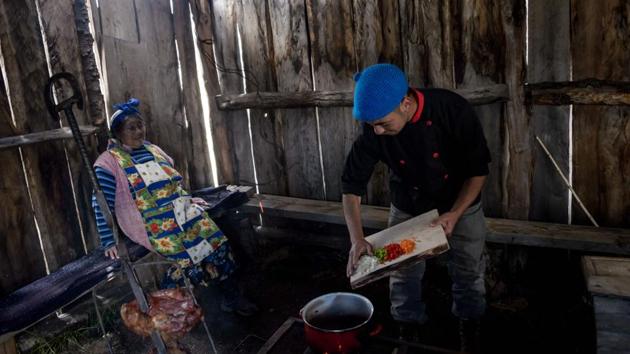
The nut can be used to make flour and drinks. It can be eaten raw or cooked. Some even use it to make jam, as well as savoury or sweet pies. “The pine nut contains lots of protein and calories. It has no salt or gluten, which makes it more healthy,” said Rene. (Martin Bernetti / AFP)
9/10
 View Photos in a new improved layout
Updated on Dec 12, 2018 12:52 PM
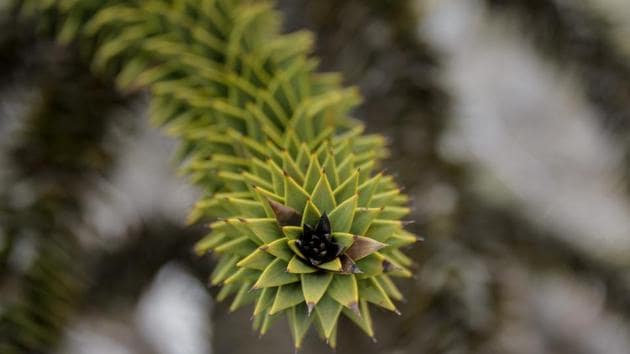
Detail of an Araucaria tree. Ruben Carrillo, a researcher at University of La Frontera, is putting pressure on Chile’s environment ministry to put the tree on the list of endangered species. “All we need now is for the decree to be published in the government gazette!” he said, noting that the araucaria is the only species associated with an indigenous people. (Martin Bernetti / AFP)
10/10
 View Photos in a new improved layout
Updated on Dec 12, 2018 12:52 PM


