
 E-Paper



Photos: In Syria’s Yarmuk, painters translate suffering into art
In Syria's capital Damascus lies theformer Palestinian camp of Yarmuk which over the decades was consumed by the expanding city’s boundaries. Around 140,000 residents fled clashes between the regime and opposing rebels in 2012, leaving the rest to face severe food shortages under government encirclement and recapture. Today its once buzzing streets lie almost abandoned. Reaching out to these ruined places, some young artists intending to translate suffering onto their canvases, gathered a recent afternoon hoping to bring back life to a dark places ravaged by years of bombardment and siege.
Updated on: Aug 24, 2018 11:52 AM IST

Share via


Copy link

1/7
 View Photos in a new improved layout
Updated on Aug 24, 2018 11:52 AM
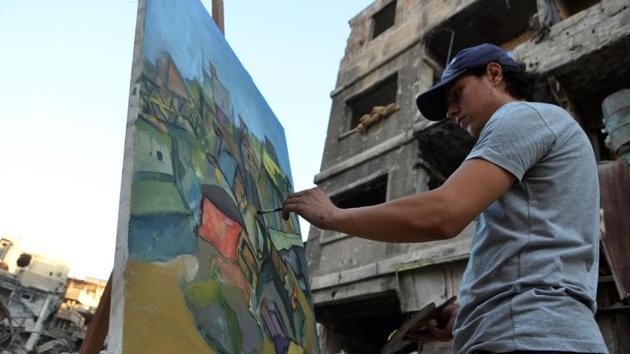
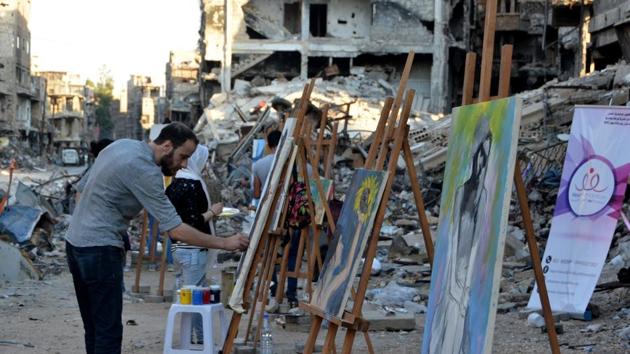
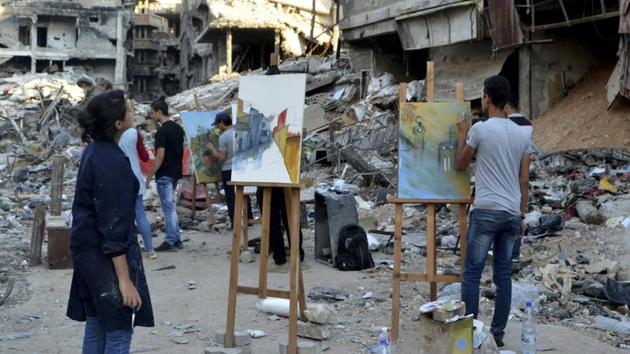
Equipped with paint brushes and pencils, around 12 young artists were seen with their easels in the once-crowded camp turned Damascus suburb, now largely abandoned after seven years of civil war. They set out to translate suffering into art in a neighbourhood ravaged by years of bombardment and siege. (Maher Al Mounes / AFP)
2/7
 View Photos in a new improved layout
Updated on Aug 24, 2018 11:52 AM
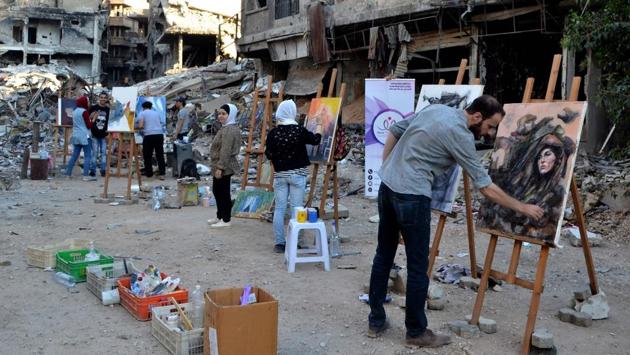
Artists paint in the Yarmuk refugee camp on the southern outskirts of Damascus. Before the war, Yarmuk was home to around 160,000, the United Nations says. Set up in 1957 to house Palestinian refugees, over the decades it became a crowded district that was eventually swallowed up by Damascus. Today, it lies almost deserted. (Maher Al Mounes / AFP)
3/7
 View Photos in a new improved layout
Updated on Aug 24, 2018 11:52 AM
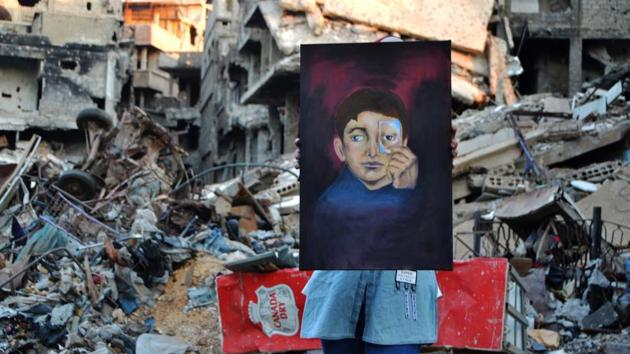
Painter Hinaya Kebabi depicted a young boy with a missing eye, holding up a drawing of another eye to conceal his wound, the 22-year-old explained. “One day, I hope people will come back here to colour, not rubble,” she said. (Maher Al Mounes / AFP)
4/7
 View Photos in a new improved layout
Updated on Aug 24, 2018 11:52 AM
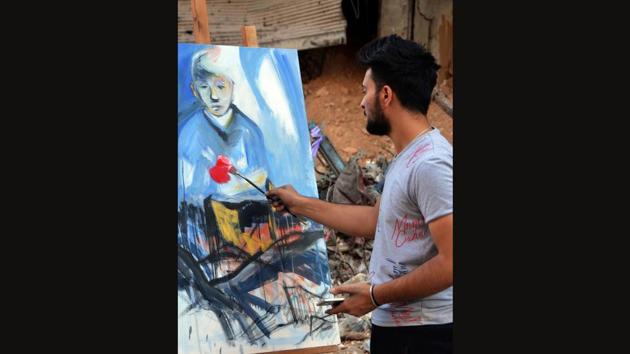
Not far from his destroyed home the camp, a 21-year-old Abdallah al-Harith dabbed bright red paint onto a canvas standing amid the grey ruins. “We’re bringing back life to a dark place,” said Harith, who fled Yarmuk several years ago, but returned after the regime ousted Islamic State group jihadists in May. (Maher Al Mounes / AFP)
5/7
 View Photos in a new improved layout
Updated on Aug 24, 2018 11:52 AM
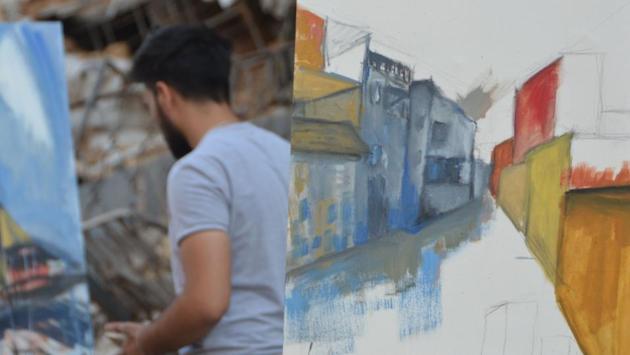
One painting depicted streams of red running down a dark building and in another; an emaciated man was curled up naked in the foetal position. Visiting the camp last month, UNRWA commissioner-general Pierre Krahenbuhl said he had rarely seen such damage. “The scale of the destruction in Yarmuk compares to very little else that I have seen in many years of humanitarian work in conflict zones,” he said. (Maher Al Mounes / AFP)
6/7
 View Photos in a new improved layout
Updated on Aug 24, 2018 11:52 AM
Harith and his peers stood sweeping paint across their canvases while the gentle melody of an oud -- a Middle Eastern lute -- was broadcast across the smashed concrete. He also painted an image of a small boy emerging from the ground, holding a bright red apple. “It’s supposed to represent new life,” Harith said. (Maher Al Mounes / AFP)
7/7
 View Photos in a new improved layout
Updated on Aug 24, 2018 11:52 AM


