
 E-Paper



Photos: Intrepid scientists witness final days of Venezuelan glacier
Blackouts shut off the refrigerators where the scientists keep their lab samples. Gas shortages mean they sometimes have to work from home. They even reuse sheets of paper to record field data because fresh supplies are so scarce. As their country falls apart, a hardy team of scientists in Venezuela is determined to transcend the political and economic turmoil to record what happens as the country's last glacier vanishes.
Updated on: Sep 25, 2019 4:31 PM IST

Share via


Copy link

1/14
 View Photos in a new improved layout
Updated on Sep 25, 2019 4:31 PM
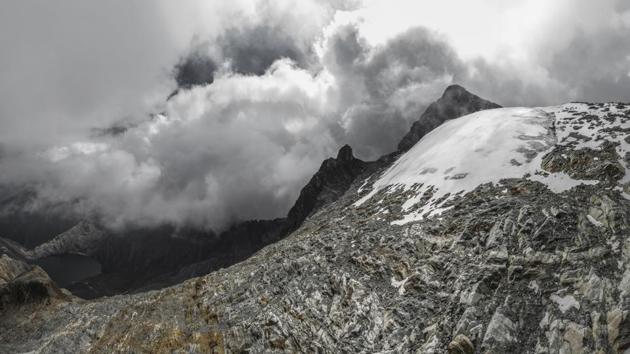
An aerial view of the Humboldt glacier, in Merida, Venezuela. Temperatures are warming faster at the Earth’s higher elevations than in lowlands, and scientists predict that the glacier — an ice sheet in the Andes Mountains — could be gone within two decades. “If we left and came back in 20 years, we would have missed it,” said Luis Daniel Llambi, a mountain ecologist at the University of the Andes. (Jose Manuel Romero / AP)
2/14
 View Photos in a new improved layout
Updated on Sep 25, 2019 4:31 PM
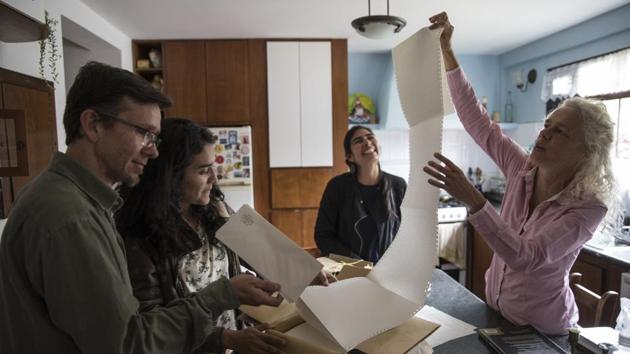
Scientists prepare to head to the Humboldt glacier. Throughout history, glaciers have waxed and waned numerous times. But the rapid pace of glacial retreat over the past century and a half, creates a new urgency — and opportunity —to understand how freshly exposed rock forms new soil and eventually ecosystems. While most of the planet’s ice is in the polar regions, there are also some glaciers in the tropics — primarily South America. (Rodrigo Abd / AP)
3/14
 View Photos in a new improved layout
Updated on Sep 25, 2019 4:31 PM
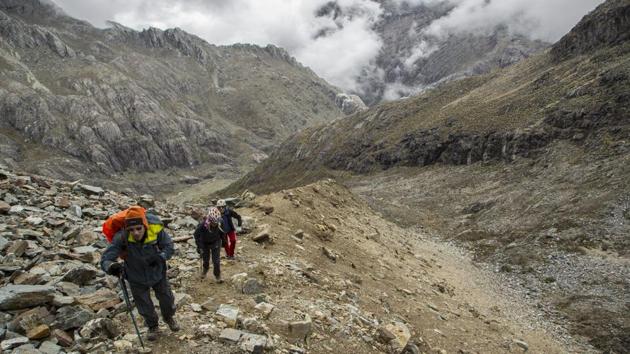
“Practically all of the high-mountain tropical glaciers are in the Andes. There’s still a little bit on Mount Kilimanjaro,” said Robert Hofstede, a tropical ecologist in Ecuador. Monitoring Humboldt depends on continuous visits, Llambi noted. Even in the best of circumstances, it’s no easy trek from the town of Merida to the ice sheet in Venezuela’s Sierra Nevada National Park at nearly 16,500 feet above sea level. (Jose Manuel Romero / AP)
4/14
 View Photos in a new improved layout
Updated on Sep 25, 2019 4:31 PM
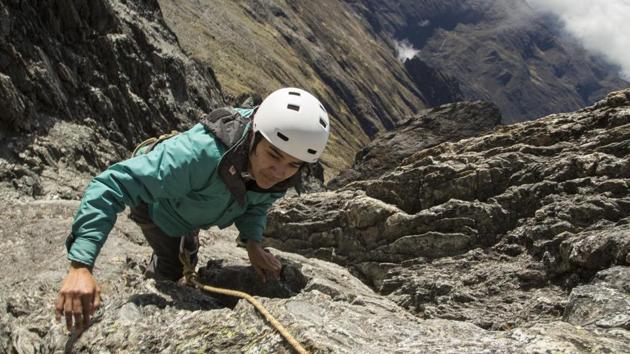
When Llambi and three other scientists made the journey this spring to scout out mountain terrain for a new research project, they first rode a cable car, then walked a full day to the base camp, pitching their tents in drizzling rain. Each day, they then had to climb an additional three hours to reach the glacier, at times donning helmets and holding tight to ropes to manoeuvre up boulders. (Jose Manuel Romero / AP)
5/14
 View Photos in a new improved layout
Updated on Sep 25, 2019 4:31 PM
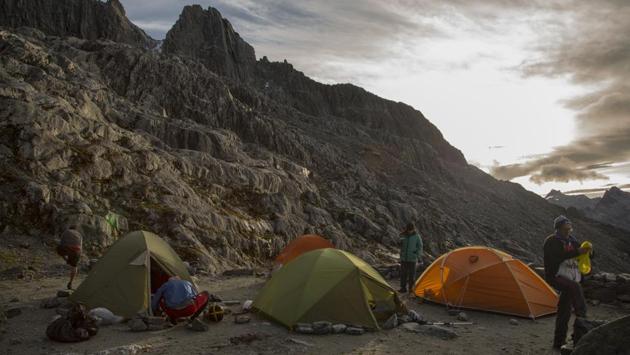
An early morning before starting a four-day mission. Mountain fieldwork always is physically gruelling, but the deepening crisis in Venezuela since the death of former president Hugo Chavez in 2013 has transformed even simple tasks into immense hurdles. “Things that you normally take for granted for research — internet, gas, electricity — all become scarce and unpredictable,” Llambi said. (Jose Manuel Romero / AP)
6/14
 View Photos in a new improved layout
Updated on Sep 25, 2019 4:31 PM
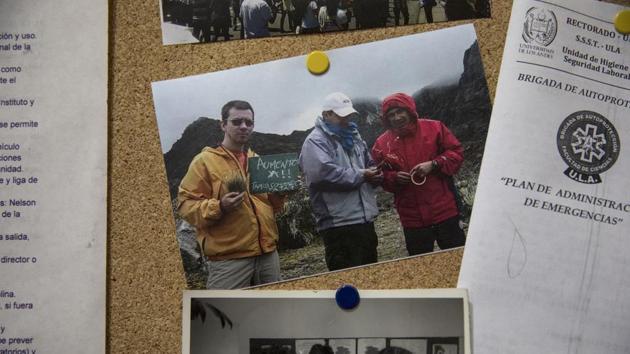
A photo of Luis Daniel Llambi, holding a poster that reads in Spanish, “Salary Increase now!! We are eating herbs!” at a laboratory at the Andes University in Merida. Perhaps the hardest toll has been watching many of their colleagues and students leave, joining the more than 4 million people who have fled Venezuela’s political upheaval in recent years. (Rodrigo Abd / AP)
7/14
 View Photos in a new improved layout
Updated on Sep 25, 2019 4:31 PM
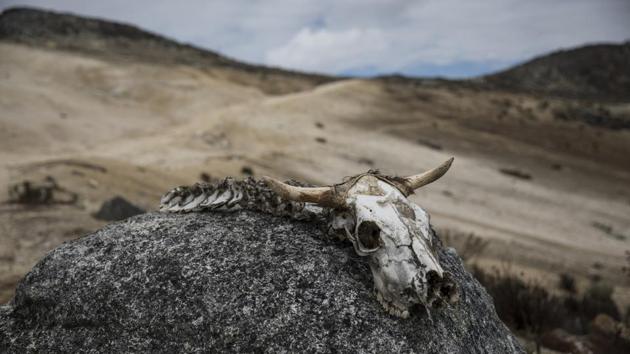
The bones of an animal lie on a rock near the Humboldt glacier. “Every week, someone asks me why I haven’t left,” said Alejandra Melfo, a physicist at the University of the Andes. Not now, she tells anyone who asks. “Climate change is real and has to be documented,” she says. “We have to be there.” (Rodrigo Abd / AP)
8/14
 View Photos in a new improved layout
Updated on Sep 25, 2019 4:31 PM
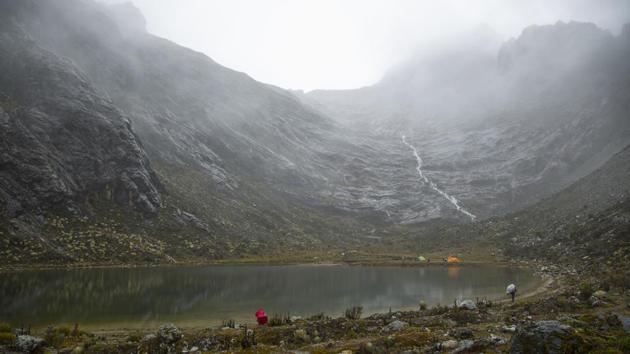
The Institute of Environmental and Ecological Sciences at the University of the Andes was founded 50 years ago and the scientists there see themselves as custodians of long-term data monitoring how temperatures and plant life are changing in the region, including in the Andean ecosystem known as the paramos — a mist-covered mountain grassland between the top of the tree line and the bottom of the glacier. (Jose Manuel Romero / AP)
9/14
 View Photos in a new improved layout
Updated on Sep 25, 2019 4:31 PM
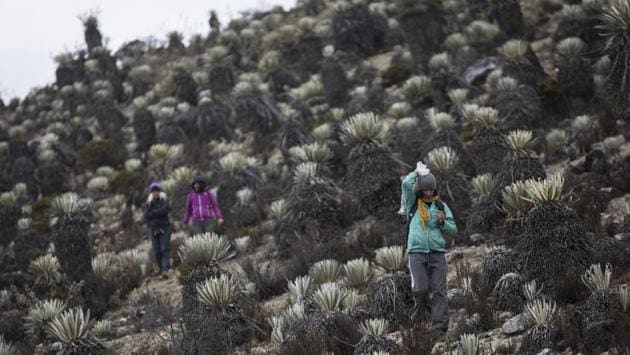
While most tundras have sparse vegetation, the paramos is famous for striking plants called frailejones that can be taller than humans and resemble a cross between a cactus and a palm tree. These mountain grasslands also store and release water that sustains the cities and croplands further downslope. (Rodrigo Abd / AP)
10/14
 View Photos in a new improved layout
Updated on Sep 25, 2019 4:31 PM
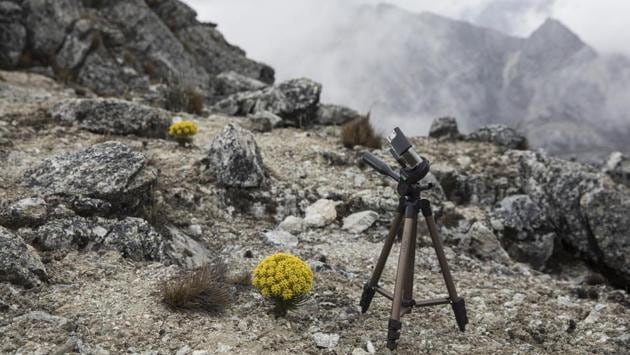
A video camera records a plant during a scientific mission. “More than 50 million people in South America rely on water provision from the Andes,” said Francisco Cuesta, a tropical ecologist at the University of the Americas in Quito, Ecuador, who marvels at the dogged work the team is doing under such punishing conditions. “To me, it’s incredible that they are still doing research there,” Cuesta said. (Rodrigo Abd / AP)
11/14
 View Photos in a new improved layout
Updated on Sep 25, 2019 4:31 PM
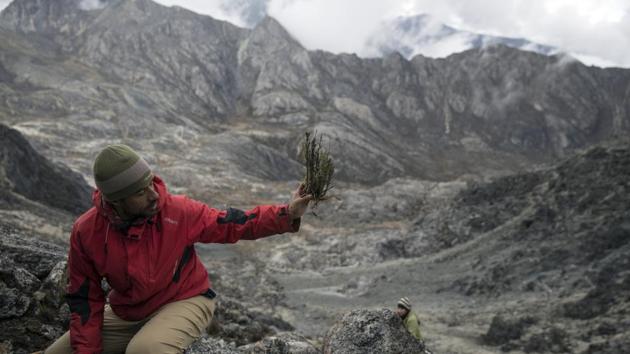
Scientist Eloy Torres shows a plant sample to a colleague. The region is one of the front lines of climate change. Glaciers here have been retreating faster than most others because tropical latitudes get more direct sunlight and radiation. When a glacier melts away, at first only bedrock is left behind — sometimes rough gravel and sometimes smooth rock, worn down by centuries or millenniums of grinding ice. (Rodrigo Abd / AP)
12/14
 View Photos in a new improved layout
Updated on Sep 25, 2019 4:31 PM
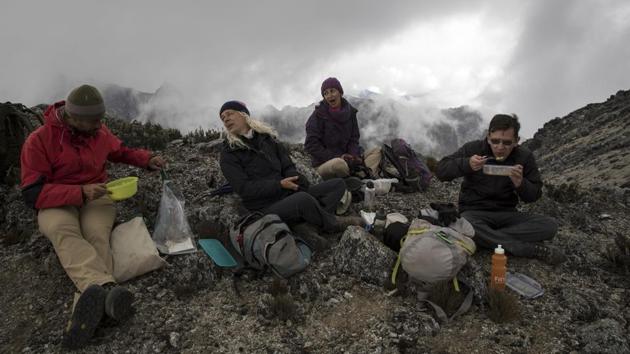
A lunch break. Within a few years or decades, bacteria and lichen colonize the area. As they decompose the minerals and decay themselves into organic matter, the first hints of soil form, the basis of a new ecosystem, providing a structure to retain water and for plant roots to grow. “The formation of soil is the difference between an ecosystem being able to form quickly and being stalled for hundreds of years,” Llambí said. (Rodrigo Abd / AP)
13/14
 View Photos in a new improved layout
Updated on Sep 25, 2019 4:31 PM
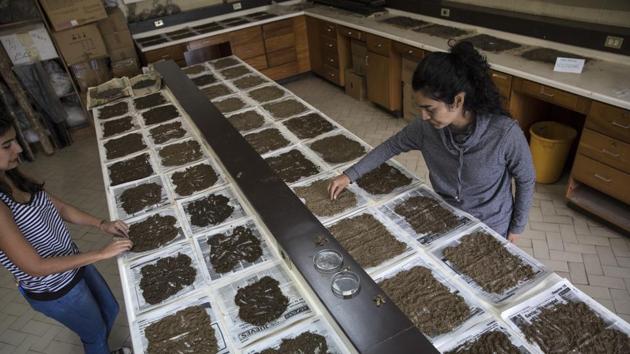
Scientists Cherry Andrea Rojas (R), and Mariana Cardenas, organize soil samples. On the rocks left behind, the scientists think a new ecosystem resembling the paramos may eventually develop. But there are many questions still to answer: Will it take decades to form new soil? Can plant and animal species that thrive at lower elevations also survive further upslope? Will they be able to adapt to continually changing temperatures? (Rodigo Abd / AP)
14/14
 View Photos in a new improved layout
Updated on Sep 25, 2019 4:31 PM


