
 E-Paper



Photos: Japan’s Gaijin rikishis shed past lives to live, breathe sumo
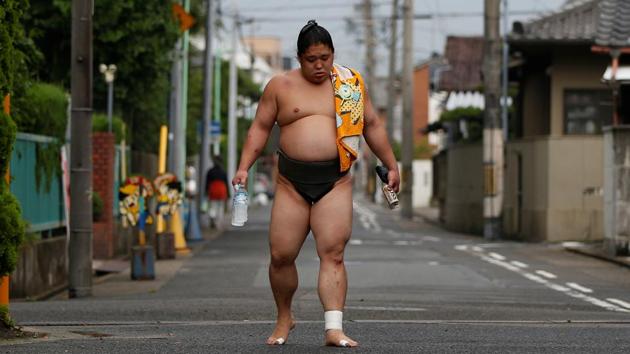
A new generation of international sumo wrestlers from countries like Mongolia and Brazil is taking over the task preserving and excelling in the traditional Japanese sport of sumo, which is losing interest among locals due to the strict impositions on life as a wrestler.
Updated on: Jul 20, 2017 10:17 AM IST

Share via


Copy link

1/13
 View Photos in a new improved layout
Updated on Jul 20, 2017 10:17 AM
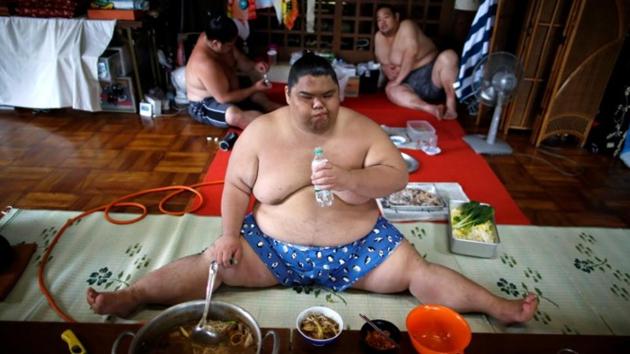
Entering the world of Japanese sumo is to eat, live, and breathe Japanese - from the samurai-style topknots to the rigid hierarchy. But the tough training and centuries old traditions have put off many local youth from the sport, leaving sumo to be dominated by foreign – mainly Mongolian – wrestlers, who face a gruelling path to assimilation. (Issei Kato / REUTERS)
2/13
 View Photos in a new improved layout
Updated on Jul 20, 2017 10:17 AM
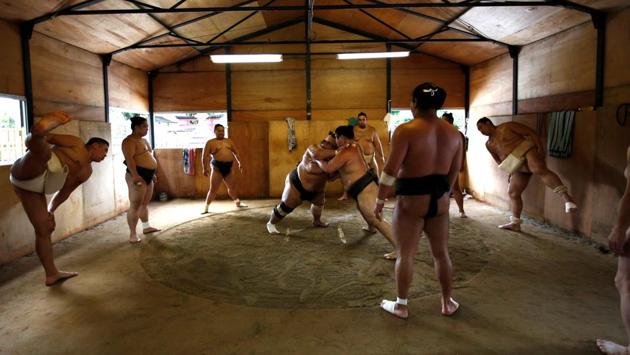
Mongolian-born Tomozuna Oyakata, or master of the Tomozuna stable (L), attends his wrestlers' training session at Ganjoji Yakushido temple in Nagoya, Japan. The temple is used by sumo wrestlers belonging to the Tomozuna stable as a temporary base for the Nagoya Grand Sumo Tournament. (Issei Kato / REUTERS)
3/13
 View Photos in a new improved layout
Updated on Jul 20, 2017 10:17 AM
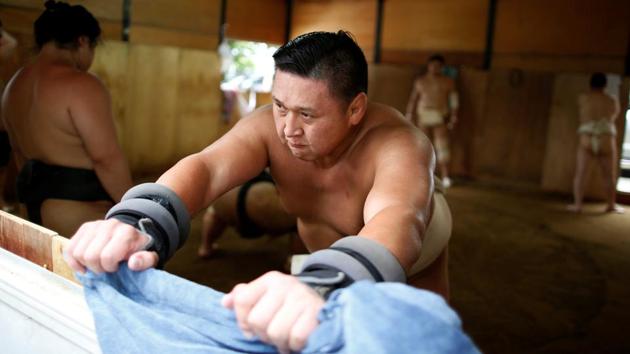
Tomozuna Oyakata, the first Mongolian-born wrestler to lead a sumo stable. ‘Language was the biggest source of stress,’ said Tomozuna Oyakata, better known by his fighting name Kyokutenho, the first Mongolian-born wrestler to lead a sumo stable. ‘I couldn’t understand anything when I was being scolded, or even when I was being praised,’ said the master, one of the first six Mongolians to be inducted into the sport in 1992. (Issei Kato / REUTERS)
4/13
 View Photos in a new improved layout
Updated on Jul 20, 2017 10:17 AM
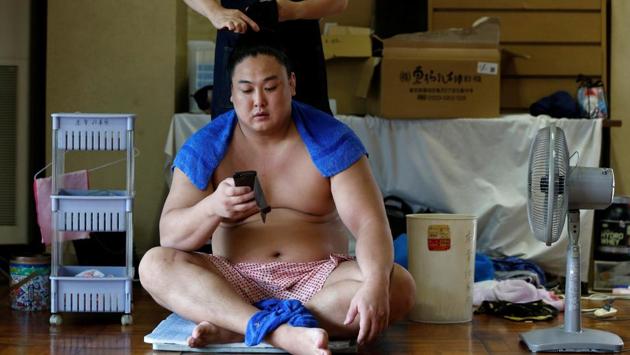
Mongolian-born sumo wrestler Kyokushuho has his hair fixed after a training session. Japan’s remarkably insulated society has always held a distinction between locals and foreigners, extending even to half-japanese born abroad. (Issei Kato / REUTERS)
5/13
 View Photos in a new improved layout
Updated on Jul 20, 2017 10:17 AM
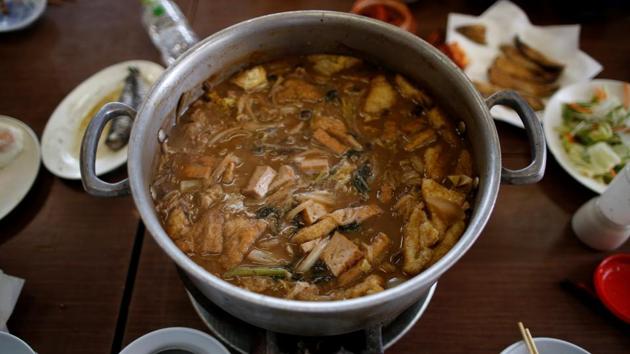
The sumo wrestlers dive deep into the process of cultural assimilation for want of acceptance within the rigid, custom-bound traditions surrounding the sport since the 15th-century. They break mid-day for a traditional meal of ‘Chanko nabe’, a signature hot-pot dish associated with sumo wrestlers and prepared by the younger members of the sumo stable. A typical sumo wrestler consumes around 8,000 calories in a day. (Issei Kato / REUTERS)
6/13
 View Photos in a new improved layout
Updated on Jul 20, 2017 10:17 AM
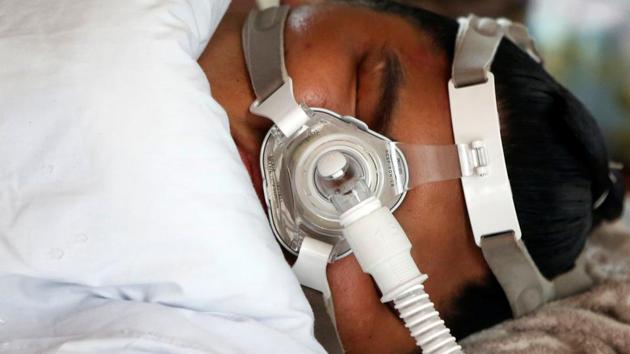
Sumo wrestler Kaiho takes a post meal nap using respirators to aid breathing. The ‘rikishis’ or wrestlers take to naps lasting several hours immediately after eating to maintain the signature heft associated with sumo wrestlers. (Issei Kato / REUTERS)
7/13
 View Photos in a new improved layout
Updated on Jul 20, 2017 10:17 AM
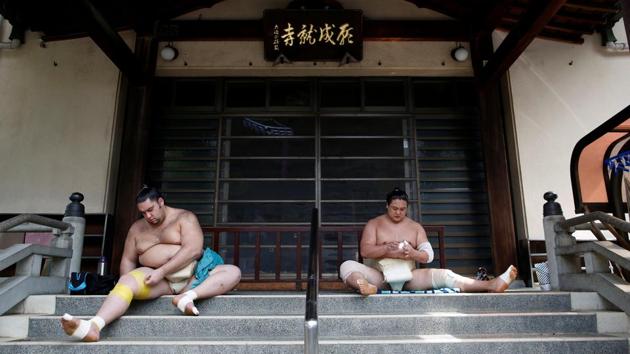
Brazilian-born sumo wrestler Kaisei (L), and Mongolian-born sumo wrestler Kyokushuho tape up during a training session at Ganjoji Yakushido temple in Nagoya, Japan. (Issei Kato / REUTERS)
8/13
 View Photos in a new improved layout
Updated on Jul 20, 2017 10:17 AM
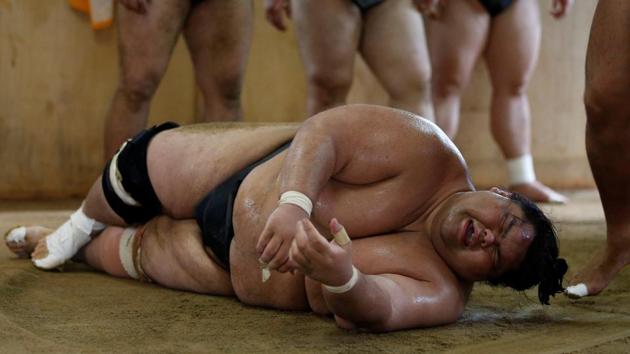
‘We wear our topknots, kimonos and sandals, and live by Japanese rules, and the rules of sumo,’ said Tomozuna Oyakata. ‘It’s only by chance that we were born a different nationality’. Full assimilation into Japanese culture means that foreign wrestlers face no ill-will. (Issei Kato / REUTERS)
9/13
 View Photos in a new improved layout
Updated on Jul 20, 2017 10:17 AM
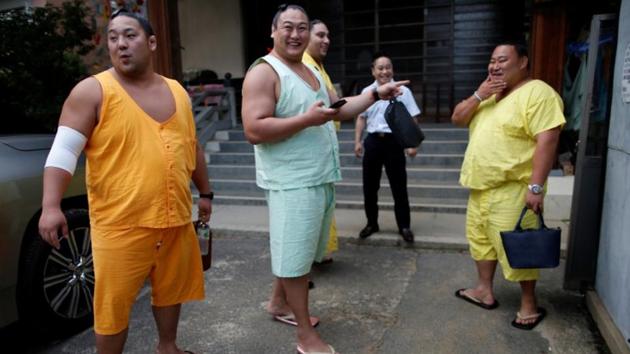
Sumo wrestlers Kyokutaisei, Mongolian-born Kyokushuho, Brazilian-born Kaisei and Asahisho, prepare to leave the Ganjoji Yakushido temple for a dinner being hosted for them, in Nagoya, Japan. (Issei Kato / REUTERS)
10/13
 View Photos in a new improved layout
Updated on Jul 20, 2017 10:17 AM
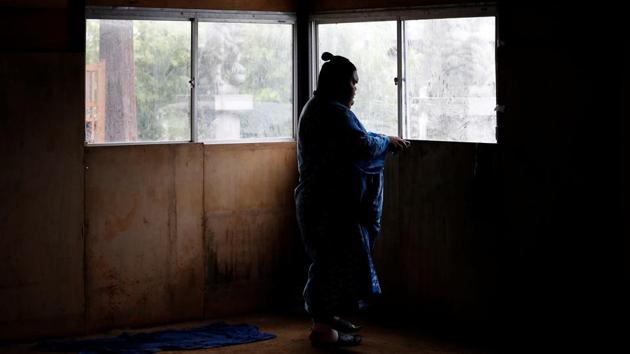
Sumo wrestler Kaiho stands on a sumo ring as he prepares for a training session at Ganjoji Yakushido temple in Nagoya, Japan, July 5, 2017. The process of becoming a sumo wrestler is a long and arduous one which requires years of dedication, practice and strict adherence to the sumo way of life. (Issei Kato / REUTERS)
11/13
 View Photos in a new improved layout
Updated on Jul 20, 2017 10:17 AM
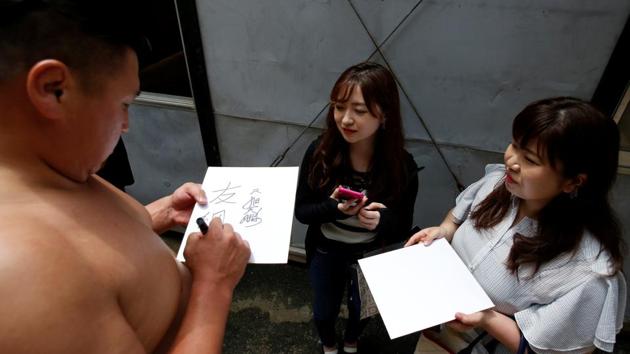
Mongolian-born Tomozuna Oyakata, or master of the Tomozuna stable, signs autographs for fans after a training session at Ganjoji Yakushido temple in Nagoya, Japan.Today, the one-time champion who was born Nyamjavyn Tsevegnyam, speaks near-flawless Japanese, has a Japanese wife, and has given up his Mongolian nationality to become Japanese - a requirement to become a sumo master, or ‘oyakata’. (Issei Kato / REUTERS)
12/13
 View Photos in a new improved layout
Updated on Jul 20, 2017 10:17 AM
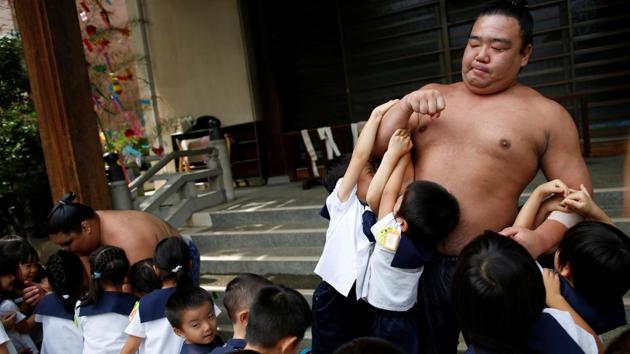
Sumo wrestler Kainoryu (R) plays with kindergarten children at Ganjoji Yakushido temple in Nagoya, Japan. After ending practice at 10:30 a.m., the wrestlers mingle with fans, sign autographs and pose for photos before the first of their two daily meals. (Issei Kato / REUTERS)
13/13
 View Photos in a new improved layout
Updated on Jul 20, 2017 10:17 AM


