
 E-Paper



Photos: Thailand’s heritage silk weaving kept alive by sole family
Once a thriving heritage -- Thailand's silk weaving culture is declining due to urbanisation and international market pressure. While a sole family is still holding on to their traditional silk weaving house, increasing urbanisation holds a threat to their future.
Updated on: Jun 08, 2019 6:54 PM IST

Share via


Copy link

1/8
 View Photos in a new improved layout
Updated on Jun 08, 2019 6:54 PM
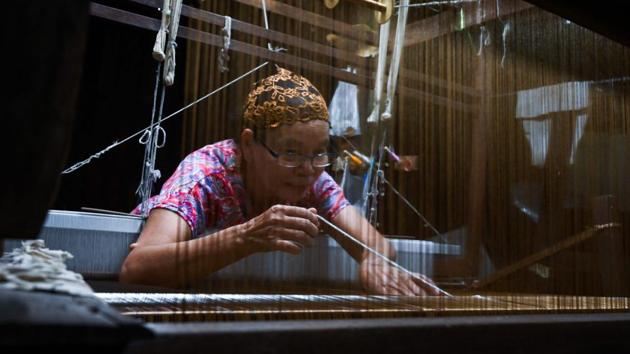
Rampai Sripetch, 65 -- weaves silk fabric on a loom at a workshop near Darul Falah mosque in Bangkok. There is a steady decline in apprentice weavers at silk shops, as modernity lures young Muslims away from a trade their community has dominated for generations. (Romeo Gacad / AFP)
2/8
 View Photos in a new improved layout
Updated on Jun 08, 2019 6:54 PM
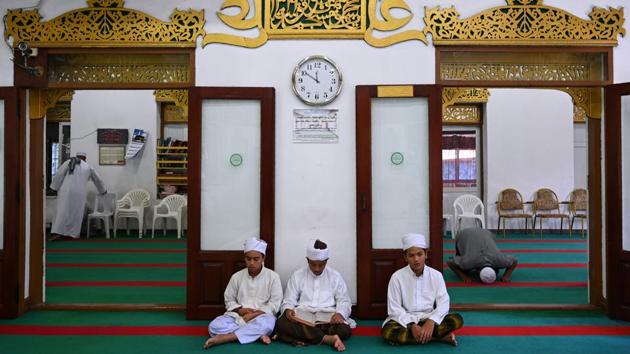
Young Thai boys read a copy of the holy Koran before Friday noon prayers at Haroon mosque in Bangkok. Though Thailand is overwhelmingly Buddhist, about seven million Muslims make up the country’s largest religious minority, and like the faithful everywhere they are observing Ramzan this month. (Romeo Gacad / AFP)
3/8
 View Photos in a new improved layout
Updated on Jun 08, 2019 6:54 PM
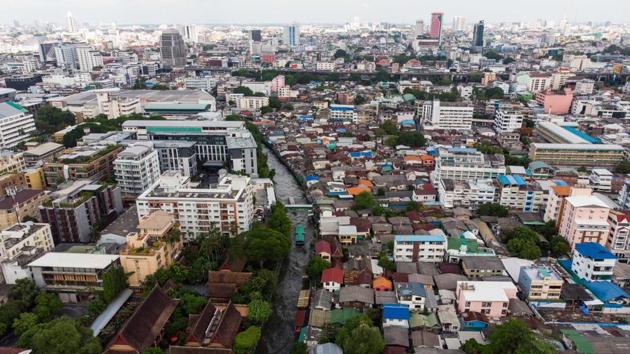
Darul Falah mosque surrounded by traditional houses, a museum, shops and high-rise buildings traversed by a canal. Niphon Manutha, 71 says his family are the last of the Muslim weavers of Baan Krua, a storied neighbourhood of dilapidated wooden houses and a mosque in downtown Bangkok, nearly engulfed by the city creep of condos and skyscrapers. (AFP)
4/8
 View Photos in a new improved layout
Updated on Jun 08, 2019 6:54 PM
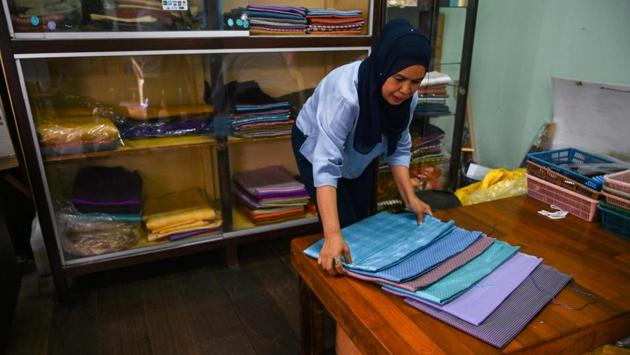
Natcha Swanaphoon, Niphon’s sister seen arranging hand-woven silk fabrics in her shop near Darul Falah. Today, Niphon’s shop has no traditional silk weavers under 60. Thailand exports around $15 million-worth of silk, but Vietnam and China now provide fierce competition to the lucrative US market. (Romeo Gacad / AFP)
5/8
 View Photos in a new improved layout
Updated on Jun 08, 2019 6:54 PM
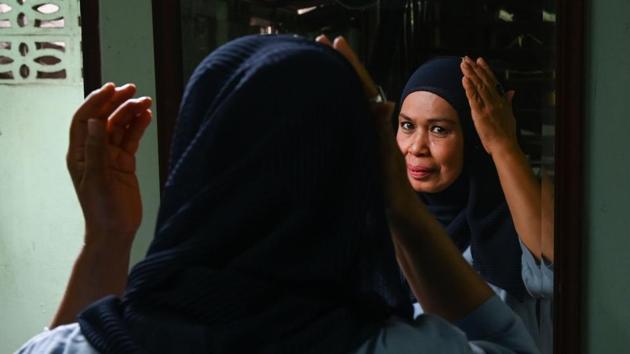
Natcha adjusts her hijab in front of a mirror at her family’s silk fabric shop. She says “It’s a shame the young generation is not interested.” The craft was passed down through generations of ethnic Cham Muslim women who migrated from Cambodia centuries ago and perfected the art of turning the cocoons made by Thai silkworms into metres of soft cloth with a unique sheen coveted across the world. (Romeo Gacad / AFP)
6/8
 View Photos in a new improved layout
Updated on Jun 08, 2019 6:54 PM
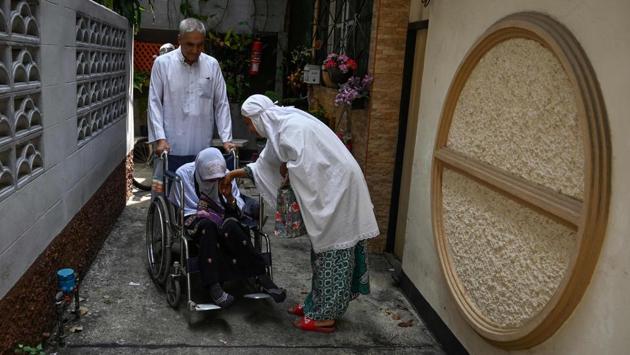
A Thai woman pays respect to an elderly woman on a wheelchair near Haroon mosque. Silk weaving boomed after World War II thanks to American “Silk King” Jim Thompson, who is credited with taking Thai silk global. Thompson’s house is one of the most visited tourist sites in Bangkok today, but it was across the canal in Baan Krua where he first found his suppliers among the Muslim weavers. (Romeo Gacad / AFP)
7/8
 View Photos in a new improved layout
Updated on Jun 08, 2019 6:54 PM
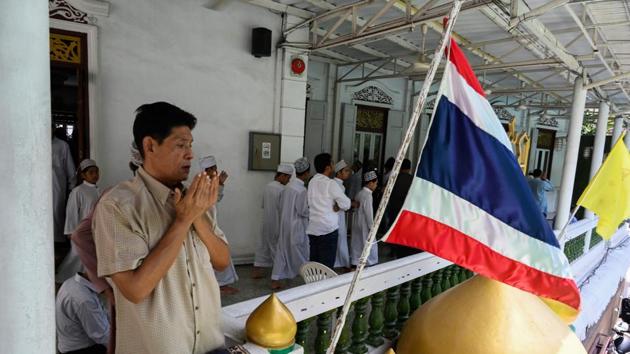
A man attends Friday noon prayers outside the Haroon mosque decorated with a Thai flag. Muslims from Iran, Indonesia and other parts of Asia have long settled in Bangkok and around central Thailand, communities of traders and businessmen drawn to the city’s location at the heart of Southeast Asia. (Romeo Gacad / AFP)
8/8
 View Photos in a new improved layout
Updated on Jun 08, 2019 6:54 PM


