
 E-Paper



Pole of cold: Extraordinary photos of the coldest village on Earth
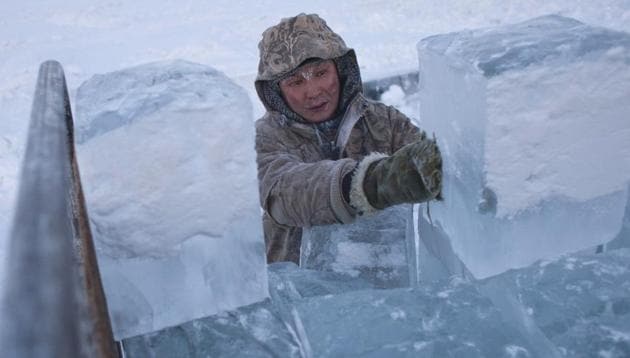
Ruslan, 35, loads blocks of ice onto a truck outside Yakutsk in the Republic of Sakha, northeast Russia. Known as the ‘Pole of Cold’, the coldest temperatures in the northern hemisphere is considered to be the coldest permanently inhabited settlement in the world. (Maxim Shemetov / REUTERS)
Updated on: Jun 02, 2017 12:57 PM IST

Share via


Copy link

1/18
 View Photos in a new improved layout
Updated on Jun 02, 2017 12:57 PM
Ruslan, 35, loads blocks of ice onto a truck outside Yakutsk in the Republic of Sakha, northeast Russia. Known as the ‘Pole of Cold’, the coldest temperatures in the northern hemisphere is considered to be the coldest permanently inhabited settlement in the world. (Maxim Shemetov / REUTERS)
2/18
 View Photos in a new improved layout
Updated on Jun 02, 2017 12:57 PM
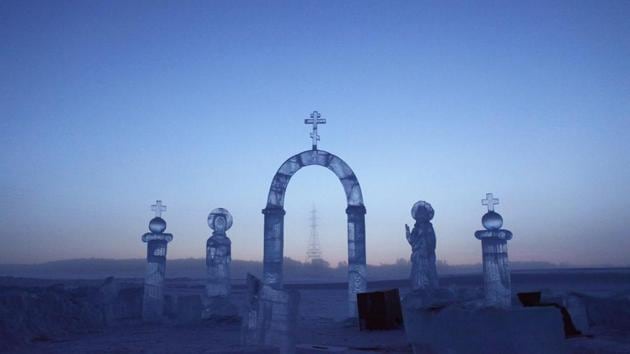
A view shows ice sculptures on the Lena river, constructed for the celebration of Orthodox Epiphany outside Yakutsk in the Republic of Sakha, northeast Russia. (Maxim Shemetov / REUTERS)
3/18
 View Photos in a new improved layout
Updated on Jun 02, 2017 12:57 PM
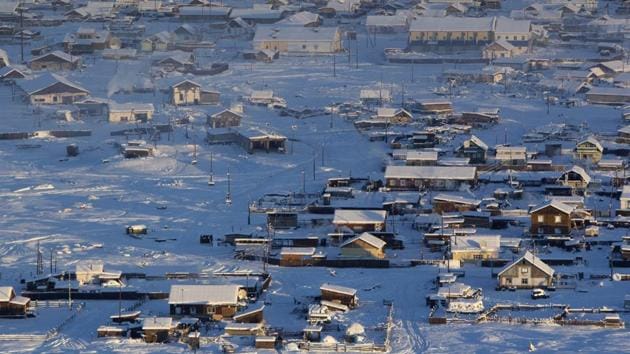
According to the United Kingdom Met Office a temperature of -67.8 degrees Celsius (-90 degrees Fahrenheit) was registered in 1933 - the coldest on record in the northern hemisphere since the beginning of the 20th century. Yet despite the harsh climate, people live in the valley, and the area. (Maxim Shemetov / REUTERS)
4/18
 View Photos in a new improved layout
Updated on Jun 02, 2017 12:57 PM
The roof of a house is covered with snow in the village of Tomtor. And despite its terrible winters, in June, July and August temperatures over 30c are not uncommon. (Maxim Shemetov / REUTERS)
5/18
 View Photos in a new improved layout
Updated on Jun 02, 2017 12:57 PM
Sergei Burtsev, 41, a meteorologist, prepares to launch a weather balloon in the village of Tomtor. (Maxim Shemetov/ REUTERS)
6/18
 View Photos in a new improved layout
Updated on Jun 02, 2017 12:57 PM
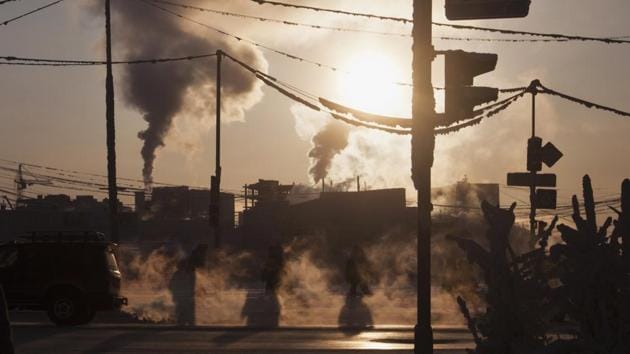
People wait to cross a road in Yakutsk, in the Republic of Sakha, northeast Russia. The village, which is home to around 500 people, was originally a stop-over for reindeer herders who would water their flocks from the thermal spring. (Maxim Shemetov/ REUTERS)
7/18
 View Photos in a new improved layout
Updated on Jun 02, 2017 12:57 PM
Ships are moored on the banks of a river for the winter outside Yakutsk in the Republic of Sakha. (Maxim Shemetov / REUTERS)
8/18
 View Photos in a new improved layout
Updated on Jun 02, 2017 12:57 PM
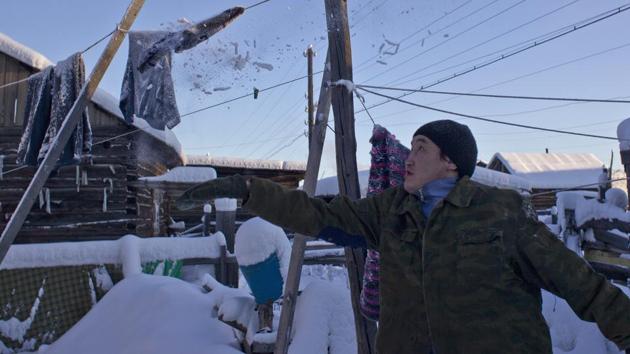
Igor Vinokurov, 35, knocks snow and ice off a frozen washing line in the village of Oymyakon. (Maxim Shemetov/ REUTERS)
9/18
 View Photos in a new improved layout
Updated on Jun 02, 2017 12:57 PM
Children run across the central square in the village of Tomtor, which lies in the heart of the Oymyakon valley, has a school, a post office, a bank and even an airport runway (even though it only functions during the summer). (Maxim Shemetov/ REUTERS)
10/18
 View Photos in a new improved layout
Updated on Jun 02, 2017 12:57 PM
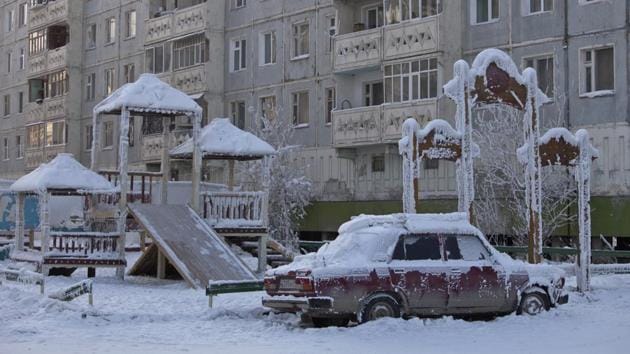
A car covered in ice is pictured near a playground . (Maxim Shemetov / REUTERS)
11/18
 View Photos in a new improved layout
Updated on Jun 02, 2017 12:57 PM
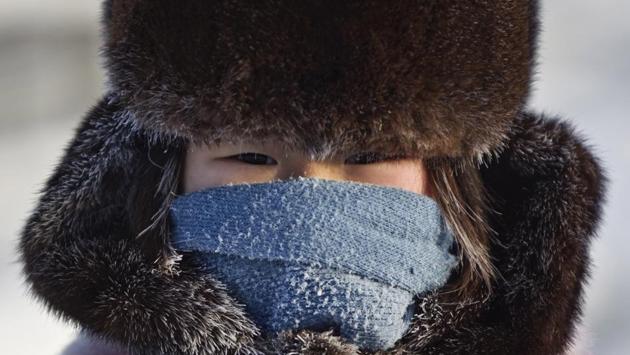
A girl poses for a picture in Oymyakon, a village which is 750 metres above sea level. (Maxim Shemetov / REUTERS)
12/18
 View Photos in a new improved layout
Updated on Jun 02, 2017 12:57 PM
A man sells fish at the Farmers' Market in Yakutsk. Due to the extreme conditions nothing grows, so locals are dependent on meat for the nourishment. (Maxim Shemetov / REUTERS)
13/18
 View Photos in a new improved layout
Updated on Jun 02, 2017 12:57 PM
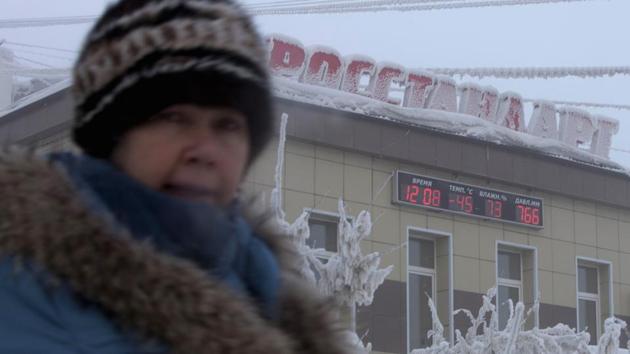
A woman passes a board on a building, displaying the local time, temperature, humidity and air pressure in Yakutsk. (Maxim Shemetov / REUTERS)
14/18
 View Photos in a new improved layout
Updated on Jun 02, 2017 12:57 PM
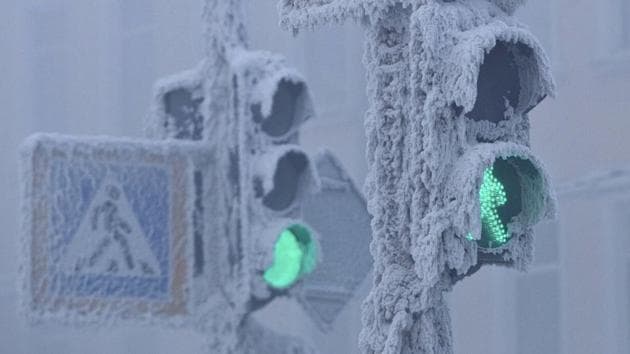
Traffic lights are seen covered in snow in Yakutsk, in the Republic of Sakha. (Maxim Shemetov / REUTERS)
15/18
 View Photos in a new improved layout
Updated on Jun 02, 2017 12:57 PM
Lumberjacks Alexey Egorov, 45, (L) and Semion VInokurov, 53, lunch in the cabin of their truck in forest outside Tomtor . (Maxim Shemetov / REUTERS)
16/18
 View Photos in a new improved layout
Updated on Jun 02, 2017 12:57 PM
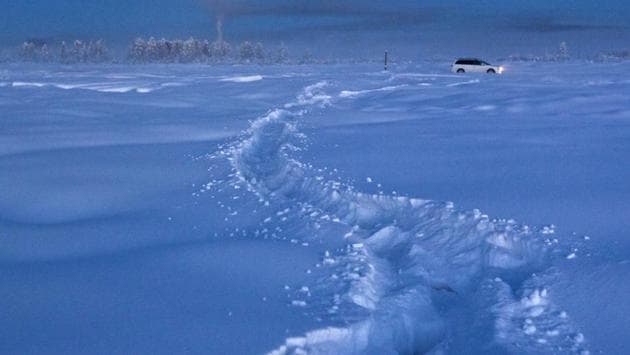
A car drives through the snow at night near Vostochnaya meteorological station, some 500 km northeast of Yakutsk . Locals keep their cars running all day for fear of them not starting again if turned off. (Maxim Shemetov / REUTERS)
17/18
 View Photos in a new improved layout
Updated on Jun 02, 2017 12:57 PM
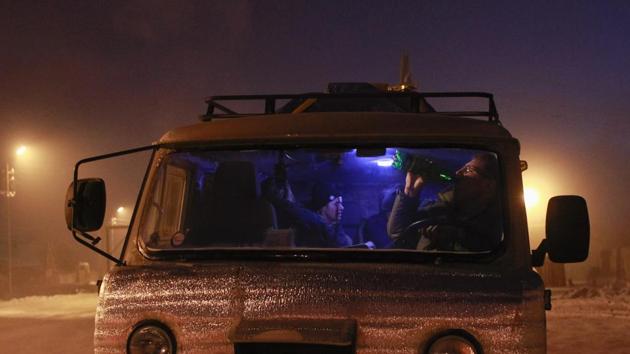
A man takes a drink in the cabin of his truck in the village of Ytyk-Kyuyol in the Republic of Sakha. (Maxim Shemetov / REUTERS)
18/18
 View Photos in a new improved layout
Updated on Jun 02, 2017 12:57 PM


