
 E-Paper



Monday Musings:11 tragic deaths…What do they mean?
There’s sheer madness on our roads and the grief and loss to the nation is colossal. Is each one of us doing something about this? Nothing is more precious than a human life. Let’s not waste it.


We look at unnatural deaths somewhat closely in a newspaper. And the heart bleeds when we report on the untimely deaths of bright young people.
Bright, young, cheerful men and women, the darlings of their families and loved ones, studying in Pune at a high cost to their parents and preparing for a promising future. The heart bleeds when suddenly, such a promising and prospective member of the national workforce is lost to the world.
These are among the most tragic deaths that we report day in and day out as a part of our “routine” journalism. Unfortunately, these deaths are so very frequent in our city- and also in our country, as the numbers indicate- that they, kind of, cease to matter beyond a point. They are reduced to a statistic, to be tabulated by the police department for the annual count of “deaths in road accidents” and then compared with the statistics of the last three years in the least.
Most of these deaths of young people are in road accidents, often when they are behind the wheels. It has been established that 90 per cent of road accidents are because of “human error”- in Indian circumstances, tragically, it is not always the driver who is at fault. A pedestrian- you or me- can get killed by being knocked by a speeding vehicle coming from behind. This is the sad reality in India, but we citizens continue with our reckless and irresponsible driving unmindful of the consequences.
To lose a bright young person in a road accident can be the worst possible tragedy that can befall a family. But has the behaviour of Indian societies changed because of that?
It is human nature to believe firmly that tragedies- “bad things,” as we say- always happen to other people. And therefore, we continue with our reckless behaviour till something similar happens in our own family.
This is the reason why we continue to drive recklessly on the roads- either killing ourselves or others. We not only comply with safety rules but our politicians, including Members of Parliament, take pride in opposing the mandatory helmet rule. As happened a few months back, in the run-up to the elections, the media reported that even the chief minister had instructed the Pune police chief to go soft on the helmet drive!
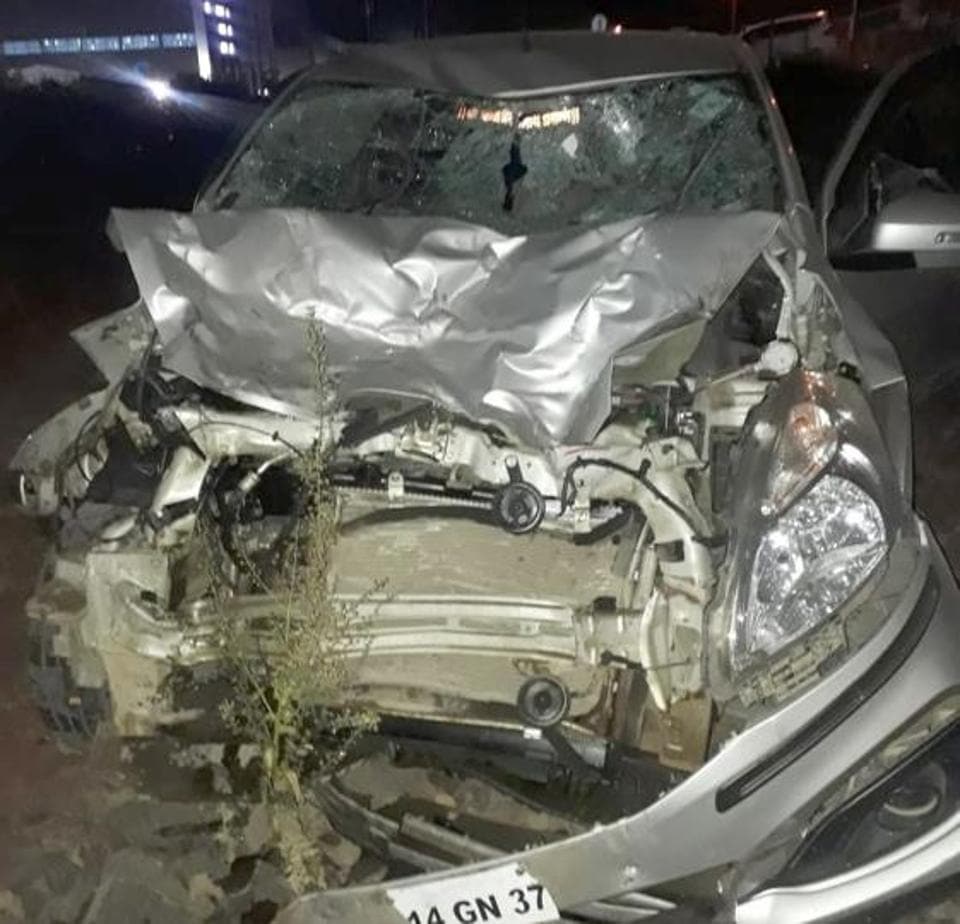
In a matter of just 24 hours between Tuesday and Wednesday, five people on three motorcycles were killed near Khalumbre in Chakan when a speeding Maruti Ertiga lost control, crossed the divider and dashed into them head-on. No fault of the motorcyclists!
At the Hinjewadi police station junction on Wednesday, 2 pm, a 24-year-old youth on a two-wheeler dashed into three pedestrians, one of who died.
Look at our other headlines from the Friday (May 3, 2019) edition: “Pick-up truck rams into a two-wheeler, kills woman,” and then, “Speeding tanker kills teen on bike.”
There’s sheer madness on our roads and the grief and loss to the nation is colossal. Is each one of us doing something about this?
Meanwhile, on Thursday (May 2, 2019) morning, three Master of Business Administration (MBA) students from Bharati Vidyapeeth’s (Deemed to be University) top-ranking management institute died when they were on a picnic and ventured for an unauthorised swim in the Mulshi dam waters. First, a young woman was trapped in the sludge and dragged into the waters and when she cried for help, two of her friends jumped into the waters to try and save her. Sadly, they too drowned. The very next day a student who had just passed his Class 11 drowned in a water body in a Chakan stone quarry. He was having fun in the waters with his friends.
These are the most tragic deaths and our society needs to do multiple things to prevent them: Put up big and multiple warning boards at such water bodies; teach ourselves and our children to drive safely at all times and demand from the authorities that proper attention be paid to hazardous spots.
Nothing is more precious than a human life. Let’s not waste it.


