
 E-Paper



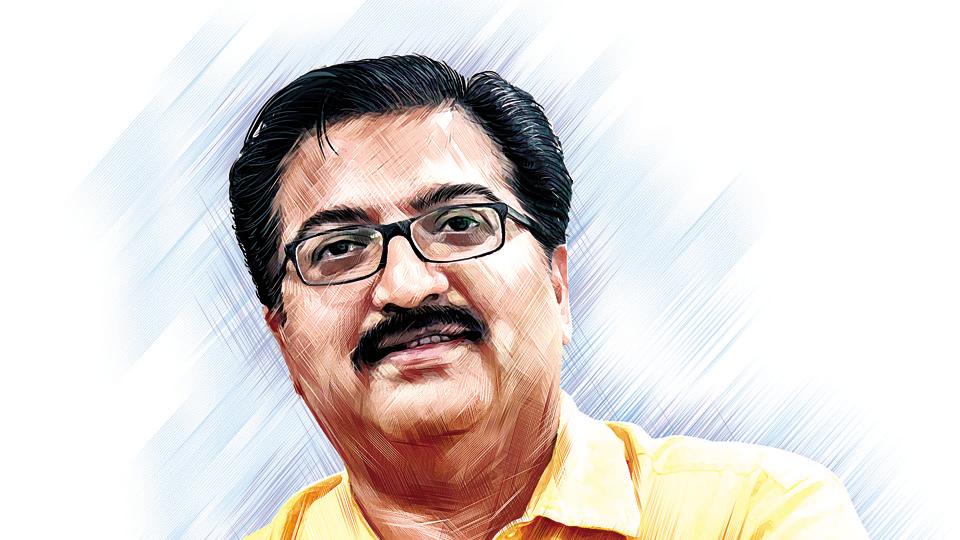
#puneonmymind: Prakash Magdum, director, NFAI on how National Film Archive has emerged as a culture hotspot
Pune has retained its old-world charm and values. Punekars love to indulge in nostalgia, be it films, music and drama. What fascinates me the most about the city is while moving forward adapting to the changes of time, the citizens have always kept an eye on the past.

 Prefer HTon Google


Pune has been a city of film lovers. Ever since the advent of silent cinema in India and establishment of Prabhat studio in Pune, residents of Pune have thronged to theatres to watch moving images on screen. Apart from drama, dance and classical music, film as an art form has evolved in the city over the years. Many production houses, including Huns, Aryan and Agarwal Film Co, based in Pune created several masterpieces on celluloid.
Setting up of Film & Television Institute of India (FTII) in 1961 in Pune was a landmark step towards providing a structured education in the making of films. National Film Archive of India (NFAI) was established in Pune in 1964 to preserve the cinematic heritage of the country. These two institutions have played a seminal role in spreading film literacy in our country. The popular one-month film appreciation course held in the city by FTII and NFAI has helped in creating an audience that supports the cause of cinema.
The film archive functioned from the Jayakar bungalow, a popular landmark at the intersection of Prabhat road and Law College road, till the 1990s. The NFAI auditorium on the same premises has attracted lovers of serious cinema over the years.
Recently, several initiatives were taken up so as to open up the film archive to the common man. Various film festivals, thematic events, special screenings and exhibitions were organised to make the film archive a buzzing space. Best of the filmic content was brought from all parts of the world to engage film lovers in the city. Through tie-ups with cultural organisations, film clubs and educational institutions as well as starting of children’s film club and documentary film club, we attracted young minds to the archive.
Many film personalities visited NFAI and donated their material for preservation. Increased outreach resulted in citizens and film collectors from city coming forward to submit the film related material at the archive. Two specific examples come to my mind. Shambhavi Bal, daughter of well-known photographer SM Ajrekar, working for Navyug Chitrapat deposited over 1,000 still photographs. This collection showcases the golden age of Marathi cinema of the 1960s.
Last year, we discovered a rare 1967 documentary made on Raigad fort. A creation of Usha Mangeshkar, Babasaheb Purandare and Madhavrao Shinde, this 10-minute short film takes us 50 years back with visuals of the capital of the great Chhatrapati Shivaji Maharaj. There was no space to even sit and stand in NFAI auditorium when a special screening of this short film was organised.
Punekars also responded in large numbers when NFAI hosted a special screening of films by Lumiere brothers. We also arranged a special session of live painting of a film poster. Veteran artist Subodh Guruji mesmerised the audience through the stroke of his brush and brought alive the lost art of hand painted posters.
As a public institution, we wanted to de-mystify the working of the archive and, therefore, vaults were opened up on certain days so that people can come and see the actual process of preservation. A regular film club is run by NFAI so that the classics from India and world from our collection are regularly screened to the members.
A research programme focussing on academic studies on Indian cinema has been promoted by the NFAI and several important topics have been highlighted by various scholars over the years. Some of them have also been published by the archive.
The archive has been using the social media platforms to bring in public domain the rare content preserved in NFAI. This has been welcomed and appreciated by the film lovers and researchers.
NFAI also decided to join hands with Savitribai Phule University of Pune (SPPU) to start a new one-year post-graduate diploma course in Indian film studies with a component of film preservation. The idea is that students of this course can take benefit of the rich database and resources at the archive. The scheme of internships also resulted in getting young boys and girls interested in films to spend time at the archive for a certain period, thereby benefiting both the students and archive.
A recent up-gradation drive saw the facelift of the infrastructure at the archive resulting in a state-of-the-art auditorium. This has turned out to be one of the most popular cinema halls in the city where film-makers want to screen their creation and film lovers throng in big numbers to catch a classic. In today’s digital world, watching a film on 35 mm projector has its old-world charm and NFAI auditorium is one of very few cinema halls left where projection is done the analog way.
NFAI also has kept pace with latest technological advances and has installed 4K digital projection system at its auditorium.
Restoration of Jayakar bungalow and setting up of a digital library will be yet another major attraction for researchers and film lovers.
The film archive has emerged as a cultural space where young minds come together and engage in their creative pursuits. A large number of educational institutions, particularly in the field of mass communication, journalism and film-making, have come up in Pune in recent years. The vibrant theatre movement in Pune is exploring new dimensions that are both classic and contemporary. Young film-makers are telling their stories that are rooted in this soil. Pune has retained its old world charm and values. Punekars love to indulge in nostalgia, be it films, music and drama. What fascinates me the most about the city is while moving forward adapting to the changes of time, the citizens have always kept any eye on the past.


