
 E-Paper



93.7 % of Punjab’s women labourers in economic distress, finds study
As per a study conducted to know the economic, social and political participation of women farm labourers, it was found that 93.71% of 1,017 women labour households that were sampled, are under debts.


Even though Punjab government had announced to waive-off farmer debts in Punjab, the households of women farm labourers, in the rural sector, are still living in economic distress.
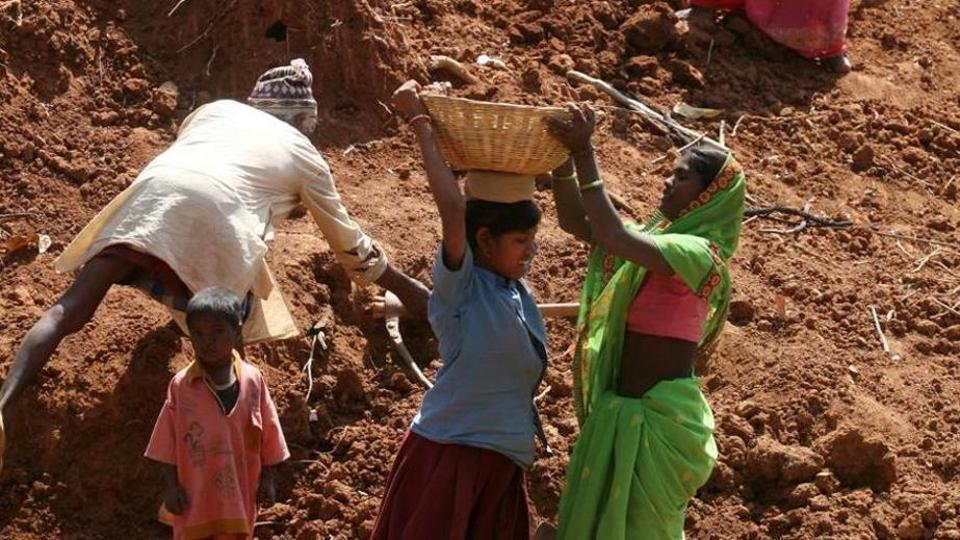
As per a study conducted to know the economic, social and political participation of women farm labourers, it was found that 93.71% of 1,017 women labour households that were sampled, are under debts. The study was sponsored by Gurnam Kaur Memorial Education Centre at Isru village in Ludhiana district. The project was carried out by a five-member team headed by Gian Singh, an expert in rural economy and former professor at the economics department in Punjabi University.
Singh said Fatehgarh Sahib and Mansa districts have been selected from Malwa region, Amritsar district from Majha region; and Jalandhar district from Doaba region.
He said that 1, 017 women labour households (408 households from Malwa region, 349 from Majha region and 260 from Doaba region) from 29 villages were visited for the information.
Economic conditions
During study, it came to fore that an average amount of debt per sampled households is ₹53,916. “Out of the total debt amount, 81% is provided by non-institutional sources which charge exorbitant rates of interest. Among the institutional sources, micro finance institutions contribute 8.56% of the total debt amount,” the study finds. The study stated that 33.98 % of debt is taken on high rates of interest. Up to 36% and above and the loan was largely taken for marriages and other socio-religious ceremonies, while only 15.29 % was used for health care.
Weak social status
As per the report, 91.84 % have semi-pacca houses while 80 % live in houses with dilapidated conditions. “Over 65% households have no separate kitchen in their houses. Although 84% have bathrooms, yet almost all the bathrooms are in dilapidated conditions,” the study stated. At least 11.70 % of the sampled households have no source of drinking water and are dependent on their neighbourers. When it comes to literacy level, 72.66% women labourers are illiterate, while not even a single woman labourer in the sample is graduate.
Hardships started at early age
Over 50 % women labourers reported that they started working as a labourer at the age of less than 20 years.The study stated that not even a single respondent is aware of the Minimum Wage Act and standard working hours fixed by the government.
Meanwhile, minimal number of labourers faced any kind of misbehaviour or sexual exploitation at the workplace by male employers.The study found that 45.43 % respondents have stated that their husbands are addicts, while, 36.77 % reported that their husbands did not contribute the entire income to the family; rather they take from the earnings of their spouses. In case of political participation and awareness, over 90% respondents did not know even the names of chief minister of the state and Prime Minister.


