
 E-Paper



A ray of hope for homebuyers
Projects stuck due to lack of funds or the builder’s inability to sell, now have a chance of finally getting completed with branded developers stepping in


Buyers awaiting possession of their homes from builders, who are strapped for cash to complete projects, finally have some reason to cheer. Development management agreements (DMA) are now being signed between local developers and major realty brands who have a track record of having executed, sold and completed projects on time.
With the Real Estate Regulatory Act (RERA) expected to put pressure on developers to complete projects on time or pay heavy penalty to buyers in case of delays, most builders will now be seen entering into development management contracts with brand names to start a new project and finish it (greenfield development). Financiers will also bring in new developers to finish incomplete projects (brownfield development). Under the Act, developers will have to pay the same interest rate for delays on their part as buyers do.
Such deals are likely to benefit homebuyers because development managers being brought in to complete an unfinished project have a brand name to protect and are more likely to finish the project on time.
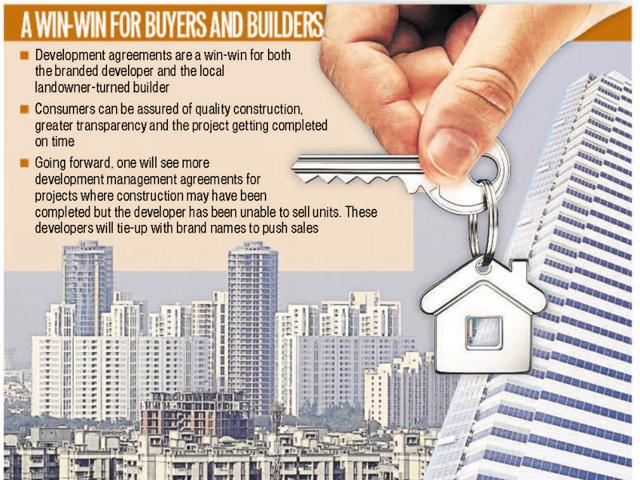
Under RERA, if a developer has launched a project but not delivered it, he will have to register the project with the regulator and open a separate account. Going forward, one will see more development management agreements for projects where construction may have been completed but the developer has been unable to sell units. These developers will tie-up with brand names to push sales, say experts.
But all companies may not want to associate with developers who have delayed projects. The readiness of a development manager to take up a project will depend on the degree of mess the local builder is in lest it spoils the branded developer’s name.
How will it help buyers?
For buyers, projects taken up by development managers are an opportunity to negotiate terms and conditions agreed upon in their original builder-buyer agreement.
Buyers can now choose to continue with the project in case they are confident about the new developer’s capability to finish it or decide to ask for a refund that earlier seemed unlikely. Also, since the project has been delayed, buyers can negotiate the terms of the builder-buyer agreement such as whether the penalty will be paid to him or adjusted against the amount he has to pay the developer. They will also have the upper hand to negotiate amenities being offered in the project while signing the new contract, says Saroj Jha of Delhi-based legal firm SRGR Law.
How does it work?
Development agreements are a win-win for both the branded developer and the local landowner-turned builder. Armed with a DMA, developers who have land parcels with approvals in place, will find it easy to sell by associating themselves with a brand that has executed projects in the past and speed up sales in a weak market. Consumers can be assured of quality construction, greater transparency and the project getting completed on time.
After RERA, developers in a messy, complicated situation will have to maintain a degree of compliance. In times to come, one will find land aggregators or consolidators who turned into developers during the boom time, going back to their core competencies and getting on board professionals to develop projects for them, says Anckur Srivasttava of GenReal Advisers.
In a development management project, the development manager is responsible for designing, marketing the project and even entering into client relationships. As for compensation, branded names charge 9% to 12% of the project sales proceeds and reimbursement of the project costs, he says. The development manager gets a fee without having to bear risks attached to putting money in a project.
From a landowner’s perspective, the branded developer comes in as a service provider and continues to own the land. “If a small developer or a traditional land aggregator is not equipped to deal with potential responsibilities and related risks and the obligations under the new RERA, it is better for them to focus on their core competencies,” says Srivasttava.
In case of a developer being declared bankrupt, financiers may decide to bring in a development manager to finish the project on a fee basis.
A development manager is like a merchant banker who works for a fee. This model can be used for both greenfield and brownfield projects. In case of a brownfield project, the incoming developer takes on the responsibility of customer sales and project execution.
The tasks cut out for him include dealing with financial investors stuck in the project, resolving issues with existing owners and taking the project forward after convincing customers that the project will be completed, says Vineet Relia, managing director of SARE Homes.


