E-Paper



Dubai real estate: US–Israel–Iran war raises questions over whether under construction property prices will drop
The US–Israel–Iran war has sparked social media discussions among Dubai investors who have put money into off-plan real estate projects

 Prefer HTon Google


The US–Israel–Iran war has sparked discussions on social media among investors in Dubai who have invested in off-plan, or yet-to-be-constructed, housing projects scheduled for delivery over the next two years.
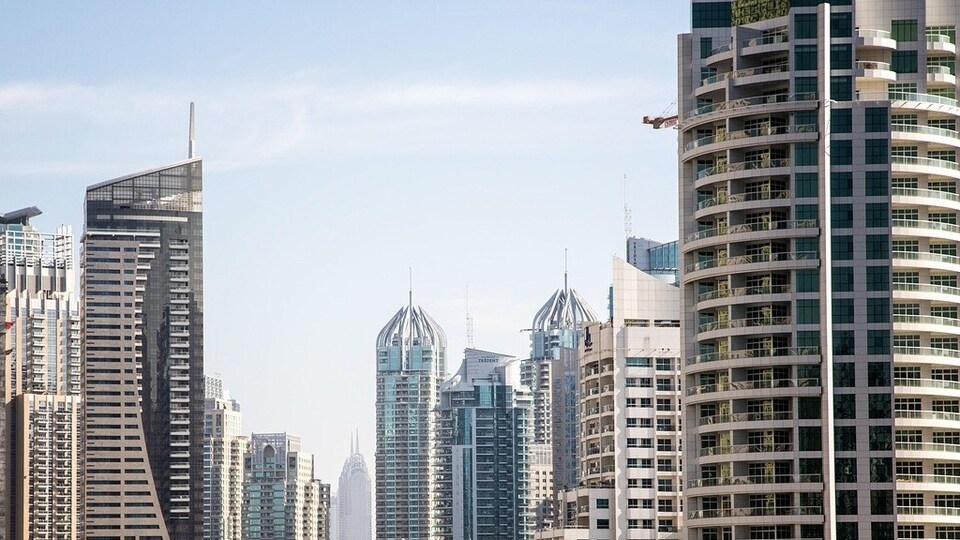
However, several users suggested that a sharp drop in property values is unlikely and that any downturn could be temporary if geopolitical stability returns. One user said the biggest risk for investors may not be losing everything, but being forced to hold on to properties longer than expected.
Real estate experts said that current geopolitical tensions could introduce caution among investors, potentially moderating transaction volumes in the near term as buyers assess the evolving risk environment. Nevertheless, Dubai’s position as a global financial and lifestyle hub, along with its diversified investor base and policy flexibility, continues to provide structural support to its real estate sector.
In the Reddit post, an entrepreneur said he had fully paid for three off-plan townhouse properties slated for handover between 2027 and 2028 and was worried about whether the investments could lose value amid the US-Israel-Iran war. “Do you think all my investments are going to be zero? Will anyone be renting out the townhouses?” the user asked, reflecting concerns that geopolitical risks could affect demand or delay project deliveries.
Investors fear delays and a slower resale market
Several Redditors suggested that investors may face a prolonged period of weak price growth, delayed handovers and lower resale liquidity.
One Redditor wrote that the “brutal truth” is that the investments will probably not drop, but the situation could become painful for off-plan buyers.
According to the comment, Dubai’s off-plan market is heavily driven by international investor capital rather than end-users, making it sensitive to geopolitical uncertainty.
“If global investors feel a region can turn unstable in a single day, they pause,” the user wrote, adding that such caution could stall price appreciation, slow new buyer activity and push developers to stretch handover timelines.
Also Read: Dubai real estate: Will mid-segment properties face pressure amid the US–Israel–Iran war?
Others echoed similar concerns, warning that a large number of units scheduled for completion between 2026 and 2029 could add to supply pressure if demand weakens at the same time. Investors who planned to flip their properties before handover may also attempt to exit simultaneously, potentially making resale liquidity thin, the post noted.
Will the real estate market correct?
Several Redditors argued that a sharp drop is unlikely and that any downturn could be temporary if geopolitical stability returns.
One user said the biggest risk for investors is not losing everything, but being forced to hold properties longer than expected. “Your investments will not be zero, but do not expect a flipping profit until the market recovers,” the user wrote, advising investors with the ability to hold assets to avoid selling in a downturn.
Another user noted that international buyers are often driven by “a narrative rather than reality,” suggesting that these questions among foreign investors could trigger short-term distress sales and temporarily lead to a dip in valuations.
Some participants also argued that smaller units, such as studios and one-bedroom apartments, could prove more resilient because they tend to rent more easily and maintain stronger liquidity during uncertain periods.
Others observed that if the conflict persists, property prices could fall by 30–40% in the short term, though they expect the market to stabilise once tensions ease.
“Your investment won’t go to zero,” one user wrote, pointing to the city’s infrastructure, lifestyle appeal and continued population inflows as factors likely to support the housing market over time.
Dubai real estate may see a short-term dip, say experts
Real estate experts say Dubai could see a temporary dip in transactions amid geopolitical uncertainty, though the market has historically shown resilience during regional crises.
“While global conflicts often lead to wider market corrections, regional instability has sometimes redirected capital into Dubai rather than away from it,” Sahil Verma, COO, Shray Projects, said.
Experts said that Indian investors, who make up one of the largest overseas buyer groups in Dubai’s property market, are unlikely to exit existing investments but may adjust their strategies.
“Real estate is typically a long-term asset, so most investors tend to hold on to what they already own,” Verma said. “However, new investments may be staggered, and some capital could be redirected towards premium housing markets in India, particularly in the National Capital Region, Mumbai and Bengaluru, where domestic demand and infrastructure-led growth remain strong.”
Prashant Thakur, Executive Director and Head - Research & Advisory, ANAROCK Group, said that while geopolitical tensions can temporarily affect investor sentiment, Dubai’s real estate market has historically demonstrated a remarkable ability to absorb shocks and recover relatively quickly. Understanding the likely impact of the current conflict, therefore, requires looking at both market fundamentals and past cycles.
India plays a particularly significant role in the Dubai real estate ecosystem. Indian nationals account for roughly 20–22% of foreign property purchases in Dubai, making them the largest investor group in the market. Several factors explain this trend, including geographical proximity, the stability provided by the UAE dirham’s peg to the US dollar, and relatively attractive rental yields that typically range between 6% and 9%.
“The current geopolitical tensions will undoubtedly introduce a degree of caution among investors. Transaction volumes may moderate in the near term as buyers assess the evolving risk environment. Yet Dubai’s position as a global financial and lifestyle hub, combined with its diversified investor base and policy flexibility, continues to provide strong structural support to its real estate sector.”
In that sense, the real question may not be whether geopolitical tensions will affect Dubai’s property market - they almost certainly will in the short term. The more relevant question is how quickly investor confidence returns once the geopolitical environment stabilises. If history is any guide, Dubai’s real estate market has repeatedly demonstrated that it can recover faster than many global property markets, he added.
Disclaimer: This report is based on user-generated content from social media. HT.com has not independently verified the claims and does not endorse them