E-Paper



Dubai real estate: Will housing sales moderate if buyers adopt a wait-and-watch approach?
Iran–US–Israel ‘war’ impact: Dubai real estate sales may slow short term as buyer caution rises and increasing supply puts pressure on property prices

 Prefer HTon Google


The Iran–US–Israel 'war' could moderate Indian investment in Dubai’s real estate market if geopolitical uncertainty persists. Experts say such situations usually lead to caution rather than panic, with buyers likely to postpone transaction closures until greater clarity emerges. A sustained slowdown in deal activity may eventually put pressure on prices, particularly as more than 1 lakh new residential units are expected to enter the market this year.
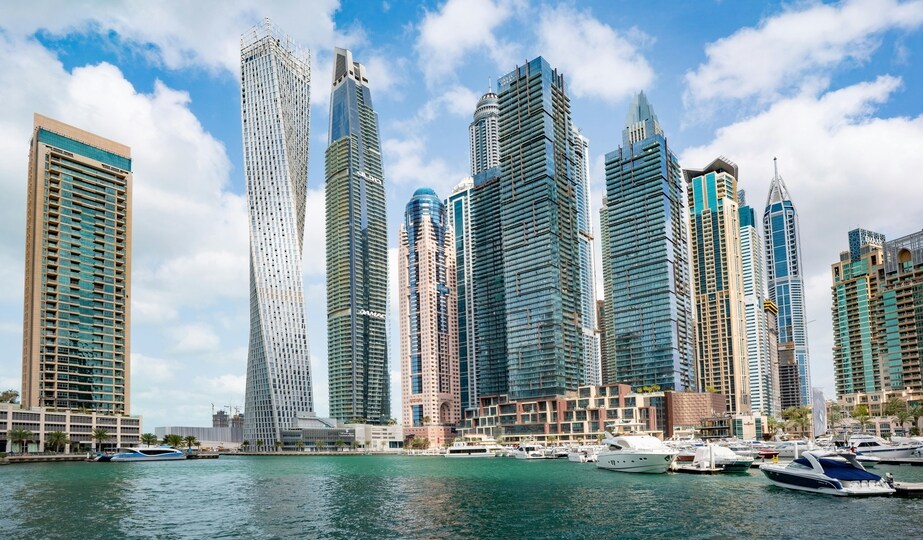
“Around 120,000 units are expected to hit the Dubai market this year, compared to the typical annual supply of 60,000–65,000 units, effectively double the usual volume. If sales activity slows amid geopolitical uncertainty, the impact on pricing could become visible over the next couple of quarters. A decline in transaction momentum would inevitably exert pressure on prices,” one of the real estate experts, not wanting to be quoted, said.
“In the short term, the immediate aftermath of geopolitical tensions tends to create hesitation rather than panic. Buyers are likely to delay transaction closings. They may also reassess their risk exposure or negotiate more aggressively,” said Sandeep Mangla, Managing Director, Forteasia Realty Pvt Ltd.
Also Read: Trump properties in Dubai attacked? Claim viral amid Palm Jumeirah fire as Iran strikes back
Short-term caution, long-term recalibration
According to Mangla, periods of geopolitical uncertainty typically trigger short-term caution rather than panic. “Transactional and speculative activity may decline in the immediate aftermath,” he said.
Mangla said that while some investors may delay closures, renegotiate prices more aggressively or reassess risk exposure, long-term capital often repositions itself into stable markets.
“Dubai continues to attract high-net-worth individuals from Europe and Asia. In uncertain times, investors shift toward markets that offer capital preservation, stable returns and regulatory clarity,” he said.
Aman Gupta, Director, RPS Group, echoed this view, stating that capital does not disappear during geopolitical crises; it gets repositioned. He said Dubai has increasingly been perceived as a geopolitical hedge in global property portfolios, benefiting from its dollar-pegged currency, tax advantages and residency-linked investment frameworks.
However, experts cautioned that if uncertainty persists, the impact could become visible over the next few quarters. If transaction volumes slow amid cautious sentiment, pricing pressure may emerge, particularly in speculative or off-plan segments.
“Even if the conflict de-escalates, some moderation in buying sentiment could follow,” experts said, noting that NRI and overseas investors may reassess their exposure depending on how alliances evolve and how long tensions persist.
Real estate markets across the Middle East may see buyers adopt a wait-and-watch approach amid rising uncertainty. Experts say this environment could prompt buyers to renegotiate deal terms, particularly in secondary segments, where price revisions or aggressive discounts of around 3–7% may become more common.
Also Read: Dubai vs Mumbai: What ₹5 crore can fetch you in real estate, returns, maintenance costs and more
What attracts Indian buyers to real estate in Dubai?
Indian buyers consistently rank among the leading investor groups in Dubai, regularly achieving top rankings. The UAE Golden Visa has further strengthened the emirate’s appeal as a preferred second-home destination for Indian investors, say experts.
It should be noted that in 2025, Indian buyers accounted for nearly 23% of foreign property transactions in Dubai. Their growing interest is largely driven by the emirate’s tax-efficient real estate ecosystem, where the absence of income and capital gains taxes enhances long-term returns.
Currency diversification benefits and the availability of residency-linked investment avenues in the United Arab Emirates also attract investors. World-class infrastructure and an established institutional tenant base position Dubai real estate as both a lifestyle and an investment asset.
Rental yields are also around 7–9%, significantly higher than the 2–4% typically seen in major Indian cities, say experts.