E-Paper



Housing society swimming pools: Should you pay a premium for an amenity that you might never use?
Pool for show? Redditors question empty society pools as brokers say flats with pool access often command a 10% premium

 Prefer HTon Google


A sparkling blue swimming pool has long been a staple of residential brochures. Captured from aerial angles and framed with loungers and mood lighting, it symbolises luxury, aspiration, and an upgraded lifestyle. But Redditors are questioning the reality behind these glossy images: if every housing society promises a pool, why do so many remain largely unused once residents move in?
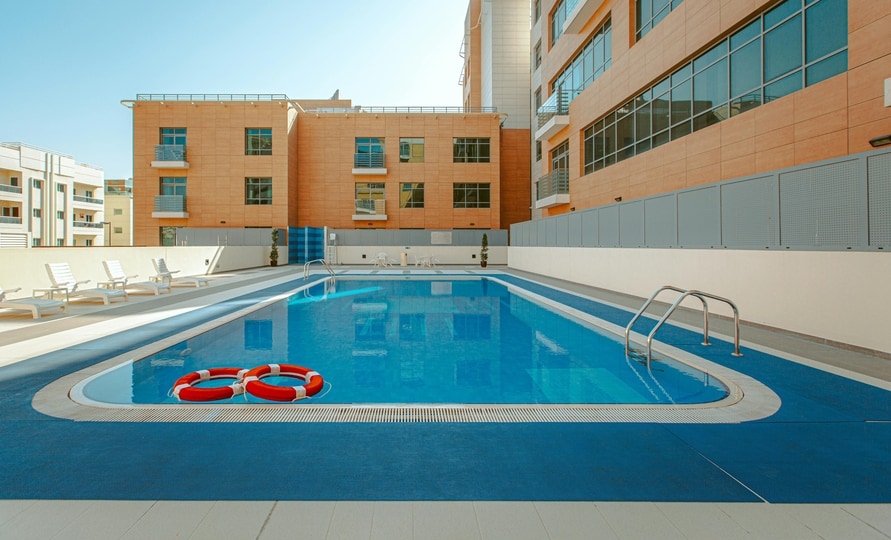
“Every new housing society shows a big swimming pool in ads. It looks very nice and modern. Many people feel happy seeing it during the visit. But after moving in, the pool is mostly empty. Some people are busy with work. Some say maintenance charges are high,” the post said.
‘Because swimming pools sell flats’
One of the Redditors said, “Because a swimming pool sells flats! Every society needs at least one for selfies, if not for swimming.”
Redditors point out that in India, a private swimming pool remains associated with exclusivity and upward mobility. It is not readily accessible outside premium clubs or hotels, making it a powerful visual differentiator in project advertising.
For developers, especially in competitive micro-markets where location and pricing may be similar across projects, a pool becomes a shorthand for lifestyle positioning. It enhances perceived value during site visits, even if actual usage later proves limited, real estate brokers say.
Aspiration versus habit
Another Reddit user offered a more behavioural explanation. Many buyers, they wrote, initially feel excited about swimming or learning the skill. “But when you get it, you are like I will swim tomorrow or next week, etc.,” the user noted.
Maintenance also plays a role. Pools require regular filtration, chemical balancing and lifeguard supervision. Poor upkeep can lead to hygiene concerns, including skin infections. If usage drops to a handful of residents, management committees may hesitate to incur recurring costs for cleaning and staffing, creating a cycle of neglect and further decline in usage, real estate brokers pointed out.
Not everyone agrees that swimming pools are underutilised. One Redditor argued that usage depends heavily on crowd management and membership models.
Citing examples from Delhi, the user contrasted an overcrowded neighbourhood pool in Lajpat Nagar with the more regulated Sirifort facility, which operates on temporary memberships and fixed slots. “Basically, you have filtered excess. So swimming pools are damn useful,” the Redditor wrote.
Pools add a premium to the maintenance and even to the apartment costs
Kiran Kumar of Hanu Reddy Realty said the presence of a swimming pool does translate into a measurable cost premium, both in ongoing maintenance and, in some instances, in apartment pricing.
According to him, societies with a swimming pool typically see maintenance charges rise by 15–20%, though the exact increase depends on factors such as the pool's size and the number of apartments sharing the cost. In larger gated communities, the per-unit burden may be lower due to cost distribution, but there is still an incremental premium compared to projects without a pool.
He said that despite the higher upkeep costs, a swimming pool remains an important consideration for specific buyer segments, particularly families with children and younger homebuyers. In many urban micro-markets, especially in mid- to premium-segment housing, it has become challenging to find gated communities without one.
Kumar noted that apartments overlooking the pool often command a price premium. As an example, he cited a project in Bengaluru where pool-facing units can sell for about ₹1.3 crore, compared to ₹1.1–1.2 crore for similar units facing internal roads, a premium of roughly 10% for the preferred view and perceived lifestyle appeal.
(Disclaimer: This report is based on user-generated content from social media. HT.com has not independently verified the claims and does not endorse them)