
 E-Paper



Reverse mortgage: Unlocking home equity without selling, what seniors and heirs need to know
Reverse mortgage for seniors: If there are unclear titles, unpaid taxes, or disputes over inheritance, heirs may face challenges inheriting the property

 Prefer HTon Google


In 2019, a retired couple in Pune used a reverse mortgage on their bungalow for extra income. After the husband died, the bank asked the children to repay the loan to keep the house. But the title still showed an uncle’s name from years ago, and no legal papers existed for his share. Clearing this took almost two years in court. Meanwhile, interest kept adding up, and by the time the matter was resolved, the family had to sell the house for less than its market value.

Understanding how reverse mortgages work
Reverse mortgage refers to the conversion of equity in the property to a lump sum amount disbursed by a bank to the borrower. Whilst securing a reverse mortgage may not be an issue during the lifetime of the borrower, the lump sum amount along with accrued interest payable upon death of the principal borrower may be an issue altogether.
“This shifts the burden on the legal heir to repay the entire amount along with interest in a short span of time, failing which, the property may have to be sold to cover the loan amount,” says Vivek Joshi, Senior Associate, PSL Advocates and Solicitors.
What is a reverse mortgage?
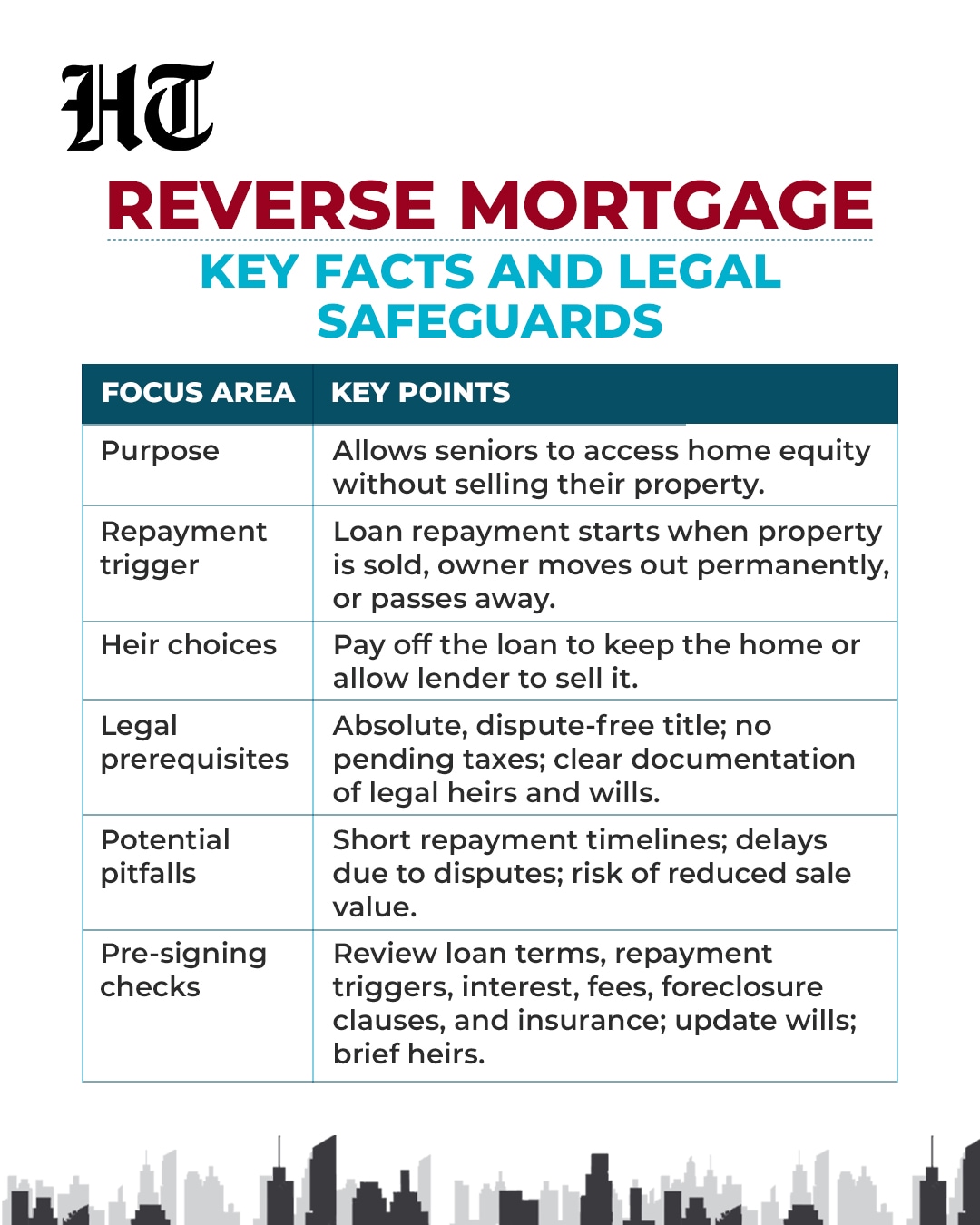
Simply put, a reverse mortgage lets a senior citizen borrow money from a bank by using their house as security, without selling it. Here, the bank pays an amount to the owner monthly, quarterly or as a lump sum. While the owner lives in the apartment, no repayment needs to be done. When the owner sells the property, moves out permanently or passes away, repayment starts. At that time the heirs have the option of repaying the loan and keep the house or let the bank sell it. Any leftover money from the sale, after clearing the loan goes to the heirs.
Under the Reverse Mortgage Scheme, 2008, the lender recovers dues by selling off the property if the borrower passes away, permanently moves out, or another contractually defined trigger occurs, and the dues remain unpaid.
“If heirs want to keep the home, they must repay the outstanding loan within the lender’s stipulated time window (often a few months, extendable at discretion). If successors contest rights or if title flaws exist, the settlement process can stall, leading to delays, legal costs, and erosion of property value,” says Atul Monga, CEO and co-founder, BASIC Home Loan.
If there are unclear property titles, unresolved encumbrances, unpaid taxes, or disputes over inheritance, your heirs may face significant challenges inheriting the home. Banks require the property to have an absolute, clear title and be free from any legal liabilities; issues here can delay or block transfer to heirs.
“Loan providers mandate a list of legal heirs, registered wills, and proof of title. Any ambiguity or dispute among heirs weakens their claim and complicates the transfer process,” says Kapildeo Maurya, Principal Partner, Urban Money.
The heir’s dilemma: Buy back or give up
Reverse mortgage may also impact the consolidated fund set-up for retirement income and lead to complications in the eventual transfer of property to the legal heir (as it works under the ordinary succession law). The peculiarity about reverse mortgage is the stringent rules formulated for borrowing monies.
“After the death of the principal borrower, it only allows a short span of time for making a decision to either repay the monies to the lender or sell the property at a lucrative price to retain any surplus after repaying the monies,” says Joshi.
So, heirs want property retention, they have to settle the remaining dues within a tight timeframe. “Without proper planning and a repayment strategy, families can risk financial strain, hampering the transfer of intergenerational wealth,” says Monga.
Due diligence before you sign the contract
Prospective borrowers are advised to undertake comprehensive legal and financial due diligence prior to execution of such a facility. This includes a clear understanding of the loan-to-value ratio, applicable interest rates, fees, repayment triggers, and contractual provisions relating to foreclosure, maintenance obligations, and insurance.
“Testamentary dispositions, including wills, should be reviewed and amended as necessary, and legal heirs should be informed of the nature and effect of the transaction.” says Richa Mehtha, Partner, Gandhi Law Associates.
You could also consult a certified legal advisor and financial planner to evaluate long-term contingencies. This will safeguard both income security and the eventual transfer of the property to its rightful heir.
Anagh Pal is a personal finance expert who writes on real estate, tax, insurance, mutual funds and other topics


