
 E-Paper



Trump’s $100,000 fee rule takes effect today: Will US-based NRIs fuel housing demand in India or hold back?
Trump’s $100K H1B fee has sparked a social media debate on whether US-based NRIs will boost housing demand back home or stay cautious amid job insecurity

 Prefer HTon Google


US president Donald Trump’s $100,000 H1B visa fee has sparked heated debate over its potential impact on Indian real estate. On X (formerly Twitter) and Reddit, opinions are divided with some users saying that it could trigger India’s ‘biggest real estate boom yet,’ while others argue returning NRIs will play it safe, preserving capital rather than investing in property.
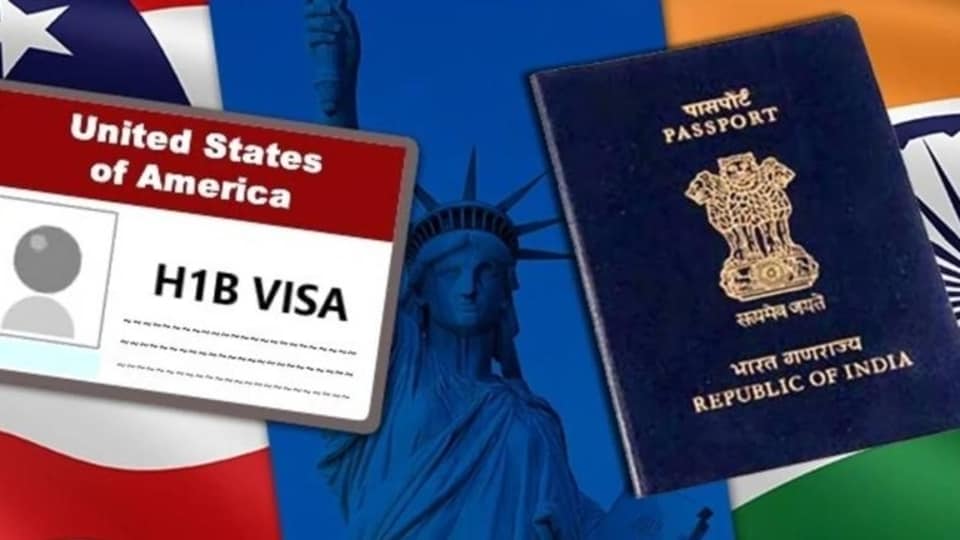
Real estate experts say that residential demand is unlikely to spike immediately, as many returning NRIs may rely on parents’ homes or savings while seeking new opportunities. The more immediate impact could be on commercial real estate. Large companies may expand Indian offices to accommodate affected employees, and a shortage of space could drive demand for co-working facilities, pushing office rents higher, especially in Bengaluru, Hyderabad, Pune, and Chennai.
Overall, while commercial real estate may see an immediate boost, residential demand and remittance-backed property investments could slow. Mid-to-high-end housing projects targeting tech professionals may face slower absorption, and purchases of second or third homes could decline as returning NRIs prioritize liquidity over long-term property investments, say real estate experts.
Social media buzz over whether NRIs will invest in property
Many Redditors said that the fee could benefit housing, as returning Non-Resident Indians (NRIs) with substantial savings may invest in properties back home. Others caution that NRIs may prioritize preserving capital over property investment.
“Now every NRI in the US will think of having a home in India just for ultimate safety… imagine the flow to real estate,” one post noted.
“This is going to jack up prices. Earlier NRIs were buying property as an investment. Now, even more NRIs will be buying because they need housing to live in. I have already seen this trend. More NRIs were buying for the purpose of residing in case they need to return back,” a Redditor said.
Several posts highlight a noticeable shift in NRI behaviour. Increasingly, NRIs are buying homes with the intention of living in them on return, often seeking premium apartments and villas that match international standards. “I’m unsure of its direct impact on real estate, but as more NRIs return, their preference for high-quality housing could push up demand beyond what domestic buyers alone drive,” a Reddit user wrote.
Another post said that “Trump’s new $100K h1B visa few could trigger India’s biggest real estate boom yet! GCCs already drive 44% of India office leasing 100Mplus sq ft since 2021. Companies may find expanding in India cheaper than H1B fees.”
A X post said that there may be demand in the medium term to trickle into privately built townships but H1B visa guys will not be able to adjust to our “disastrous municipalities.”
Job insecurity may prompt NRIs to preserve funds rather than invest in property.
Others emphasize caution: “Earlier, NRIs invested with confidence for higher returns. Now, uncertainty over income and doubts about long-term appreciation make them more cautious. Many prefer to keep capital liquid until better opportunities arise.”
While uncertainty and job losses may put downward pressure on prices, the overall demand dynamic is shifting. Previously, NRIs bought mainly for investment; now, the trend is increasingly toward securing homes for personal use or family, a move that could further support high-quality property prices in India’s top metros, a post said.
“Uncertainty and job losses are more likely to push prices down, not up,” said another post.
"I love how the comments are equally divided between “Real estate will skyrocket beyond the universe”, and “Real estate will fall beyond the depth of the planet,” a Redditor noted.
The post noted that “If you think there will be a steep drop in real estate prices, it won't be the case. Yes., prices may come down from 15k to 12k, and will continue to stay in 12k for 6,-7months. , but it will never be 8k…This is how the game is manipulated, and there will be FOMO, and NRIs will continue to inflate the prices."
“Prices very rarely drop by significant % in top metros. There could be time correction. Like prices remaining stagnant for 5 years or so. But since the prices are already inflated by 2x or 3x considering the standard of living, the apartments would still be unaffordable for most folks. Maybe top 3% earners in the country may benefit but there is a large segment of aspiring buyers beyond that 3%,” the post noted.
Another post said that “It will drop prices for sure. Now there are going to be no more NRIs. Existing ones have already bought. Also when a person sees less income in future his expenses shrinks not increase. No more new NRI doesn't mean more money coming to India, it means less money coming in country.”
What will be the impact on Bengaluru real estate prices?
Reddit users noted that this is unlikely. “If anything, prices may rise. Returning NRIs with sizable savings will add demand to an already supply-constrained market,” said a Reddit user.
Many of these NRIs have rented out their homes. That means either they won’t move back in, choosing to preserve rental income and avoid a lifestyle downgrade, or they will ask tenants to vacate, forcing those households to look for alternatives. Either way, the net housing demand increases, said a post.
Also Read: Donald Trump’s 5% tax on remittances: Should NRIs fast-track real estate investments back home?
Another post noted that combined with job uncertainties from AI and now H1B changes, the pressure on Bengaluru’s housing market could intensify further.
Real estate experts say that buying a house would likely be a low priority for NRIs facing job losses. Many may initially move into their parents’ homes, relying on savings to cover living expenses until they stabilize. “For the first couple of years, housing will be the least of their priorities. Once they settle down, they may consider buying a property,” one expert said, adding empty-nest parents could see their children returning home, at least temporarily.
Also Read: Donald Trump birthright citizenship: Will it impact the Indian real estate market?
Meanwhile, commercial real estate could see a boost. Some multinational companies may hire affected NRIs back into their Indian offices. If corporate office space is insufficient, these companies may turn to co-working facilities, driving up demand and rents, particularly in cities such as Bengaluru, Hyderabad, Pune, and Chennai, with Bengaluru likely being the first port of call, a real estate expert said.
Trump’s $100K H-1B visa
US president Donald Trump on September 20 signed a proclamation that will raise the fee for H1-B visas to a steep $100,000 annually. The H-1B visa fee ranges from about $2,000 to $ 5,000, depending on employer size and other costs.
Trump also signed an executive order entitled ‘The Gold Card’, aimed at setting up a new visa pathway for foreigners of extraordinary ability who are committed to supporting the United States. Under the Gold Card programme, individuals who can pay $1 million to the US Treasury, or $2 million if a corporation is sponsoring them, will get access to expedited visa treatment and a path to a Green Card in the country, a media report said.
Akash Puri, Director-International, India Sotheby’s International Realty, said that the “US visa overhaul with Gold and Platinum Cards is a clear signal: global mobility now walks hand-in-hand with global investment. While the ultra-wealthy may embrace these shiny new pathways, higher H-1B costs could push top talent to look beyond America’s borders. For luxury real estate, that means fresh demand shifting toward global cities and markets that deliver stability, access, and lifestyle. Add in the Fed’s 25-basis-point rate cut, and you’ve got a recipe for renewed liquidity and real estate once again taking center stage as the asset class of choice for global investors."
Experts say the US visa fee hike comes at a time when India’s $283 billion IT sector is already navigating a turbulent business environment in the world’s largest outsourcing market. The industry faces delays in client decisions amid macroeconomic uncertainties, trade tensions, geopolitical risks, and the disruptive impact of AI.


