
 E-Paper



110 mn-year-old rare, toothless dinosaur elaphrosaur identified
The five-cm (two-inch)-long neck bone or vertebrae fossil belonged to a dinosaur known as elaphrosaur, meaning “light-footed lizard”, and was related to the Tyrannosaurus Rex and Velociraptor.

 Prefer HTon Google


A fossil of a rare, toothless dinosaur that walked the earth 110 million years ago was recently identified by palaeontologists.
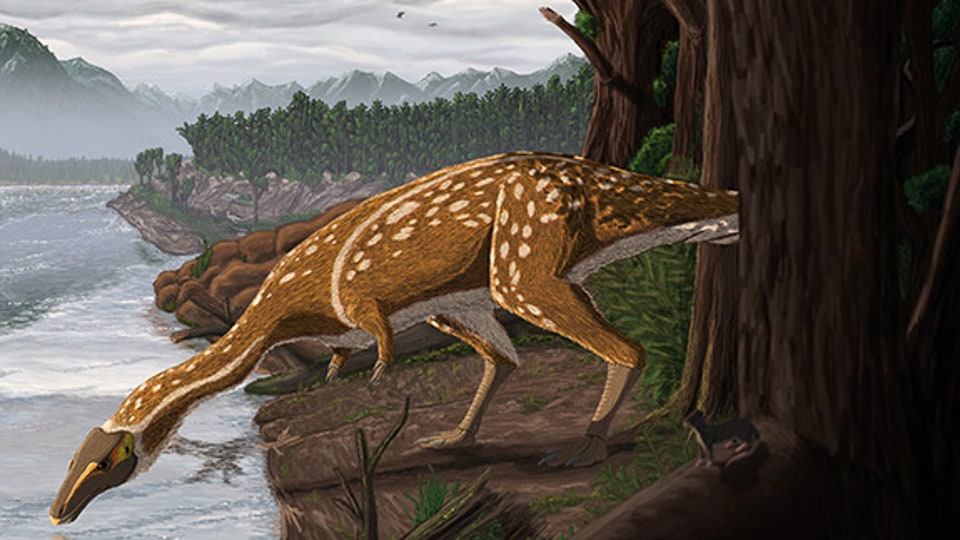
The five-cm (two-inch)-long neck bone or vertebrae fossil belonged to a dinosaur known as elaphrosaur, meaning “light-footed lizard”, and was related to the Tyrannosaurus Rex and Velociraptor, according to a report in BBC News.
Discovered by a volunteer digger Jessica Parker in 2015 during a dig near Cape Otway in Victoria, Australia, the fossil was identified by a team led by Swinburne University of Technology palaeontologist Dr Stephen Poropat.
It is the first elaphrosaur bone ever to be found in Australia.
It was initially thought to be from a flying reptile called a pterosaur as distinct from a dinosaur, but much later scientists realised that it was a delicately-built dinosaur.
“We soon realised that the neck bone we were studying was from a theropod: a meat-eating dinosaur, related to Tyrannosaurus rex, Velociraptor, and modern birds,” Dr Poropat was quoted as saying in an article on Swinburne University website . “The only catch – this ‘meat-eating dinosaur’ probably didn’t eat meat!”
The fossil indicated the animal was about two metres (6.5ft) long. However, fossils of other elaphrosaurus previously found in Tanzania, China and Argentina show that they could reach up to six metres in length, says the BBC report.
Dr Poropat said the Australian elaphrosur had long necks, stumpy arms with small hands, and relatively lightly-built bodies.
“As dinosaurs go, they were rather bizarre. The few known skulls of elaphrosaurs show that the youngsters had teeth, but that the adults lost their teeth and replaced them with a horny beak. We don’t know if this is true for the Victorian elaphrosaur yet — but we might find out if we ever discover a skull.”
Their toothsome youth suggests they may have gone through some kind of dietary shift with age, Poropat told the Guardian. “I’d speculate that it was primarily herbivorus (as an adult), but might have been an opportunistic predator of small animals,” he said.
The identification of the fossil was published this month in the journal Gondwana Research.


