
 E-Paper



From masses to classes: Big screen's changing audience | Number Theory
Expensive tickets help explain why the poor exited cinemas faster than the rich, but the attrition has been visible across classes.
Published on: Jul 17, 2026, 06:40:42 IST

 Prefer HTon Google
Share via


Copy link

Oscar-winning director Christopher Nolan personally premiering a film in India for the first time is only the latest sign that big-budget Hollywood is serious about wooing the Indian market. While promoting The Odyssey in Mumbai last week, Nolan also heaped praise on Indian audiences, calling them “among the most enthusiastic and knowledgeable audiences in the world.”

Nolan’s enthusiasm about Indian audiences captures an interesting irony. Fewer Indians watch films in theatres now, but it is the poor who have stopped going, not the rich. That development might please the Nolans of the world, but it is perhaps not good news for Indian filmmakers.
From masses to classes: Big screen's changing audience
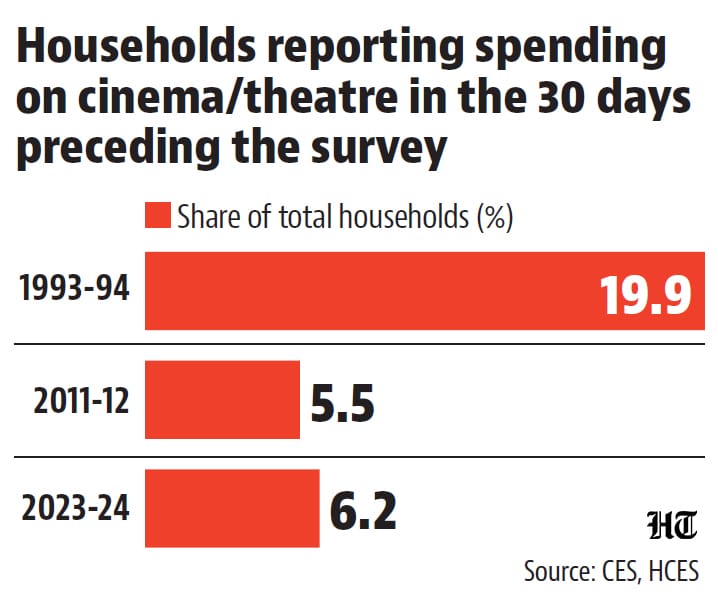
 Monthly cinema going audience has halved in India post-reformsIn 1993-94, almost one in five Indian households reported spending on cinema or theatre in the previous month, according to official Consumption Expenditure Surveys (CES). This fell to about one in twenty by 2011-12 and has remained at roughly that level since. Combined with population estimates, these numbers suggest that the absolute number of monthly cinema-goers declined from 169 million in 1993-94 to 78 million in 2023-24. To be sure, this does not mean that only 6% of households go to cinemas now; rather, it means only 6% reported going to a cinema in the preceding month.
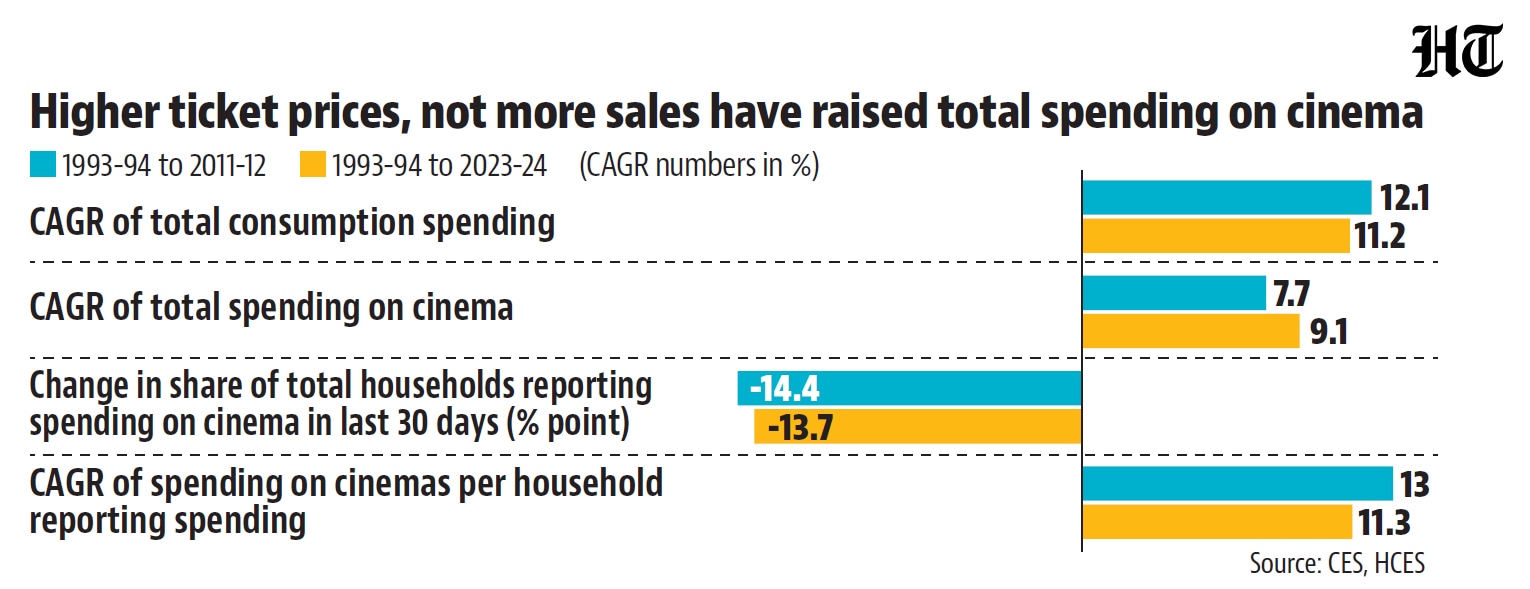
- But spending on cinema has avoided a similar collapseThe CES data is instructive. India’s total consumption spending in nominal terms, as captured in the surveys, grew at a compound annual growth rate (CAGR) of 11.2% between 1993-94 and 2023-24, while per capita consumption spending grew at 9.5%. The CAGR of total and per capita spending on cinema was only a couple of percentage points lower, at 9.1% and 7.5%, respectively. What explains this resilience despite the sharp fall in audiences? Rising ticket prices have compensated for the decline. The CES data supports this intuitive explanation. Households that reported spending on cinema spent ₹19 per month in the 1993-94 survey, ₹169 in 2011-12 and ₹465 in 2023-24, providing a floor to overall cinema spending despite the shrinking audience.
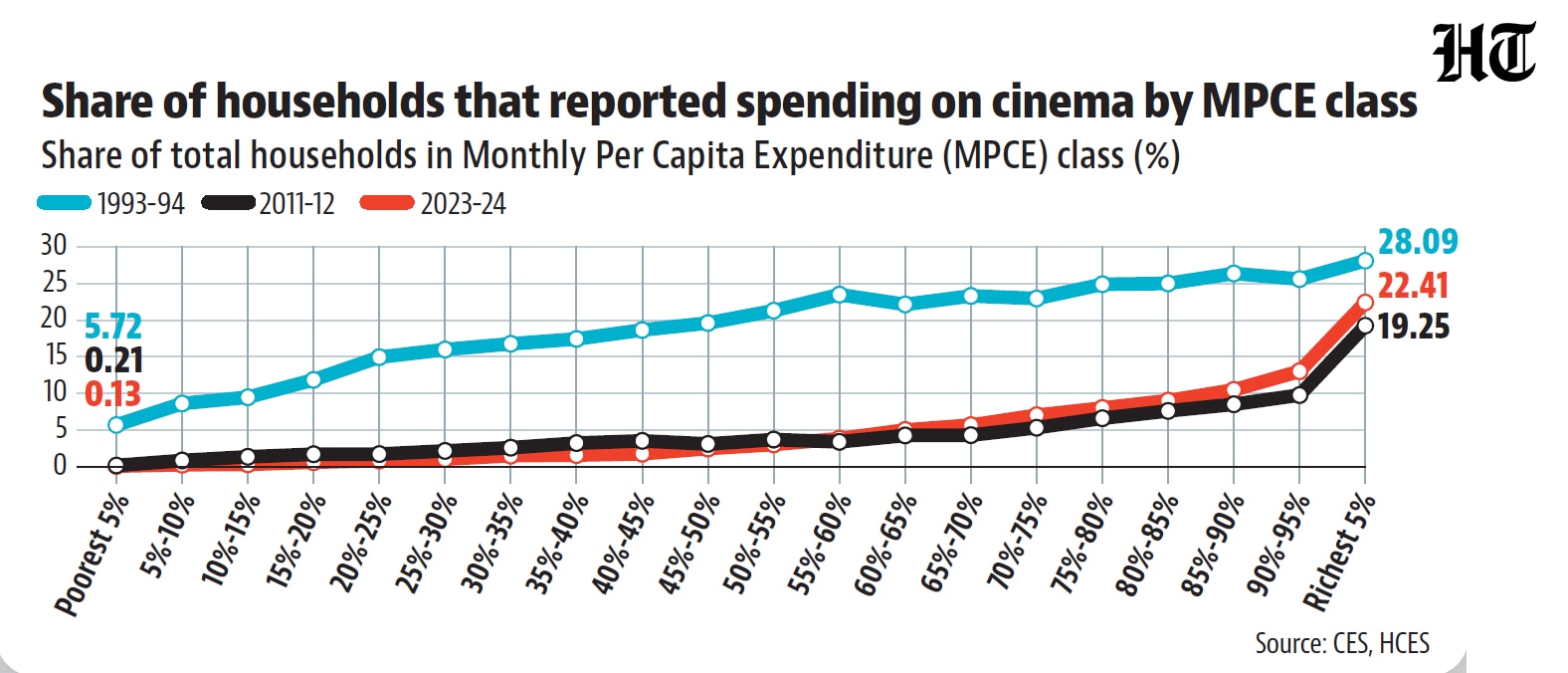
- The decline of the cinema audience is more among the poor than the rich…To be sure, while the poorest 50% have continued to abandon cinemas after 2011-12, the richest 50% have started returning to cinemas. The rich, of course, are more likely to relate to and watch Hollywood films. No wonder, Nolan’s marketing team took notice, and made sure he came to promote his film.
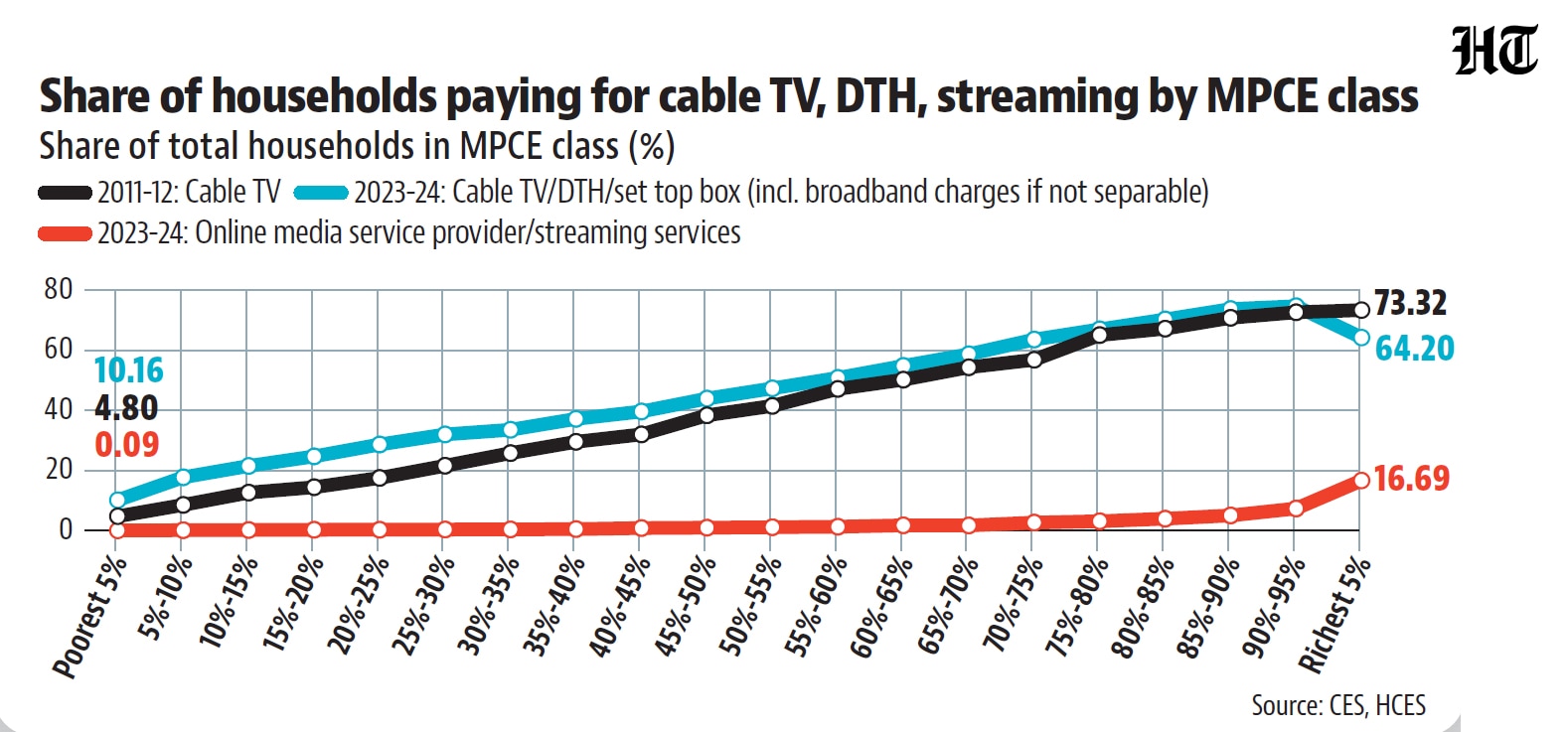
- Streaming did not kill India's theatre audience, because theatre was already dead by thenExpensive tickets help explain why the poor exited cinemas faster than the rich, but the attrition has been visible across classes. Who is to blame? Streaming is not. Major international streaming platforms only arrived in India around 2016, by which time theatre-goers had already seen a large fall. Cable TV might have played a role. 1993-94 CES did not ask households about cable TV. The share paying for cable TV among the poorest 5% was 4.8% by 2011-12, which increased to 10.2% by 2023-24 (including DTH/set top box). Between 2011-12 and 2023-24, the share of cable or DTH consumers has decreased only among the richest 5%, the only class where more than 10% households pay for streaming services, suggesting some substitution between the streaming and cable TV.
- ConclusionTo come back to Nolan’s visit to promote The Odyssey, it is yet another instance that proves that India’s attraction as a market for foreign goods (and services) can have very different dynamics compared to its more broad-based consumption patterns. The dualism is perhaps comparable to the idea of Gotham City in Nolan’s famous trilogy.


Unlock a world of Benefits with HT! From insightful newsletters to real-time news alerts and a personalized news feed – it's all here, just a click away! -Login Now!


