
 E-Paper



Astronauts will experience the New Year 16 times while in space. Here's how
Unlike the familiar 12-hour light and 12-hour darkness pattern on Earth, astronauts experience 45 minutes of daylight followed by 45 minutes of darkness.

 Prefer HTon Google


As the world gears up to welcome the New Year, astronauts on the International Space Station (ISS) are poised to encounter the shift from 2023 to 2024 in a distinctive manner—by observing a total of 16 New Year countdowns. Due to the space station's rapid velocity and its uninterrupted orbit around Earth, the astronauts on board will witness around 16 occurrences of both sunrise and sunset in a single 24-hour cycle. “In 24 hours, the space station makes 16 orbits of Earth, travelling through 16 sunrises and sunsets,” NASA says.
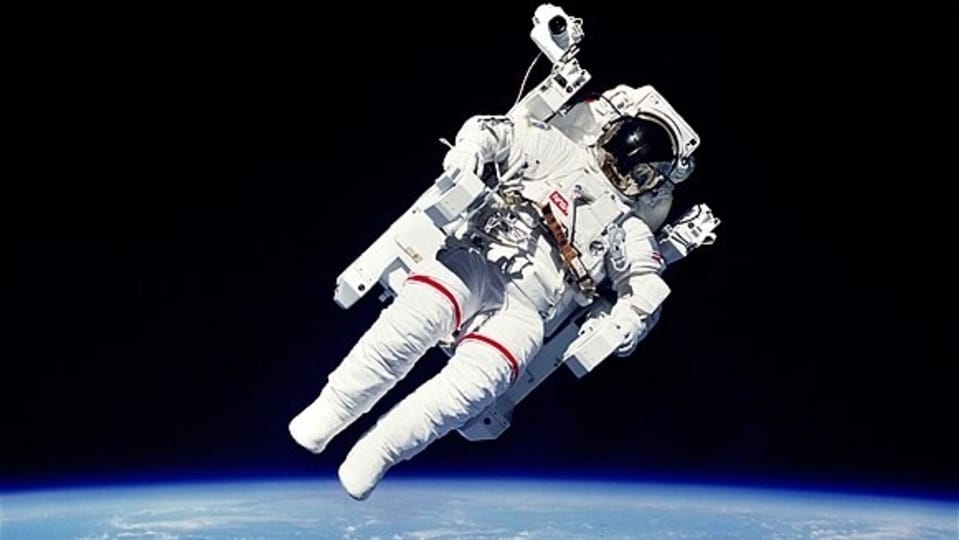
With a speed of approximately 28,000 kilometers per hour, the International Space Station (ISS) completes a full orbit around Earth every 90 minutes. This swift trajectory provides astronauts with the unique chance to welcome the New Year multiple times as they traverse various time zones during their journey.
Encountering multiple day-night cycles in a single Earth day is a regular occurrence for the ISS crew. Unlike the familiar 12-hour light and 12-hour darkness pattern on Earth, astronauts contend with 45 minutes of daylight followed by 45 minutes of darkness. This repetitive cycle unfolds 16 times a day, resulting in a total of 16 sunrises and sunsets during their orbit.
The repeated shifts between day and night on the ISS offer astronauts the opportunity to conduct experiments across diverse fields like microbiology and metallurgy, yielding insights that are unattainable on Earth.
Additionally, the distinctive conditions aboard the ISS contribute to expanding our comprehension of the universe.
Despite adhering to Greenwich Mean Time (GMT) for a consistent schedule, the continual oscillation between day and night poses challenges for maintaining circadian rhythms. Among the most remarkable aspects of their mission are the breathtaking views of Earth's horizons and the extraordinary experience of celebrating New Year's Eve 16 times.


