
 E-Paper



Space fizzle! A stunning solar storm that hit Earth, but failed to shock and awe
A powerful solar storm hit Earth but left sky-gazers quite disappointed even though it was billed as the strongest such event in 10 years.

 Prefer HTon Google


It was billed as the strongest solar storm in almost 10 years and skywatchers, professional and amateurs, were looking up at the skies with great hope and anticipation for the fireworks to light them up in brilliant hues. However, they were left quite disappointed. Why? Because the entire thing fizzled out and there were no signs of life left in this solar phenomena on Earth.
What really happened
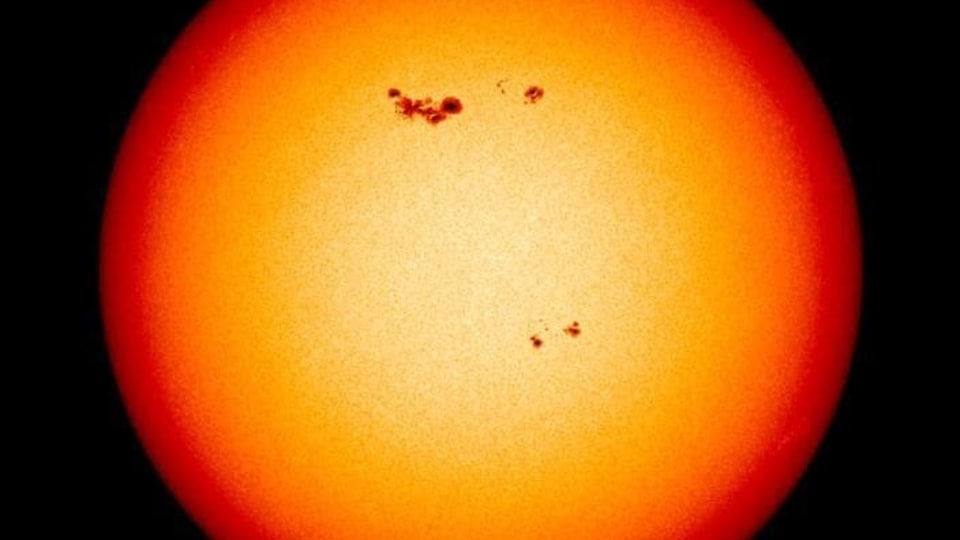
Our Sun, currently in the most volatile part of the solar maximum that it undergoes in a cyclical manner every 11 years, exploded on its Earth-facing side and sent a burst of energy directly towards the planet. The event happened on March 23 when a massive X-class solar flare exploded and unleashed a coronal mass ejection (CME) that was expected to hit Earth. When it did, it led to a G-4 class geomagnetic storm - the highest in G-5. The classification matters. Reason being that this was the strongest such storm to hit Earth since 2017, reported space.com!
Read More: Total Solar Eclipse 2024 is different from 2017
What solar storms can impact
Such solar storms are a regular occurrence, but not at such high levels and therefore, this one led to a lot of concern. The problem that these extremely strong geomagnetic storms can cause are many. They can affect the power grid (knock out the electricity grids), wreak havoc on satellites, disrupt radio communications and even affect the Internet. However, the worst effects are possible only if extremely powerful geomagnetic storms strike, but these are rare. And that is why this one made many astronomers sit up and take notice. Adding to the interest was that NOAA had put out an alert saying that this level of solar activity is likely to lead to Northern Lights (aurora) in the sky and that they would be visible perhaps as far South as in Alabama. Ultimately, however, the solar storm impact was nullified and it simply fizzled out.
Read More: Japan's Moon lander put to sleep after surviving its second long lunar night
Space Weather Physicist Tabitha Skov, in her post on X, expressed her surprise in a telling manner. She posted, “Might this be a #solarstorm fizzle?” She added, “…this does not bode well for generating aurora.” And that is exactly how this potentially massive, once-in-a-decade solar storm, ended up disappointing all the skywatchers.
All about auroras in brief
Now, it begs the question, from those who are not in the know - what are auroras? According to US space agency NASA, “Auroras are brilliant ribbons of light weaving across Earth's northern or southern polar regions.” And how are they caused? They are caused by geomagnetic storms triggered by solar activity, (Sun shooting off super-heated plasma or CME) and the energetic charged particles from these events carried by the solar wind. In effect, it is a sign of the Earth being attacked by the Sun! The least that was expected was the generation of an aurora, but that did not really happen.
Read More: A faster spinning Earth may cause timekeepers to subtract a second from clocks
Adding to the disappointment for skygazers was the timing. The CME hit Earth during daytime and by the time night came along, what was there was too weak to really induce awe of any kind.


