
 E-Paper



Arsenal's revenge mission meets PSG's dynasty dream as Champions League 2026 final returns to old wound
PSG and Arsenal meet again in the Champions League final, a year after Arsenal's semi-final exit.

 Prefer HTon Google


Twelve months ago, PSG knocked Arsenal out of the UCL in the semi-finals. Twelve months later, Arsenal are back in the final. PSG are also there, defending their title.
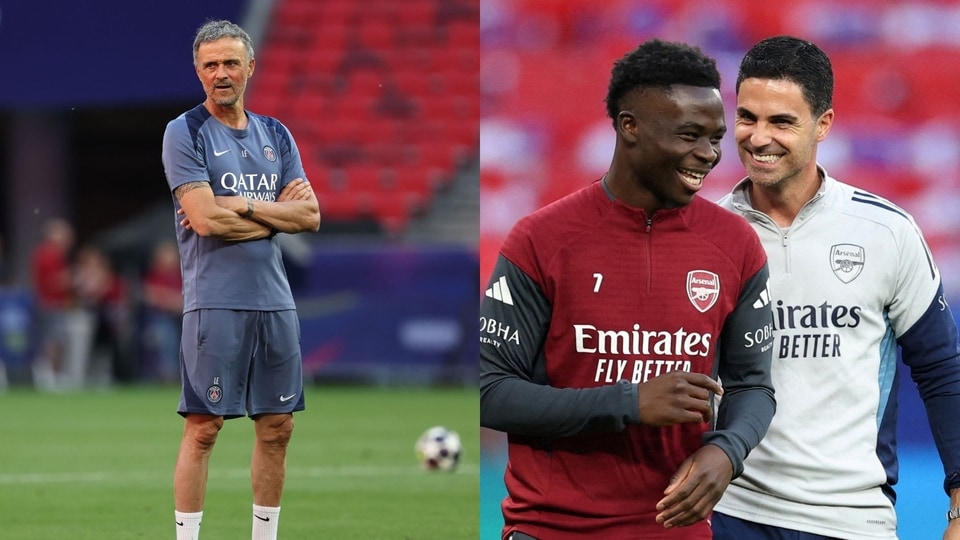
The Puskas Arena showpiece revisits last season’s semi-final, when Luis Enrique’s side won both legs 3-1 on aggregate en route to dismantling Inter Milan 5-0 in the final. Arsenal were eliminated, injury-hit, outclassed in transition, denied. They went away, rebuilt, and returned. This season, they won all eight of their league-phase matches, the first club in the competition’s history to manage that, conceded just four goals across the group stage, then eliminated Bayer Leverkusen, Sporting CP, and Atletico Madrid to reach the final without losing a single game. One year on from that semi-final exit, a kiss on the Champions League trophy would represent the sweetest possible revenge.
PSG’s route here tells a different story. After finishing 11th in the league phase, they beat Monaco 5-4 in the play-off, then thrashed Chelsea 8-2, brushed aside Liverpool 4-0, and survived a remarkable 6-5 aggregate semi-final with Bayern Munich to reach Budapest. Less elegant. Every bit as ruthless.
The narrative going in is simple: the best attack in the competition against the most resolute defence. PSG have scored 44 goals this campaign. Arsenal have conceded 0.43 per game. Unstoppable force, immovable object - this kind of final that earns its own mythology before a ball is kicked.
But beneath that frame sits something deeper, and that is the real contest.
Luis Enrique arrives in Budapest trying to make PSG’s breakthrough look permanent. Mikel Arteta arrives, trying to make Arsenal’s restoration feel complete.
That is the real contest beneath the Champions League final. PSG are not chasing release anymore. They found that last season, when they dismantled Inter Milan 5-0 and converted years of obsession into the trophy that had always slipped away. Arsenal are chasing something older, more uncomfortable, and more defining - the European crown that even Arsene Wenger could not deliver to north London.
Enrique’s PSG are chasing repetition, not validation
For PSG, this final is not about proving they belong. That argument ended in 2025. Luis Enrique’s task is harder now: to prove that last season was not the ceiling of a carefully assembled side, but the opening chapter of a European order.
That is why the pre-final message carries weight. Enrique has argued that PSG’s motivation to retain the Champions League is greaten that Arsenal’s desire to win it for the first time. It sounds provocative. It is also a statement of standards. Winning once gives a club history. Winning again gives it authority. PSG are trying to become only the second team in the Champions League era, after Real Madrid, to defend the title.
This PSG is not the club’s old European version, the one that asked individuals to solve the competition alone. Enrique has built a side capable of scoring 44 goals in a single Champions League campaign, one short of Barcelona’s single-season record from 1999-2000. That number is not a decoration. It is the statistical shape of this project. PSG do not merely attack; they keep asking the same question from different angles until the opponents run out of answers.
Arteta’s Arsenal are chasing completion, not romance
Arsenal’s burden is different. They are not defending history. They are rewriting it.
This is only Arsenal’s second Champions League final. The first, in 2006, ended in defeat against Barcelona. Since then, the club has carried a quiet contradiction: enormous domestic identity, a global following, and elite tradition - but no major European trophy. Arteta has spent years rebuilding the emotional and tactical grammar of Arsenal. This final is where that grammar must become silver.
The league title has already shifted the weight of this project. Arsenal enter this final as Premier League champions for the first time in 22 years, but that does not dissolve the pressure - it sharpens it. They are no longer the promising rebuild, the nearly team, the young side growing through pain. They are champions with the chance to become double champions. The stakes have changed.
Mikel Arteta’s Arsenal were built for nights like this - compact without becoming passive, aggressive without becoming frantic, controlled without becoming inert. Their run to the final has been built on defensive authority: their semi-final win over Atletico Madrid added another clean sheet, their ninth of the campaign.
That is Arteta’s case. Arsenal do not need to out-chaos PSG. They need to slow the game down, win territory, protect transitions, and turn the final into a test of discipline rather than a festival of open spaces.
The tactical mirror of two projects
This is where the managerial stories become tactical.
Enrique’s PSG are most dangerous when Vitinha sets the first rhythm and the wide players receive with the pitch stretched. Kvaratskhelia and Dembele are not simply flair options - they are the release valves of a system built to pull opponents apart, with Vitinha’s line-breaking passing forming the engine of PSG’s post-superstar identity.
Arteta’s first task is to kill that rhythm before it reaches the flans cleanly. Arsenal cannot allow PSG’s midfield to convert possession into repeated isolation situations for Kvaratskhelia and Dembele. That is where Declan Rice, Martin Odegaard, the centre-backs, and Arsenal’s pressing shape become decisive.
Arteta has confirmed Jurrien Timber is fit to start - a significant boost, because Arsenal’s right side could become one of the final’s defining fault lines against PSG’s left-side threat.
Arsenal’s own attacking may be less glamorous but no less important. Set-pieces, second balls, controlled pressure - these are not side details in Arteta’s football. They are weapons. Against a PSG side that can shred broken games, Arsenal’s ugliest route may turn out to be their most valuable one.
One goal could bend the whole final
The first goal may decide which manager gets the final he planned for.
If PSG score first, Enrique inherits the game state that suits his champions. Arsenal must open, their full-backs must gamble, and PSG’s wide players gain room to run. The final shifts towards speed, width, and transition - PSG territory.
If Arsenal score first, Arteta faces the deepest test of his rebuild. Can Arsenal absorb pressure without retreating too deep? Can their exits stay clean? Can they force PSG into impatient attacks rather than structured ones? That is where the restoration either hardens into something permanent or cracks under the weight of the occasion.
Budapest will crown a club. But it will also certify a project.
For Enrique, victory turns PSG from champions into dynasty candidates. For Arteta, it turns Arsenal’s revival into a conquest. One manager is trying to prove that greatness can repeat itself. The other is trying to prove that restoration can become immortality.
Only one story gets the trophy.


