
 E-Paper



Can Italy break World Cup curse and shake off play-off demons to return in 2026?
Italy turn to their own Divine Comedy, hoping the upcoming playoff against Northern Ireland leads them out of this prolonged footballing inferno.

 Prefer HTon Google


In February this year, Italy scripted a record show at the Winter Olympics. In the same month, the nation broke new ground in one of the unlikeliest arenas, cricket, securing their maiden win in an ICC tournament at the T20 World Cup in Mumbai, in what was their debut appearance in a global event.
Soon after, 19-year-old Kimi Antonelli became the second-youngest driver to win a Formula One race following his triumph at the Chinese Grand Prix. In March, Italy’s rugby team stunned England for a historic first-ever Six Nations victory, while Jannik Sinner has continued to spearhead the nation’s rise in tennis, building momentum towards another strong run at the Miami Open. Success has also followed in less-heralded disciplines such as baseball and volleyball.
Italy, as a sporting nation, has flourished over the past six months, expanding its footprint across disciplines.
Yet, in football, the ‘beautiful game’ it once helped define, the story has been starkly different.
From Berlin glory to prolonged decline
When Fabio Cannavaro lifted the FIFA World Cup trophy at the Olympiastadion in July 2006, it was seen as the beginning of a new era for Italian football.
It was their first final in 12 years and a first title in over two decades, achieved just four years after a painful round-of-16 exit to South Korea. The triumph came against a star-studded France side featuring Zinedine Zidane and Thierry Henry, sealed on penalties in Berlin. With a fourth World Cup title, Italy stood second only to Brazil in the all-time list.
Two decades on, Italy have little to show but misfortune.
An entire generation has grown up without seeing the Azzurri at a World Cup. Their last appearance came in 2014, ending in a group-stage elimination against Uruguay, a match remembered as much for Luis Suárez’s bite on Giorgio Chiellini as for the result.Italy won their fourth World Cup title in 2006

Italy did lift the European Championship in 2020, beating England on penalties, but that success now appears more an exception than a turning point.
Now, they turn to their own Divine Comedy, hoping the upcoming playoff against Northern Ireland leads them out of this prolonged footballing inferno.
With qualification for the 2026 World Cup still on the line, Italy must first overcome Northern Ireland in Bergamo on Thursday, and then beat either Wales or Bosnia and Herzegovina away. Failure would see them become the first former champions to miss three consecutive World Cups.
The curse that refuses to fade
Some call it misfortune. Others have labelled it the “Zinedine Zidane curse,” tracing it back to the infamous headbutt on Marco Materazzi in the 2006 final.
Whatever the explanation, the pattern is undeniable.
Italy’s title defence in 2010 ended in disaster, as they finished bottom of Group F in South Africa, behind Paraguay, Slovakia and New Zealand, managing just two draws and a defeat.
In 2014, drawn into a ‘Group of Death’ with England, Costa Rica and Uruguay, they beat England but lost to both Latin American sides, crashing out again in the group stage.
Then came the unthinkable.
For the first time since 1958, Italy failed to qualify for a World Cup, losing to Sweden in a 2018 playoff. The defeat marked the end of Gianluigi Buffon’s international career and one of the darkest moments in Italian football history.
Hopes were revived ahead of the 2022 World Cup after their Euro triumph, but heartbreak struck again. A stoppage-time goal from North Macedonia’s Aleksandar Trajkovski eliminated Italy, condemning them to a second consecutive absence.
Where have Italy fallen behind?
Former Italy forward Alessandro Del Piero offered a blunt assessment.
“The level of investment is low. Other markets have become much, much bigger than us. Problems? Stadiums. We know you have to perform better outside of the pitch. Youth systems as well," he told CBS Sports.
Serie A, once the powerhouse of European football, has steadily lost ground to the Premier League and Spanish clubs. Ageing infrastructure, limited commercial growth, and widening revenue gaps have made it difficult for Italian clubs to compete financially or retain top talent.
The consequences have filtered through to the national team.
A qualifying campaign full of twists
Italy’s path to this playoff has been anything but smooth.
Luciano Spalletti was dismissed just one game into the qualifiers following a 3-0 defeat to Norway, though he remained briefly in charge for a win over Moldova.
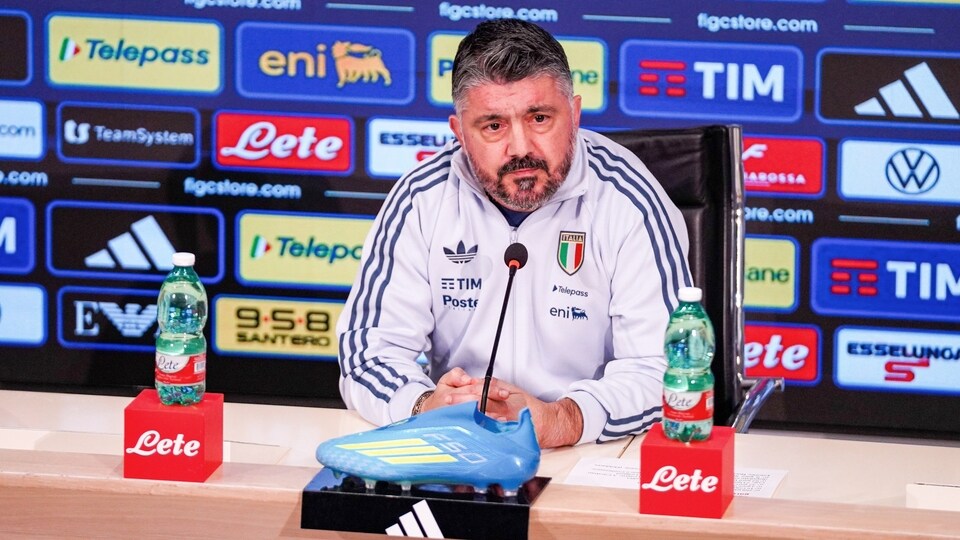
In a surprising move, the Italian federation turned to Gennaro Gattuso, a member of the 2006 World Cup-winning squad, as his successor. Fresh off a Coppa Italia triumph with Napoli, Gattuso’s appointment raised eyebrows, but he initially delivered, guiding Italy to five straight wins against Estonia, Israel (home and away), and Moldova.
However, a crucial home defeat to Norway saw Italy finish second in their group, forcing them into the playoffs for the third consecutive campaign.
A final shot at redemption
On paper, this Italy side is better placed than in previous failed campaigns. They boast a 75% win rate in the qualifiers, significantly higher than their returns in 2022 (44%) and 2018 (58%).
Yet, history looms large.
Gattuso has urged his players to remain composed and block out the weight of past failures.
“Italy didn’t play in the last two World Cups, but there is no need to suffocate them. These are players who have won the Euros and played in Champions League finals. They are accustomed to these games.
“There are no excuses; we must only think about Thursday’s game. We must have the right mentality and serenity. We respect the opponents, but we must be clear-headed and smell the danger.”
What lies ahead
If Italy navigate the playoffs successfully, they will return to the World Cup after more than a decade, joining Canada, Qatar and Switzerland in Group B.
Their first match, against Canada on June 12, would come almost 12 years after their last appearance on football’s grandest stage.
For a nation thriving across the sporting spectrum, it would mark a long-awaited revival where it matters most.


