
 E-Paper



Peak age for football players: Ballon d'Or winners reveal changing trends
Recent trend reshapes transfer strategies and player development, suggesting that with proper conditioning, players can extend their peak years.

 Prefer HTon Google


Every sport wrestles with the same question with each of its passing generation: when is a player at their absolute best? Well, football is not an exception to this query. From managers calculating contract extensions to scouts evaluating transfer targets, understanding the peak performance windows drives billion-dollar decisions. Few datasets would give us the peek into elite football excellence than the Ballon d’Or, awarded annually since 1956 to the world's best player.
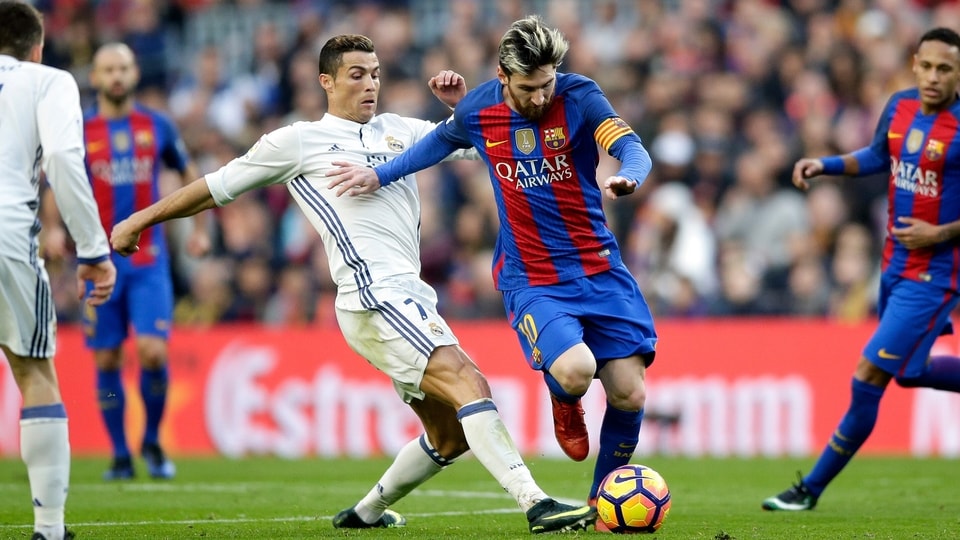
The analysis of every winner from Stanley Matthews to Ousmane Dembélé reveals patterns that challenge conventional wisdom about when footballers truly peak.
The historical baseline
Since 1956, Ballon d’Or winners have averaged 27.4 years old, with a median around 27. This figure has long aligned with sports science research suggesting that elite performers reach their optimal blend of physical capabilities and tactical intelligence in their mid-to-late twenties.

The traditional pattern shows clear categories -
Early prodigies: Players like Ronaldo Nazário, Michael Owen represent 15% of the winners, who achieved the feat in their early 20s
Vast Majority: Nearly two thirds of the winners belong this group, who claimed their first Ballon d’Or between ages 24-29, from Johan Cruyff’s peak years to the prime of most modern legends
Veteran winners: This comprises the smallest group of winners. Players ageing over 30 getting the honor is a rarity with Stanley Matthews’ 41 year old wonder standing as a remarkable outliner
The disruption of modern era

Recent Ballon d’Or winners tell a dramatic story:
- 2025: Ousmane Dembélé (28)
- 2024: Rodri (28)
- 2023: Lionel Messi (36)
- 2022: Karim Benzema (34)
- 2021: Lionel Messi (34)
The 2020s average of 31.5 years represents a seismic shift about 4.1 years above the historical norm. This isn’t just a statistical anomaly, it is pointing towards a fundamental recalibration of when the football world recognizes peak performance.
Breaking down the evolution

Historical decade patterns have remained relatively stable:
- 1950s-1960s: average age of 29+ years
- 1970s-2000s: stabilized around the 26-28 years
- 2010s: showed slight increase in due to the Messi-Ronaldo longevity and duopoly of the honor
The 2020s represent an unprecedented break from this pattern, suggesting either an anomaly or a new paradigm. Well, the anomaly’s name could well be Lionel Messi, since he has won two of three Ballon d’Ors this decade.
The science behind the shift
Modern science has extended peak performance windows through advanced recovery methods, personalized diet plans, and injury prevention. Rodri’s 2024 win exemplifies how tactical intelligence now rivals physical gifts. His role in anchoring Manchester City’s dream run and Spain’s EURO 2024 win showcased a premium on positional mastery.
The game’s increasing complexity also favors experience. Dembélé’s 2025 win came after years of learning from setbacks at Barcelona, finally flourishing in Luis Enrique’s system at PSG with 35 goals and 16 assists.
Implications for modern football
This age shift carried profound implications for transfer strategies, contract negotiations, and player development. The traditional peak window of 24-29 may be expanding upward toward 26-32 for elite talents with proper conditioning and tactical development.
For clubs, this suggests that veteran acquisitions in their early 30s may offer more sustained value than previously assumed. For players, it indicates that career peaks can be extended far beyond traditional timelines with the right investment in fitness and tactical intelligence.


