
 E-Paper



Fulton uses chess board to boost hockey team’s strategic thinking
Indian hockey team learns strategy from chess in a masterclass, enhancing their tactical skills and bonding under coach Craig Fulton.

 Prefer HTon Google


From making the Indian hockey team climb the famous Table Mountain on the outskirts of Cape Town to giving them a crash course in surfing during their overseas tours, chief coach Craig Fulton has always found innovative ways to recharge his players. Each time the Harmanpreet Singh-led side has returned stronger on the field.
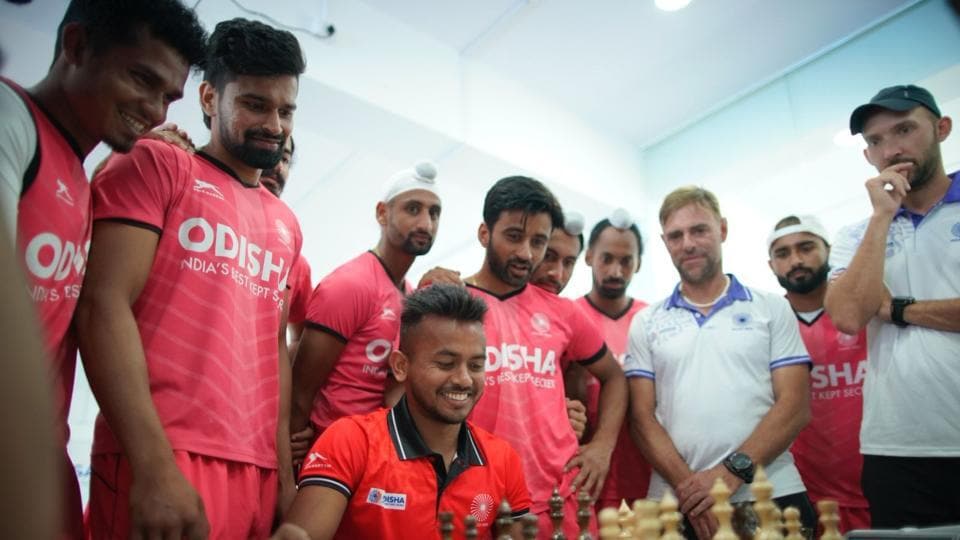
This time around, the team management decided to once again take the unusual route to learn something new as a chess masterclass was organised in the SAI campus in Bengaluru for Fulton’s wards. Former international chess player Prachura P Padakannaya held an interactive session on Friday where he introduced the nuances of chess, drawing correlations between the two sports and what the players could learn from a different sport.
“Chess is a thinking game, more of a mind game, and it can be helpful for players in other sports, not just hockey. This could probably make our hockey players think quickly because hockey moves very fast. In that short amount of time, one has to react and think quickly on your feet. You can learn that from chess,” said Padakannaya, who co-owns American Gambits in the Global Chess League with former India cricketer R Ashwin.
While some Indian players have played the game, others were curious to know about the different formats — classical, rapid and blitz with many drawing parallels between the latter and hockey due to the lack of reaction time during play. Both are played intuitively and at a rapid pace.
As the session progressed, the players wanted to know more about D Gukesh’s World Championship triumph. They even drew parallels between chess and hockey — from controlling the centre of the chess board to having a command over the midfield. From tournaments and first moves, time control, and heart rates of chess players, the hockey team’s curiosity grew about every aspect of the board game.
“If you think about the big picture, every game has a strategy associated with winning. I think chess is more (about strategy) than most. It’s such a tactical game because you learn a lot of your moves while trying to be multiple steps ahead of the one move that you make. When you look at it from a hockey perspective, we have a strategy with the ball and a strategy without it,” said Fulton, who guided the team to the Paris Olympics bronze last year.
“And it was just trying to link the two games to show that, you know, it’s really important to understand the strategy. It was an educative session, with the players getting better at learning what a pattern looks like. The more they can see patterns, the better they know where to position themselves. So it was interesting. I enjoyed it,” said Fulton.
The hockey players were also pleasantly surprised to learn about the prize money in major chess events, following which they decided to take the board and play a few games. Two-time Olympic bronze medallist Vivek Sagar Prasad faced Padakannaya.
Prasad’s early moves surprised Padakannaya who was impressed with the midfielder’s play with Harmanpreet and Mandeep Singh’s suggestions to Prasad indicating they also have a decent understanding of the game. The entire session turned out to be a great bonding exercise for the team with the players joking and pulling each other’s legs, even checking the heartbeat of others for fun.
“The bottom line is we train a certain way, we want to play a certain way. But if we have the wrong strategy or the wrong setup from the beginning, we can never play that way. This is the connection. If you start with the wrong setup in chess and you’re already playing in the wrong areas, then you open yourself up,” said Fulton, who helped India win the Asia Cup last month and qualify for the 2026 World Cup.
“We have to know our strategy and be very good at implementing our own strategy. It’s the same with chess. You have to start really well. Then the middle game becomes about intelligence and then the end game is about finishing it. There are correlations between all of those with the way that we set our teams up to play a hockey match in four different quarters.”


