
 E-Paper



Asian Games: Legends, Pioneers, Heroes
From Lavy Pinto to Hawa Singh, we revisit some of India's finest moments at the Asian Games

 Prefer HTon Google


By now, we are familiar with Neeraj Chopra’s arc of triumph. But when the champion, with an easy charm and ready smile, won gold with a throw of 88.06m in the 2018 Asian Games, it was a first. As Hangzhou hosts another iteration, we look back at some of the hoorays and heartbreaks of a journey that began in 1951.
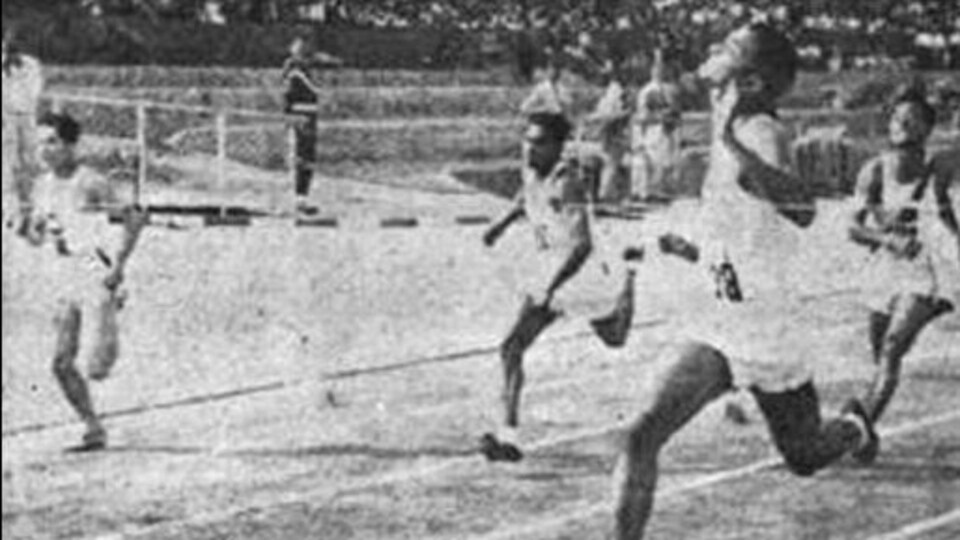
Lavy Pinto too scripted a first. As did Sachin Nag. Less than four years independent and a little over one year as a republic, India had Asia’s fastest man on land and water. Nag’s gold came first. Part of the waterpolo team in the 1948 and 1952 Olympics, Nag bested the rest in 1:04.7 in what was then the shortest distance in the pool. He and Singapore’s Wiebe Walters clocked the same time but the judges ruled that the man from Howrah had won. Being part of the the 4x100 relay and the 3x100 medley bronze medal winning teams meant that a man whose music had taken the Hindi film industry by storm was not the only Sachin who was famous
Nag’s gold remains India’s only gold in the pool, the other highlights being Bimal Chandra’s 400m freestyle bronze and Kanti Shah’s 100m backstroke silver in 1951, Khajan Singh’s 200m butterfly silver in 1986 and Virdhawal Khade’s 50m butterfly bronze in 2010.
Pinto topped the podium one day after Nag. While others ran on the cinder track, he, it is said, flew. In New Delhi though, Pinto started badly and by the 50m mark, as per a report in Hindustan Times, was nearly two yards behind Japan’s Toshihiro Oshahi. But, “once he had settled into his stride, nothing could live with him.” In 10.8 seconds, Pinto won the 100m gold. It remains India’s only gold in that event. A sprint double and a 4x100 relay silver, Pinto anchoring the race despite a muscle injury, followed.
Also in 1951, Roshan Mistry became the first Indian woman to medal when she bagged silver in the 100m and the 4x100 relay. Nineteen years later, Kamaljeet Sandhu became the first Indian woman gold medallist when she won the 400m in 57.3 seconds. From New Delhi in 1951 to Jakarta 2018, athletics has given India its most medals, 254 out of 672. Eleven of them, including four gold in 1986, were won by PT Usha alone. The rest by a line of champions that include Milkha Singh, Mohinder Singh Gill, Bahadur Singh, Praveen Sobti, TC Yohannan, Sriram Singh, Geeta Zutshi, MD Valsamma, Usha, Jyotirmoyee Sikdar, Anju Bobby George, Soma Biswas, Swapna Burman.
Milkha learnt his lessons from the 1956 Olympics and learnt them so well that till the 1962 Asian Games – with that heartbreak in Rome, where the first four broke the Olympics record, in between – he ruled the 400m on the continent and the Commonwealth. Not just middle-distance (as the 400m was once classified), Singh also won the 200m gold in 1958. The 400m gold in 1958 and 1962 were his too and the ‘Flying Sikh’ (the moniker given by former Pakistan president Ayub Khan) was also part of the 4x400 gold medal winning team. Milkha and Makhan Singh made it 1-2 in 1962.
If Milkha’s rivalry with Pakistan’s Abdul Khaliq was a looked-forward-to thing in the 1950s, the one between Usha and Philippines’ Lydia de Vega nearly 30 years later was no less riveting. In 1982 and 1986, they were the cynosure in the 100m and 200m. Two years after the fourth-place in the 400m hurdles, Usha won the 200m gold in Seoul but was second behind De Vega in the 100m. At the New Delhi Games in 1982 – where Amitabh Bachchan explained to the world what Pandit Narendra Sharma’s title song, ‘Swagatam’ set to music by Pandit Ravi Shankar, meant – Usha won silver in the 100m and 200m. Four years later, she won gold in the 400 with Shiny Wilson, then Abraham, finishing second. Usha also won the 400m hurdles and was part of the 4x400m relay team that finished first.
Among other individual highlights were Hawa Singh and Kaur Singh winning the heavyweight boxing titles, MC Mary Kom’s flyweight gold in 2014, Dingko Singh showing why he shouldn’t have been initially left out of the 1998 contingent with the bantamweight gold beating world No. 5 Timur Tulyakov in the final, boxer Vikas Krishan’s medals in three successive Games, Randhir Singh breaking the duck in shooting in 1978 and the wrestling gold medals from Kartar Singh and Satpal Singh that paved the way for Yogeshwar Dutt, Bajrang Punia and Vinesh Phogat to top the podium.
From individual to team events. For all their prowess in the Olympics, India won the Asian Games gold in men’s hockey only thrice: in 1966, 1998 and 2014. The women’s team took the first place in 1982 and their best showing since was a silver in 2018 on which they built to finish fourth in the Olympics in 2021.A first table tennis medal came with the men’s team bronze in 2018 four years after the compound team broke the gold drought in archery.
At the acme of their prowess, the attacking trio of Chuni Goswami, PK Banerjee and Tulsidas Balaram complemented the excellence in all areas of the pitch to add the 1962 gold medal to the one India won in 1951. A bronze in 1970 was the closest India have come to playing the gold medal round since. Before 2023, the men’s volleyball surprised once when they won bronze in 1986. In the squad was Jimmy George, who has an indoor stadium named in his memory in Italy, and Sindhu’s father PV Ramana.
But sport is not about triumphs alone, disasters too make for memorable moments. Such as the 1-7 defeats, to China in the 1974 Asian Games football and to Pakistan in the men’s hockey final eight years later, Manu Bhaker’s meltdown in 2018 and Shiny Abraham’s disqualification for lane changing in the 800m final in 1986, a race she thought she had won comfortably.


