
 E-Paper



‘Not fair for women to face biologically men’: Aryna Sabalenka voices her stance on transgender athletes in WTA events
Aryna Sabalenka argued the current approach is unfair to female athletes, citing the physical advantage transgender women may have in competition.

 Prefer HTon Google


World No. 1 Aryna Sabalenka didn’t mince words, saying she believes it’s unfair for transgender women to compete on the WTA Tour, making her stance on the issue unmistakably clear. During an appearance on Piers Morgan’s show on Tuesday evening, Sabalenka was asked whether she agreed with Martina Navratilova, the former World No. 1 who has spoken out against transgender women competing in WTA events.
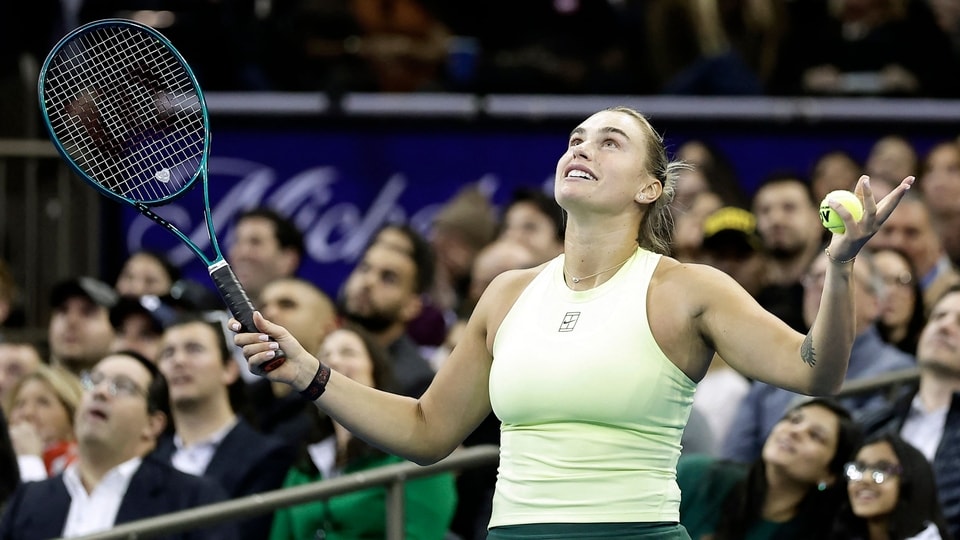
"That's a tricky question," said Sabalenka.
"I have nothing against them but I feel like they have still got a huge advantage over women (who have not undergone gender transition).
"And I think it's just not fair to a woman to face, biologically men. It's not fair," added Sabalenka, who will take on Nick Kyrgios in an exhibition match dubbed 'The Battle of the Sexes' in Dubai at the end of December.
Sabalenka didn’t hold back while explaining why she feels the current approach is unfair to female athletes, highlighting the physical gap they would be forced to compete against.
"Like the woman has been working her whole life to reach her limit and then she has to face like a man, who is biologically much stronger. So I don't agree with this kind of stuff in sport," she added.
WTA rules allow participation, but no top player competing
The WTA allows transgender women to compete as long as they meet specific criteria, including maintaining blood testosterone levels below 2.5 nanomoles per litre for at least two years and providing a signed statement confirming their female or non-binary identity. In reality, however, no transgender woman is currently competing at a prominent level on the women’s tour.
Renee Richards — originally Richard Raskind, born in 1934 — remains one of the very few transgender athletes to have competed at the top tier of professional tennis. She first appeared at the US Open in the 1950s, entering the men’s draw multiple times before stepping away from the sport. Following her transition, Richards returned in the late 1970s and began a new chapter on the women’s circuit, continuing into the early 1980s. Her journey remains a landmark moment in the discussion around gender and elite competition.
After retiring from competition in 1981, Richards notably coached Martina Navratilova.


