A team of 36 volunteers took part in a scientific study to test a new device designed to help people survive being trapped in snow after an avalanche. The experiment examined whether the user-worn device could delay oxygen loss and prevent the buildup of carbon dioxide under snow. The study was carefully supervised, and each participant was removed as soon as their vital signs showed any health risk.
Volunteers Participate in Survival Experiment
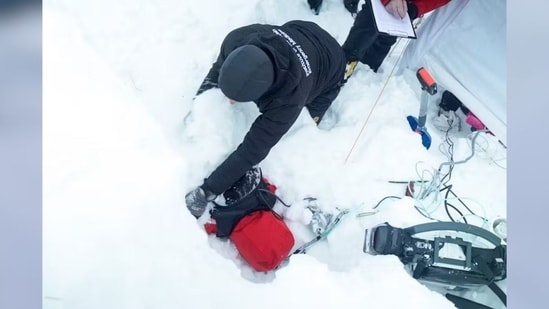
The research took place at a field site in Italy between January and March 2023. The device, called the Safeback SBX, was created to draw air from the surrounding snow and direct it to a person’s airways. It functions without the need for external oxygen or a mouthpiece, which sets it apart from traditional systems.
Also read:More than 80000 iPhones stolen in this city, police accuse Apple of…
The randomised and blinded trial involved healthy participants aged between 18 and 60. Each volunteer was buried under about 50cm of snow while lying face down, and their health parameters were continuously monitored. They were divided into two groups: one equipped with the Safeback SBX and the other with a non-functional version as a control.
How Safeback SBX works in Avalanche Rescue
The study, published in the Journal of the American Medical Association (via Eurac Research), found a clear difference between the two groups. Participants using the Safeback SBX stayed buried for a median duration of 35 minutes without their oxygen levels falling below 80 percent. In contrast, the control group showed a median survival time of just over six minutes, with several cases of oxygen saturation dropping below safe limits.
Also read:JioHotstar Premium ad-free plan may soon get costlier: Here’s what might change
Measurements of air composition further supported the device’s effectiveness. The oxygen concentration in the air pockets of those using the Safeback SBX averaged 19.8 percent, compared to 12.4 percent in the control group. Meanwhile, carbon dioxide levels remained much lower at 1.3 percent compared to 6.1 percent in the control group.
Potential Use in Avalanche-Prone Regions
The researchers noted that the majority of avalanche-related deaths are caused by suffocation within the first 35 minutes. Extending this critical time frame could significantly increase survival rates. Experts believe that combining the new airflow device with existing avalanche safety equipment, such as transceivers and airbags, could improve the outcome of rescues.
{{/usCountry}}The researchers noted that the majority of avalanche-related deaths are caused by suffocation within the first 35 minutes. Extending this critical time frame could significantly increase survival rates. Experts believe that combining the new airflow device with existing avalanche safety equipment, such as transceivers and airbags, could improve the outcome of rescues.
{{/usCountry}}Also read: Apple brings back this original iPhone feature but with a twist
Such technology could prove useful in regions prone to heavy snowfall and avalanches, including parts of Jammu and Kashmir, Ladakh, Uttarakhand, and Himachal Pradesh. The Safeback SBX may offer trapped individuals valuable extra time until rescuers arrive, which could improve the chances of survival during emergencies in snow-covered areas.