
 E-Paper



Are your phone and Wifi blocking black hole signals? Astronomers say it could wreck Earth’s cosmic map
Astronomers track Earth’s position using faint signals from black holes, but the explosion of Wifi and phone use threatens this vital science.

 Prefer HTon Google


Have you ever wondered how Earth’s place in the cosmos is ascertained? Turns out, astronomers use faint signals sent from distant black holes to measure Earth’s position in the universe with exceptional accuracy. These black holes are located in the hearts of galaxies and their powerful radio waves reach our planet after traveling for millions of years. Fascinating, right?
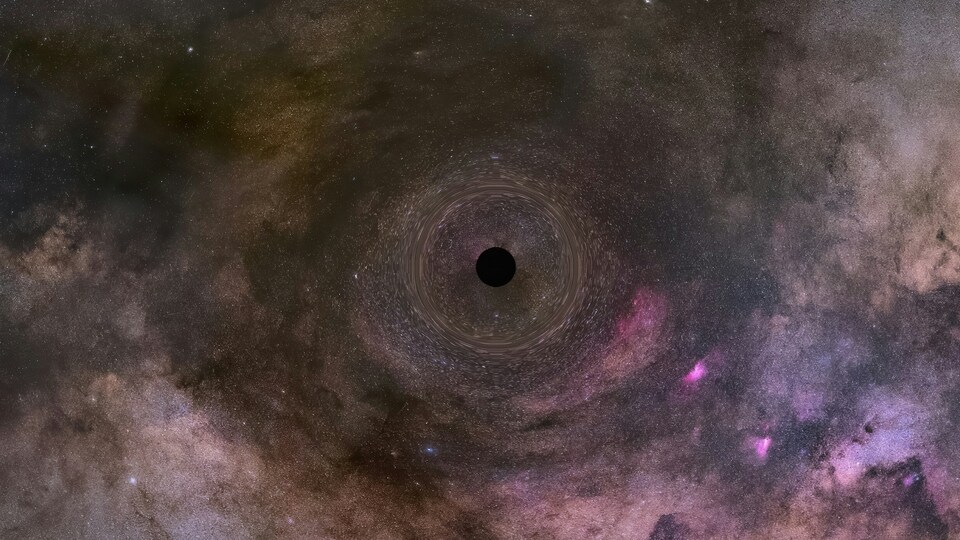

Scientists record these signals using radio telescopes, then use a technique called “geodesy” to synchronise measurements from stations all across the world. This network allows them to track Earth’s motion and changes in its rotation. These measurements support key technologies like GPS, satellite navigation, Internet timing, and global communications, The Conversation reported.
A crowded spectrum
In the past, there was plenty of empty radio spectrum set aside for astronomy. Now, as mobile networks, Wifi routers, and countless consumer technologies expand, new slices of the spectrum are claimed every year. Each new mobile service, from 1G to 6G, grabs another piece of the radio highway. The result is increasing interference around the signals astronomers need to catch. The radio waves from distant galaxies are incredibly faint, while human-made signals can be millions of times stronger.
Today’s radio telescopes often struggle to hear black hole signals clearly because they are buried beneath noise from wireless devices. Even frequencies once reserved for astronomy can become crowded as devices leak radiation or governments reallocate frequencies for commercial use. The precision needed for cutting-edge science is at risk.
Why clear signals matter
Geodesy is more than a scientific curiosity. Systems that keep aeroplanes on course, help guide container ships, track supply chains, or settle global money transfers depend on knowing the precise location and timing of the Earth. If astronomers lose access to cosmic radio signals, many navigation and timing systems could become less reliable.
Scientists propose solutions such as creating “radio quiet zones” where wireless signals are strictly controlled, or preserving more exclusive frequencies for astronomical research. However, the radio spectrum is managed country by country, and finding global agreement is complicated. Collaboration across borders will be necessary to keep radio astronomy and the services that depend on it functioning smoothly.
Many people are unaware that their Wifi routers and smartphones can affect advanced science. As wireless technology spreads, awareness and careful planning are becoming more important. Without action, the view of black holes that lets us pinpoint our place in the universe could be lost in the noise.


