
 E-Paper



Women-friendly systems needed so that they can contribute to innovation: Delhi HC judge Prathiba Singh
Delhi High Court Judge Justice Prathiba M Singh said that India is educating its girls properly as the overall number of women STEM graduates is 43 per cent, more than many developed countries. However, it's appalling that the research papers authored by women in India are only 3-4 per cent, she added.

 Prefer HTon Google


There is immense opportunity in the area of innovation for women and they need systems that are friendly and flexible enough for them to use their educational qualifications to contribute more to the field and the GDP, Delhi High Court Judge Justice Prathiba M Singh said on Wednesday,
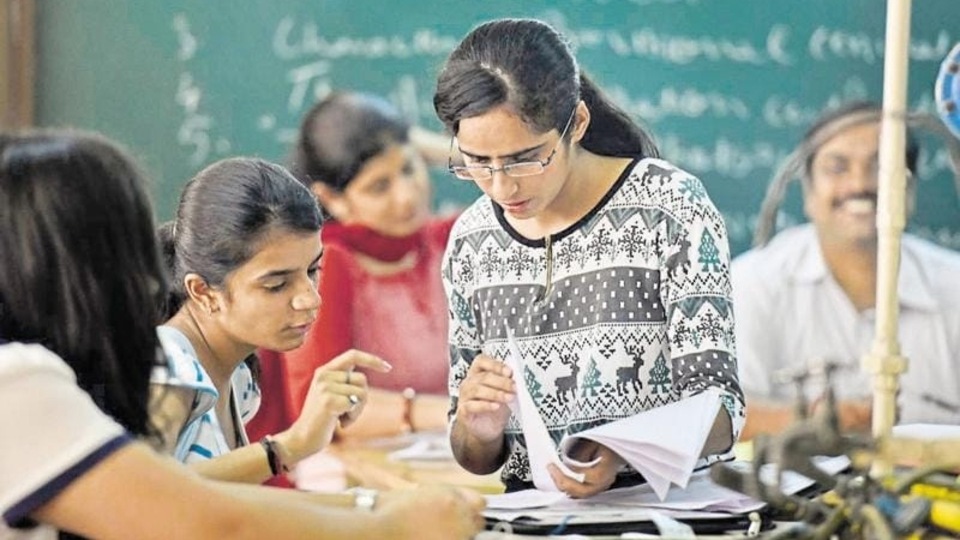
She said women are mentally very intuitive, creative and innovative and Indian women are ''lucky" as the country is much more progressive and is seeing more of them in leadership roles.
However, she expressed concern that despite being innovative and creative, women are not able to bring about actual material inventions that can be commercialised and can help them in making more progress in society.
She was delivering the inaugural address on the topic, 'Facing the unseen barriers: Addressing challenges faced by Women in Science, Technology, Entrepreneurship and Mathematics (STEM)'.
Justice Singh said that the evident brain drain in India is “because we have not allowed our women to come out and to contribute to the Gross Domestic Product (GDP)”.
“It is not about empowerment, it is about putting the best systems in place to make sure that the systems are women-friendly and flexible enough for women to use their educational qualifications to contribute to the GDP.
"There is a huge opportunity in the field of innovation for mentorship,” the judge said.
She said in India, the overall number of women STEM graduates is 43 per cent, more than in many developed countries.
"In the US it's 34 per cent, in the UK it's 38 per cent, in Germany it's 27 per cent and in France, it's 32 per cent.
" In India, it's 43 per cent, which means we are educating our girls properly,” Justice Singh said.
In B.Tech, the figure is 42 per cent, in M-Tech it is 63 percent, and in medical and health-related courses it is 30-35 per cent, according to data for 2018-19.
However, the research papers authored by women in India are only 3-4 per cent, which is appalling.
“So where have all the 40 per cent women gone? It is just so contrasting that I was so shocked. If you take joint authorship then it is 47 per cent. So somewhere down the line as a team, there are women but as individual authors, they are unable to come out on their own,” she said.
ALSO READ: Girls deserve equal access to tech and STEM education
The conference was organised by the Federation of Indian Chambers of Commerce and Industry's (FICCI) WISE Council (Women in Science and Entrepreneurship).
“Women are very innovative and creative. Mentally women are intuitive, creative and innovative but why is it that we are not able to translate it into actual material inventions which can be commercialised and can help women make progress in society and do their own business?
“We are lucky to be in a country like India which is much more progressive about women and seeing women in leadership roles. I am not saying we need to ignore the violence and bad things happening to women at a lower level but yes at the higher and middle levels, we are seeing women growing. We need to have that and perceive that very well,” Justice Singh said.
She further said that Indian women are blessed as the scriptures have always given a very respectable position to them.
“In fact, the Asian countries do much better in respecting women, in households and in general. That's because of the cultural and religious background which we have. The women and equally men play a very important role in our lives to be where we are and to achieve what we want,” she said.
The judge, who mentioned the 'social taboo' of women entering the legal field, said in a lighter vein, “Lawyer women are the best wives because they know how to behave and they know they don't want their case to go to the court”.
She said a lot of women are now there in the legal field and added that while in the Delhi High Court, there are 12 women judges, the number in the Madras High Court is 14.
Justice Singh also advocated living in joint families.


