
 E-Paper



NASA beams high-definition cat video back to Earth from deep space, calls it a giant leap in mission to Mars
The space agency achieved this feat by an instrument called a flight laser transceiver.

 Prefer HTon Google


NASA revealed on Monday that it successfully beamed a high-definition video of a cat back to Earth from deep space. The 15-second video, which features an orange tabby cat named Taters was sent back from nearly 19 million miles away. The space agency achieved this feat by an instrument called a flight laser transceiver. It is a part of NASA's technology demonstration, which aims to “pave the way for high-data-rate communications” from deep space.
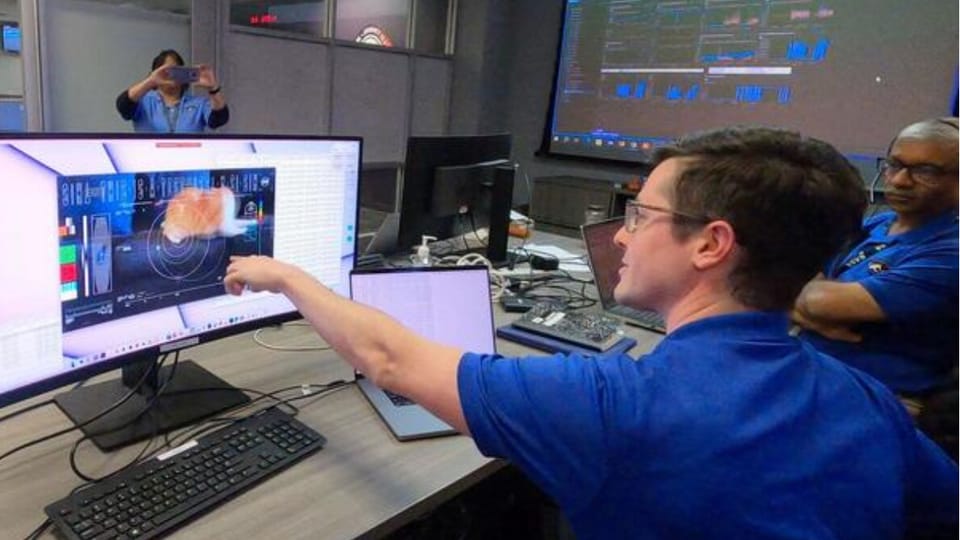
First HD video of a cat from deep space
The US space agency shared the video on X, formerly Twitter. The space agency wrote, “We just streamed the first ultra-HD video brought to you via laser from deep space. And it’s a video of Taters, a tabby cat.” This milestone paves the way for “the next giant leap: sending humans to Mars.”
NASA Deputy Administrator Pam Melroy said, “This accomplishment underscores our commitment to advancing optical communications as a key element to meeting our future data transmission needs. Increasing our bandwidth is essential to achieving our future exploration and science goals, and we look forward to the continued advancement of this technology and the transformation of how we communicate during future interplanetary missions.”
Here's how NASA did it
The video of the orange feline was first uploaded to NASA's $1.2 billion Psyche asteroid probe before its launch in October. It was transmitted on December 11 en route to the asteroid. It was then beamed back to Earth via a cutting-edge piece of tech known as a flight laser transceiver. The space agency revealed that the ultra HD video merely took 101 seconds to reach Earth at the maximum bit rate of 267 Mbps.
Taters' video was downloaded at Caltech’s Palomar Observatory in San Diego County, California. It was then sent “live” to NASA’s Jet Propulsion Laboratory in Southern California, where the video was played in real-time.


