E-Paper



Singapore street food vs Indian ‘ghar ka khana’: Nikhil Kamath’s latest post sparks cooking debate
Nikhil Kamath shared on X how Singaporeans rarely cook at home, sparking a debate on India's preference for "ghar ka khana" vs Singapore's street food.

 Prefer HTon Google


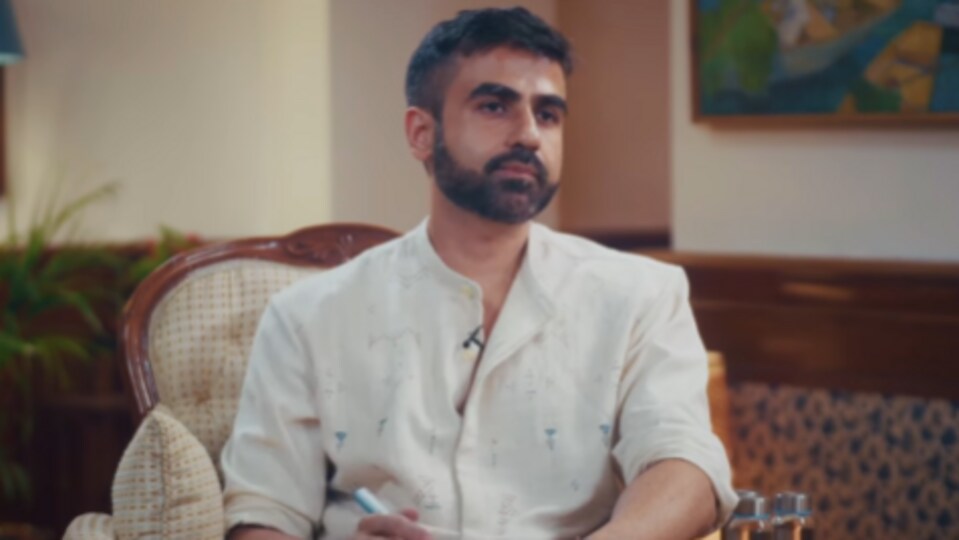
Zerodha’s co-founder, Nikhil Kamath, recently took to social media platform X to shed light on the stark differences in food consumption habits between India and countries like Singapore. On Tuesday, the billionaire shared insights from his trip to Singapore, where he noted that home cooking is virtually non-existent. According to him, many Singaporeans either don’t have kitchens or never cook at home, raising an intriguing question about cultural differences in food consumption.
(Also read: ‘I feel like an idiot’: Nikhil Kamath’s Valentine’s Day post after meeting under-25 entrepreneurs)
“I was in Singapore this week; most people I met said they never cook at home, and others don’t even have a kitchen,” Kamath revealed in his post. This observation led him to ponder whether India, too, might eventually shift towards the same trend, especially if economic conditions change.
Kamath highlighted an interesting aspect of this potential shift, pointing out that if India were to follow Singapore’s food habits, the restaurant business would explode. “If India were to follow this trend, investing/opening restaurants would be a massive opportunity, but we don't have restaurant brands that have close to the scale Southeast Asian chains do,” he wrote. Kamath questioned why India’s food service industry lags in terms of organised restaurants, noting that only 30 per cent of India’s food market is organised, compared to 55 per cent in the United States.
Sharing data from Swiggy and Bain & Company, Kamath revealed that India consumes significantly fewer non-home-cooked meals compared to other countries. For instance, China saw an average of 33 non-home-cooked meals per customer in 2023, followed by the US with 27, Singapore with 19, and South Korea with 14. India, however, came in last at just 5.
Check out the post here:
Cooking preferences stir debate
Kamath’s post garnered over 3 lakh views, sparking a wide range of reactions from his followers. One user responded, “Ghar ka khana (home-cooked meals) is an integral part of Indian culture, and I don’t think that will change anytime soon.” Another said, “I live in Singapore - been here for 15 years. You are right, but if I may add, Singapore’s eating out culture is primarily an outcome of the 121 hawker centres promoted by the government. The 6000 stalls under these centres have to adhere to strict quality standards and provide affordable meals. They are also an embodiment of the rational spirit as cater to different cuisines and communities. So focused is the Government on maintaining the hawker centres that they even have a ‘hawker incubation’ program.” A third user joked, “If we follow Singapore’s trend, all restaurants in India will just serve ‘masala chai’!”
(Also read: Bengaluru CEO who lost ₹2 crore, was paralysed, gets Nikhil Kamath’s backing: ‘They called me Elon Musk’)
Others shared their views on the rise of street food culture, with one commenting, “Street food in India will continue to thrive regardless of home cooking habits.” Another added, “The convenience of delivery and restaurants will definitely grow, but we will always cherish our home-cooked meals.”