E-Paper



Plant instead of night light? These glowing succulents can replace your lamp
Scientists create glow-in-the-dark succulents that can light up rooms without electricity, using a special synthetic material

 Prefer HTon Google


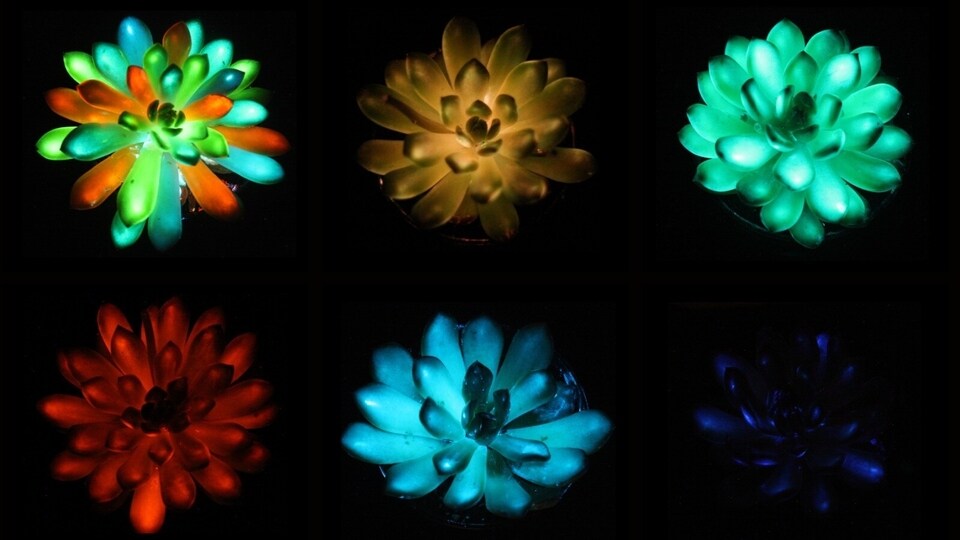
Imagine a plant that can light up your room. Scientists from South China Agriculture University have developed a method by injecting a special synthetic material to make an ordinary succulent for a few hours. The study was published in the journal Matter.
Not Genetic Modification, But Science
According to The New York Times, the team injected the plants with afterglow phosphor particles. This compound is capable of making objects glow in the dark, just like the ‘glow in the dark stars’ which we all have seen in our bedrooms during childhood. This Material absorbs the light from its environment and, via phosphorescence, it releases the light slowly and steadily. This is how the plant grows in the dark.
A Proof of Concept for Night Lamps
“This is a proof of concept that a common plant can store and release light,” said Shuting Liu, the first author of the paper. The researchers aim to create a “living, light-charged plant lamp” that could brighten dark spaces without electricity. The succulents can emit multiple colors and recharge just by being exposed to light.
How This Differs From Earlier Work
Glow-in-the-dark plants have existed in real life since the 1980s, starting with tobacco plants spliced with firefly genes. More recently, glowing petunias made with bioluminescent bacteria or fungi became commercially available. The South China Agricultural University team’s approach is unique because it uses a synthetic material rather than genes from other species.
The Lab Behind the Innovation
The research was carried out at the Key Laboratory for Biobased Materials and Energy, which often explores ways to combine technology and plants. Previous projects included improving photosynthesis with carbon nanoparticles.
Also read: AI-designed drugs give scientists foothold in mission to thwart antibiotic-resistant bacteria
Although it is not ready for everyday use, glowing succulents show that plants can be used not just to decorate a room, instead it can be used to provide light. Such bionic plants are creative steps toward sustainable innovation and futurist home décor.
FAQs
Q1: How do these succulents glow?
A1: The succulents glow because they are injected with strontium aluminate, a material that absorbs light and slowly releases it through phosphorescence.
Q2: Are these genetically modified plants?
A2: No. Unlike some earlier glowing plants, these succulents are not genetically modified. They glow thanks to a synthetic material, not genes from other species.
Q3: How long can the plants glow?
A3: Currently, the glow lasts for a few hours after the plants are exposed to light. They can recharge by being placed under light again.