
 E-Paper



‘Buck stops at govt’s doors’: FM takes responsibility for infrastructure push
Budget 2020:She said the charter was a demonstration that the government’s principle was not limited to merely ending the harassment of the taxpayers but was rooted in respect and trust.

 Prefer HTon Google


Finance minister Nirmala Sitharaman said a budget touching the lives of every section was the vision guiding the 2020 exercise. She was speaking to the Editor-in-Chief of Hindustan Times, Sukumar Ranganathan in an interview telecast on national broadcaster Doordarshan, a few hours after she presented her second budget in the Parliament on Saturday.
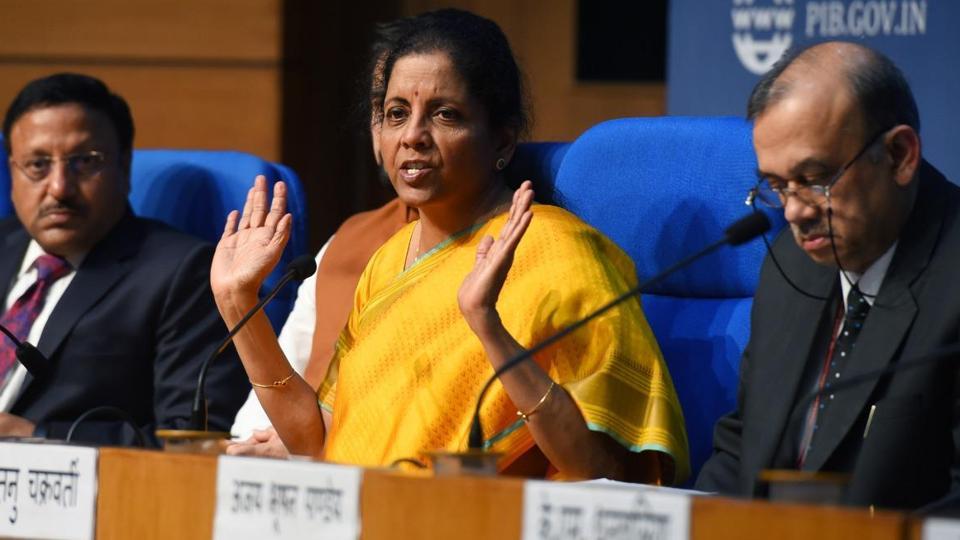
“The Ministry of Finance had run a social media campaign, calling it Jan-Jan ka (every citizen’s) Budget. I really wanted to touch the lives of every section through this Budget. I also wanted to convey that we are a responsible government and thirdly that India’s potential had to be maximised,” Sitharaman summed up the three objectives that inspired and strung the budget together.
Sitharaman said the new tax regime introduced was aimed to make filing simpler, encourage spending and savings, improve tax collection assessment and gradually shift to an exemption-less system.
“Wanted to make filing of tax simpler for Indians so that they can calculate clearly the tax burden they bear. There were 120 tax exemptions and it was difficult even for the government to estimate tax revenue because of the wide range of exemptions,” Sitharaman said.
She said the new regime was the beginning of the process to make tax rates very attractive.
“We want to remove gradually everything called exemptions. And that is why I have started the process. I am not forcing people. Gradually when exemption goes, I will also give an attractive rate.”
She said the charter was a demonstration that the government’s principle was not limited to merely ending the harassment of the taxpayers but was rooted in respect and trust. She said she was proud of joining countries like the USA, Australia, and Canada in making the tax charter part of the statute.
“The government trusts and respects the taxpayer, how many times has the PM made that point himself. We are very clear in our intention and why should we then be afraid to make it part of the law,” she argued.
The finance minister said the budget had amply displayed that the government was not waiting for private investments to bail out the economy.
“As is the analysis done by policy experts and economists, if the private investment is not really catching up, the buck stops at the government’s doors, the government will have to show that it is not waiting for the private investments--it will happen, when it will happen—but we have to go about investing and that’s what we made very clear that yes, we will invest and in infrastructure,” she said.
Listing out steps taken in the direction to back her claim, Sitharaman said apart from PM’s Republic Day declaration to spend Rs 100 lakh crores on infrastructure development, the government had come up with a plan for 5600 projects to boost infrastructure.
“Within the matter of four months if we were able to come out with a complete pipeline and in this budget to help that pipeline see the light of the day...,” she said and added that “enough concessions had been given in budget to sovereign funds that want to come into India”.
Sitharaman also said that the government had granted Rs 22 thousand crores to direct investments towards the pipeline projects.
Speaking on the disinvestment bid, Sitharaman denied the government was selling the family silver.
“Divestments will happen and the money will go to infrastructure lending institutions that we are creating. Disinvestment money won’t go for revenue expenditure,” it will go for Capex,” she said.
On the rural and agrarian economy, Sitharaman said the idea was to enable farmers to locally store produce, which would eventually, solve the storage capacity issue that often leads to distress selling and a loss for the farmers.
Sitharaman belied fears that government outlay for Mahatma Gandhi National Rural Employment Guarantee Scheme (MGNREGS) may not be adequate in the budget, she said the scheme was demand-driven and will be provided for when the requirement comes.
One of the creative ideas was to extend MGNREGS “for fodder creation to help local livestock survive in water distress districts,” she said.
On the reduction in food subsidy, she said it was not a “conscious reduction” done from the government side.
“It can also be seasonal, sometimes when people are migrating,” she explained.
Talking about the nominal GDP growth projection of 10%, she suggested her budget was honest and realistic.
“Corporate Tax cut will have a time lag for it to show. I bear the brunt of having lost that money, as a result, my revenue collection will suffer. But I expect the revenue generation to improve, so I can cut my fiscal deficit back down towards a glide path, 3.8 (%) comes to 3.5 (%),” said Sitharaman.


