
 E-Paper



Artemis II launch ahead: Why it's taken over five decades for Nasa to look to the moon again for a crewed mission
Nasa has the first six days of April to launch Artemis II before standing down until the end of the month if plans don't work out; likely date is Apr 1, US time

 Prefer HTon Google


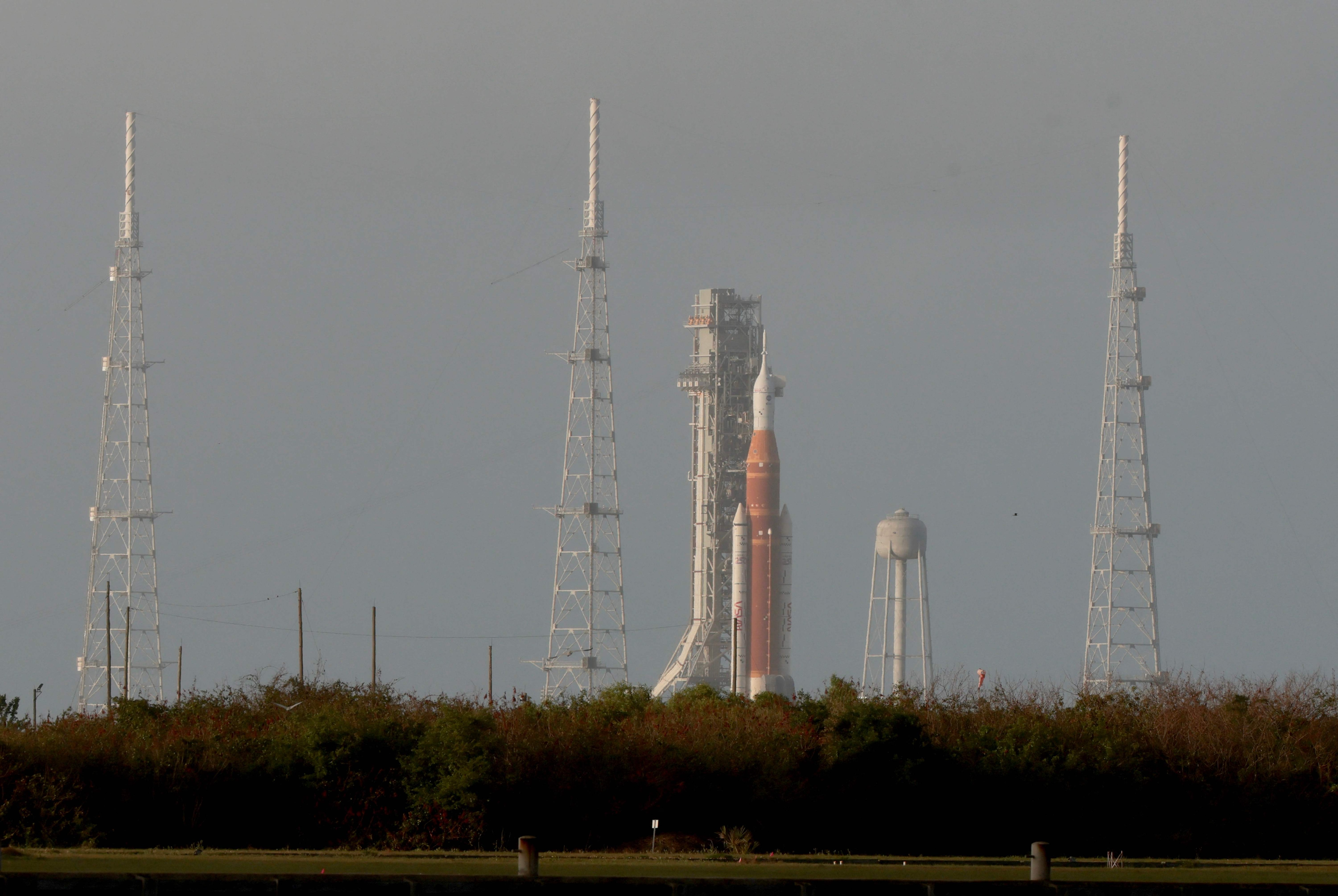
In the first week of April 2026, when the Artemis II mission of the US National Aeronautics and Space Administration (Nasa) finally lifts off from the Kennedy Space Centre in Florida, it will mark the first manned flight to the moon in 54 years. Almost. The flight will carry four astronauts on a high-speed loop around the moon, not actually land on it, but it is historic for several reasons.
But what were the reasons for no such space mission for over five decades?
First, what the mission really is. A 10-day flyby designed to test the Orion spacecraft’s life-support systems, Artemis II is the essential precursor to returning boots to the lunar surface.
Nasa’s Reid Wiseman, Victor Glover, and Christina Koch, alongside Canadian astronaut Jeremy Hansenm, will make the journey. It will be the first time a human crew would venture beyond low-Earth orbit (LEO) in over five decades.
While Artemis II will only fly around the moon, the first crewed landing of the new Nasa programme is currently planned for Artemis IV in early 2028.
When was the last time?
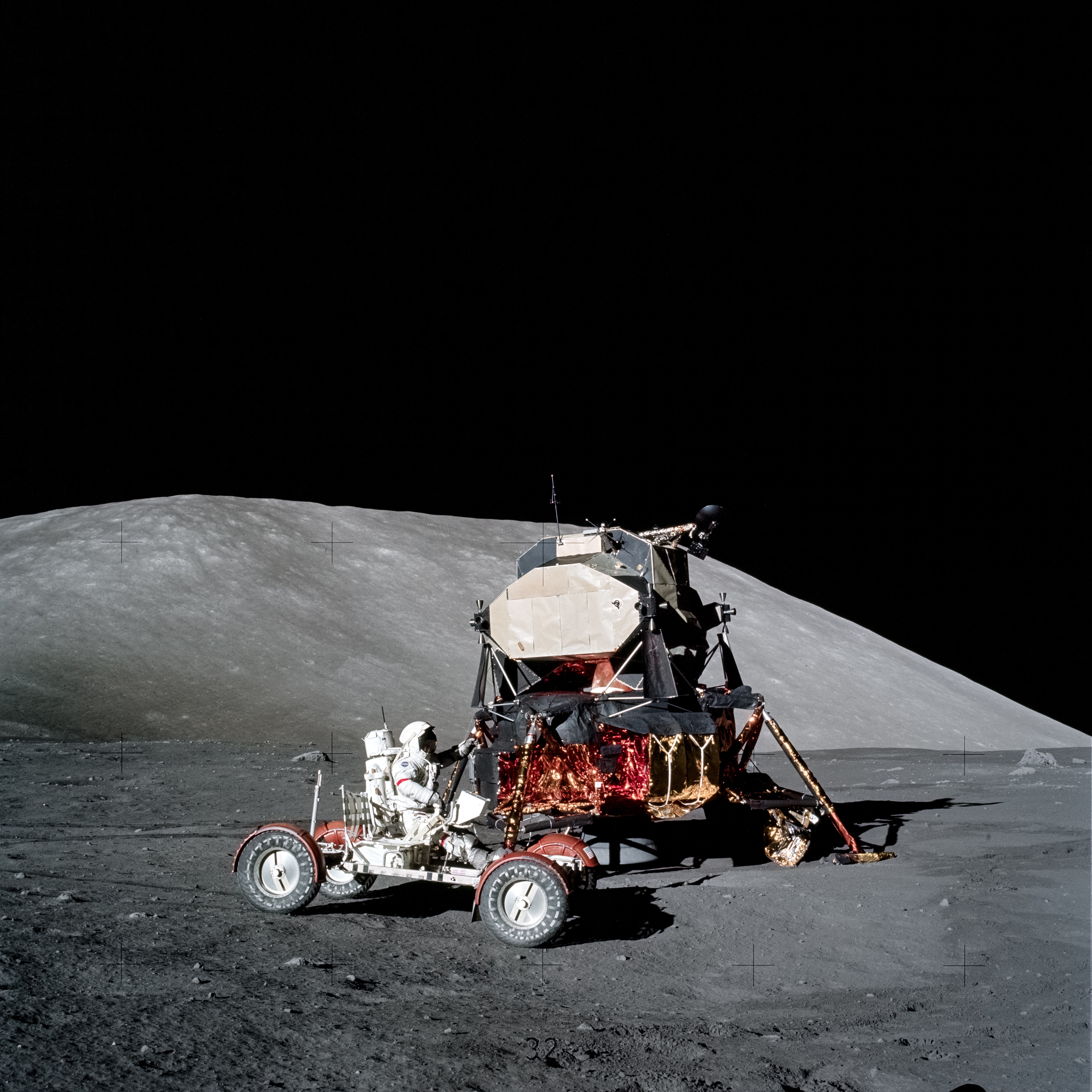
The first human mission to land on the moon was Apollo 11 in July 1969. Neil Armstrong took the historic step on July 20, 1969. The last mission to send humans to the moon was Apollo 17, which took place in December 1972. It was the sixth successful crewed lunar landing, and the final flight of the Apollo programme.
So, the last time a human being stood on the moon was December 14, 1972, when Nasa’s Apollo 17 commander Gene Cernan left his final footprints in the Taurus-Littrow valley.
The reasons for the long hiatus since include a shift in political priorities, economic changes, and a modern world that planned other types of space flights instead.
Political reasons: No longer a Cold War race
The most significant hurdle to a lunar return has been the whims of the US government.
Teasel Muir-Harmony, curator of the Apollo Collection at the Smithsonian National Air and Space Museum, argues that the short answer to ‘why the 54-year gap’ is simply “political will”. Muir-Harmony has underlined that moon missions are "extremely complex, really costly, major national investments".
Les Johnson, a former NASA chief technologist who served for over 30 years, said the space programme has been a victim of presidential term cycles. "Every four to eight years, Nasa has its human spaceflight goals and objectives completely, totally, radically altered," Johnson told CNN in February.
He recounted his own career to map this confusion: "When I joined NASA in 1990, we were directed to go back to the moon by then President George HW Bush. But when President (Bil) Clinton took office in 1993, he cancelled that. He said, ‘we’re going to make the space station happen — don’t do anything associated with going back to the moon’.”
This pattern repeated when George W Bush launched the Constellation programme in 2001 to return to the moon, only for President Barack Obama to cancel it in 2010 in favour of asteroid missions.
It was not until 2020 that a President, Joe Biden, maintained the goals of his predecessor. It was the first time a President "did not change everything", he said.
Economic reasons: Budget not enough
During the height of the Space Race in the Cold War era of the 1960s, the United States viewed the moon as a battleground against Soviet Russia. Nasa got roughly 5% of the entire US federal budget. In contrast, Nasa now commands less than half a per cent.
Casey Dreier, the The Planetary Society’s Chief of Space Policy, argued that while the US "funded Apollo like a race it had to win; it funded Artemis like a casual stroll turned into a jog".
Artemis now aims to replicate and eventually exceed Apollo’s capabilities at a fraction of the cost. Since 2017, NASA has spent an average of $6 billion per year on Artemis-related projects.
But the US space agency’s civil servant workforce, which hit 35,000 in the 1960s, has since dwindled to just 14,000 employees. In 2025 alone, roughly one in five employees left the agency, creating what the society describes as a "morale crisis" that has made meeting deadlines increasingly difficult.
After the Apollo missions ended, you could not simply "remake" it years later, according to Wayne Hale, a former Nasa space shuttle programme manager. Rebuilding this capability has required two decades of development for the Space Launch System (SLS) and the Orion capsule.
High stakes, but low risk tolerance
The 1960s were an era of extreme risk. The Apollo programme survived the Apollo 1 fire that killed three astronauts and the near-disaster of Apollo 13.
However, NASA’s chief historian, Brian Odom, pointed out that modern missions are governed by a much more "grounded approach to risk". The losses of the shuttles Challenger and Columbia led to a safety culture that prioritises thorough testing over schedule speed.
This caution is evident in the delays leading to the April launch of Artemis II as well. A February launch window was missed after a dress rehearsal identified a liquid hydrogen leak in the rocket’s fittings. A subsequent March window was ruled out following the discovery of a helium leak. Additionally, data from the unmanned Artemis I test in 2022 revealed that the Orion heat shield experienced greater-than-expected erosion during its re-entry into Earth's atmosphere.
Nasa has said the challenges were fully anticipated, and that the agency will not risk a crewed flight until these technical hurdles are resolved.
Staying, not just visiting, eventually
Perhaps the most important reason behind the delay is that Artemis is fundamentally more ambitious than Apollo. While the Apollo missions were described as "flags and footprints" ventures, and lasted only a few days, Artemis is meant to work towards sustained human presence.
Les Johnson explained that the new landers being developed by private partners like SpaceX and Blue Origin "are designed to remain for longer than a day".
The long-term goal is to establish the Artemis Base Camp at the moon’s south pole, where water-ice in craters could be used for life support and rocket fuel. This is seen as a permanent test bed before humanity can attempt the much more dangerous journey to Mars.
While the US has been focused on low-Earth orbit for decades, other nations have entered the longshot arena. China aims to land its first astronauts on the moon by 2030. India has set a target for a human landing by 2040 following the success of its Chandrayaan-3 robotic mission in 2023.
First for many reasons
Aboard the Artemis — unlike Apollo which sent only men to the moon from 1968 through 1972 — the debut crew includes a woman, a person of coloor and a non-US citizen.
Artemis II’s pilot Victor Glover, who is Black, said he wants young people to see them and think: “Girl power and that’s awesome, and that young brown boys and girls can look at me and go ‘Hey, he looks like me and he’s doing what!?’”
At the same time, Glover said he looks forward to when ”one day we don’t have to talk about these firsts”, and exploring the cosmos becomes an all-encompassing “human history".
Nasa has the first six days of April to launch Artemis II before standing down until the end of the month if plans don't work out. The likely date is April 1, US time.
Why it's a big deal: Astronaut explains
“The Apollo programme was designed to send small crews there for short periods of time and bring them back, and not really to do anything there. The whole mission with Artemis is sustained, permanent exploration and presence,” said senior Canadian astronaut Joshua Kutryk, who is currently training for his own mission to the International Space Station.
“If you think about what we do in low Earth orbit now — we have humans working from all over the world together for long periods. Six, seven, eight, 12 months at a time. That's what I'm getting ready to go do,” he underlined.
“We want to do that on the surface of the Moon. That's what Artemis is about, and that's something that we couldn't have done during Apollo because we didn't have the technology to do it,” he explained.
(inputs from AFP, Reuters)


