What is taking place inside Myanmar is a disaster, but it matters for another, more abstract reason, too.
Published on: Jun 5, 2025, 07:24:13 IST
The Economist
Prefer HTon Google
Share via
Copy link
The world is not exactly short of crises. But one of the most alarming is also the most overlooked: an escalating state of anarchy in Myanmar, in the heart of Asia. The country is degenerating into a violent state of nature. Over 2m of its people are on the verge of starvation. The effects of crime, including drug-dealing, huge scam centres and human trafficking, spread far beyond its borders.
Asia-s-forgotten-hellscape
What is taking place inside Myanmar is a disaster, but it matters for another, more abstract reason, too. America and Europe have walked away from what was once an influential role in the country. Instead, the hellscape is unfolding under the watch of China, which has gradually become the dominant outside power. Its cynicism and indifference in Myanmar are an ominous demonstration of its values-free foreign policy in action.
Myanmar has a desperate past. After a coup in 1962, it suffered 49 years of military rule. Between 2011 and 2021, the army relinquished some power, and for a while that allowed Aung San Suu Kyi, a liberal darling of the West, to front a government. Even in those years there were severe human-rights violations, including pogroms against the Rohingya minority. In 2021 the army fully retook power in a coup. Since then, a sinister junta has been engaged in a civil war with a swirling cast of dozens of armed-resistance groups, freedom fighters and bandits, turning a country the size of Ukraine into a bewildering and bloody mess.
As the West has lost interest, China has become more powerful. Its conduct is pragmatic rather than ideological, and it will do business with anyone who has power, money or guns. It has worked with Ms Suu Kyi, and now co-operates with the junta and also with the resistance groups and militias. It uses its influence and control over ammunition and weapon supplies to shape the fighting in order to safeguard its interests.
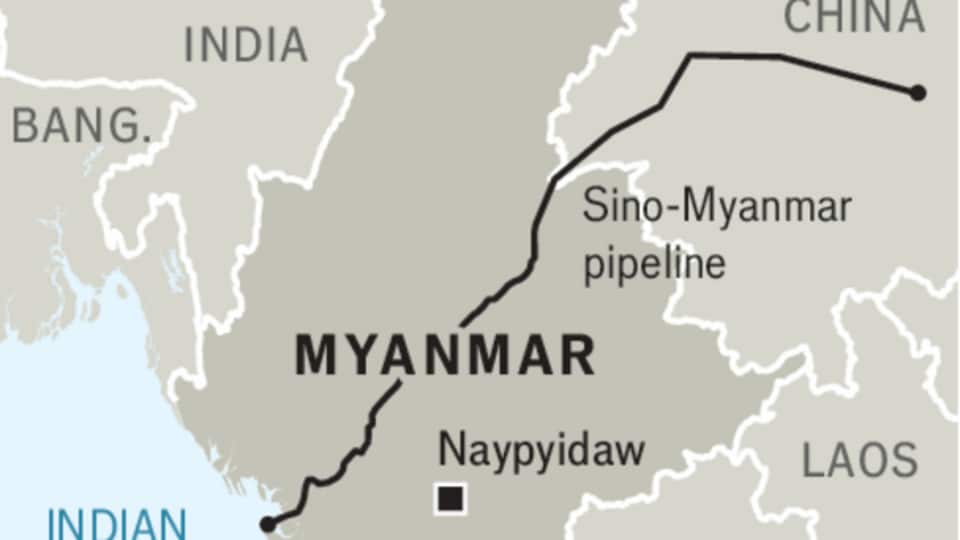
These include protecting a 2,500km energy pipeline from the Indian Ocean. This gives China an alternative supply route that bypasses the strait of Malacca and might become vital in the event of a war over Taiwan. China also wants to maintain its access to minerals and other resources, protect infrastructure built under its Belt and Road Initiative, tamp down on scammers targeting Chinese citizens, and keep the West out of a country adjacent to its own southern border.
China plays all sides, arming, threatening and coaxing them into meeting its demands. The results are lethal. Amid mounting hunger, the size of the economy has fallen by a quarter in nominal terms since 2019. The picture could get worse. China is pushing General Min Aung Hlaing, the junta’s chief, to hold a sham election later this year, designed to provide a figleaf of legitimacy. That could trigger a surge in violence as resistance groups seek to disrupt an illegitimate process. More chaos could spill across the borders Myanmar shares with Bangladesh, China, India, Laos and Thailand.
Having been mistakenly star-struck by Ms Suu Kyi’s leadership in the 2010s, the West has abandoned the groups fighting for democracy. Today America and Europe could still help Myanmar by increasing their humanitarian assistance, publicising abuses and backing pro-democracy forces in any negotiations and even on the battlefield. But the Trump administration has cut aid to Myanmar and Europe is preoccupied with security on its own eastern border.
Given Western neglect, Myanmar’s best long-term hope is either that pro-democracy groups eventually consolidate and win the civil war, or that Myanmar’s other neighbours, such as India and Thailand, strive for a just peace. Despite all the talk of a multi-polar world in which power and responsibility are more evenly spread, neighbouring countries have so far tended to back the junta and have encouraged other states to normalise relations with it. Yet over time they may come to recognise that only a more democratic Myanmar will provide the stability they crave.
Until then, the war will continue and the liberal future that some Burmese are fighting for will remain out of reach. China’s growing power and pursuit of its own priorities, the West’s shrinking view of its own interests, and the apathy of everyone else have consigned a country to misery. That makes Myanmar not just a tragedy—but also a warning.
Get the latest World News, breaking headlines and global updates from the US, UK, Pakistan, Bangladesh, Russia and other countries. Follow major international events on Hindustan Times.

 E-Paper





 Prefer HTon Google